
ANTHONY BRINK
15 November 2000
ISBN 0 620 26177 3
Published by:
Open books
Pietermaritzburg
South Africa
To contact the author:
arbrink@iafrica.com
083-6260945
Printed by:
Kendall and Strachan
164 Pietermaritz Street
Pietermaritzburg
South Africa
AZT: A MEDICINE FROM HEAVEN (Dr D J Martin)
[1] Dr Martin scolds the editor of the Citizen from a high horse.
[3] AZT and muscles.
[10] AZT and bone marrow.
[14] What does AZT do for opportunistic infections?
[15] Does AZT have "long lasting beneficial effects"?
[16] What did the Concorde trial in Europe reveal about AZT?
[17] The invention of HAART cocktails.
[18] Does AZT prolong life - or shorten it?
[19] The grim findings of the Claude Bernard Hospital study in France.
[21] Pressure from the manufacturer to sweeten the Concorde findings.
[22] Does AZT "improve quality of life"?
[26] AZT and the liver.
[30] AZT, foetal toxicity and birth defects.
[37] Is AZT safe for neonates and children?
[39] Are the 'side effects' of AZT different from AIDS?
[40] How well do untreated HIV-positive people do?
[41] How are children exposed to AZT in the womb affected?
[43] What did AZT do for the AIDS death rate in the US?
[44] What cancer risks are posed to babies of mothers treated with AZT?
[49] Does AZT reduce HIV transmission from mother to child?
[50] AZT and the 'AIDS experts' at Chris Hani-Baragwanath Hospital.
[51] A precedent for AZT: Diethylstilbestrol.
[52] Cancer again.
[56] AZT, nerve damage and dementia.
[58] AZT and hearts.
[59] AZT and eyes.
[60] A lesson from Japan.
[61] More cancer.
[66] AZT and needlesticks.
[67] Why AZT can never in principle prevent HIV infection.
[70] AZT and rape victims.
[72] MRC president Dr William Makgoba and the South African experts.
[73] Big-shots overseas.
[74] The National Minister of Health on AZT.
[75] Charlene Smith cheerleading AZT.
[84] The puzzling Glaxo Wellcome HIV-AIDS Helpline.
[86] Mbeki and D P leader Tony Leon debate AZT for rape victims.
[88] Glaxo Wellcome has a change of mind.
[89] The New York Times on 'African AIDS'.
[90] Mbeki replies to Leon in his Oliver Tambo Memorial Lecture.
[91] South African journalists slap down the government's concerns.
[94] Don't take HAART - the latest research reports.
[112] A Pellagra parable.
[113] ACT UP founder Larry Kramer speaks about HAART.
[114] So does Ronnie Burk of ACT UP's dissident San Francisco chapter.
[115] A withering indictment of AZT by the Perth group.
[116] AZT, Jewish weddings, soccer riots and mothers-in-law.
[117] Glaxo Wellcome's feeble response to the Perth group critique.
[118] Mbeki chides the MRC president and local Nature correspondent.
[120] The lazy pharmacology professor who let the President down.
[126] The AZT campaign peters out.
[127] Nevirapine moves in, and Robert Kirby jumps ship.
[128] AZT and its coy advocates.
[129] Judge Edwin Cameron and medical miracles.
[133] AIDS Law Project director Mark Heywood sounds off.
[137] Dr Neil McKerrow's caring cures.
[138] Mbeki answers an appeal to provide AZT to pregnant women.
[139] Mbeki explains his reservations about AZT.
[141] Journalists on Mbeki's grasp of the triphosphorylation problem.
[142] Mandela on Mbeki.
[143] The calomel calamity.
[145] Conclusions.
WHY THE 'AIDS TEST' IS USELESS AND PATHOLOGISTS AGREE
Recommendations
"... a rare combination of incisive insight, entertaining wit,
profound perspicacity, all of which and a lot more being available through his
racy, delicious pen. He exhibits the uncommon gift of a timely turn of phrase
that truly adds spice to the intellectual content... Mr Brink's book will have
an Illichean impact likely to cure the increasingly sick HIV-AIDS establishment
in particular and the medical and governmental establishments in general. His
expose is both a diagnosis and a cure... [It] will remain a classic eye-opener
to the misdeeds of modern medicine for decades to come. I am also sure that
Mr Illich will give his imprimatur to Mr Brink at first reading
Manu Kothari Phd, Professor of Anatomy, Seth Gordhandas Sunderdas Medical
College, King Edward Memorial Hospital, Mumbai, India.
"I started reading it the day it arrived, found it so fascinating
that l read it through to the end that evening. A case of not being able to
put it down. Remarkable research and brilliant writing."
Jaine Roberts MA, researcher, HIV and Economic Health Research Unit, University
of Natal, Durban.
"AZT: A Medicine from Hell" is a well written, lucid article for anybody to read... your arguments about prescribing this drug are excellent... Perhaps when more people like yourself who are not scientists come out publicly to clarify the issue on this drug, pregnant women will be spared! Your article will now be additional prescribed reading for the students in my class."
Shadrack Moephuli Phd (toxicology), senior lecturer, Department of Biochemistry, University of the Witwatersrand.
"...very nice writing ... you can't really be a lawyer ... I love the parallels with other past failed medical panaceas - calomel etc."
Denis Beckett, freelance journalist and filmmaker.
"What a good comprehensive review of the literature you
performed! ... During my research I noticed a lot of resistance from many different
people to believe our data. In general there is resistance to the 'bad news'."
Ofelia Olivero Phd, staff scientist, US National Cancer Institute, USA.
"Christ this is good... Beautifully written... Extremely
accomplished... So much data. Makes the opposition's platitudes look embarrassingly
hollow... Eleni and I think it's really great."
Valendar Turner MD, consultant emergency physician, Department of Emergency Medicine, Royal Perth Hospital, Perth, Western Australia.
"Anthony knows more about the science of this than all the
other AIDS dissidents put together."
"No, no; you don't, you don't [merely reflect the medical literature]. It's
the way you write, it's the way you put it."
Eleni Papadopulos-Eleopulos MSc, biophysicist, Department of Medical Physics,
Royal Perth Hospital, Perth, Western Australia.
"Mind-blowing."
Richard Stretch, attorney, Pietermaritzburg.
"A masterful piece."
David Rasnick Phd, pharmaceutical biochemist and patent holder, visiting scientist, University of California at Berkeley, USA.
" . . .outstanding..."
Hiram Caton Phd, Professor of Applied Ethics, Griffith University, Brisbane,
Australia.
". . .wonderful . . . soldier on!"
George Kent Phd, Professor of Political Science, University of Hawaii, USA.
"...great ... very important..."
Stefan Lanka Phd, virologist, formerly of the University of Konstanz, Germany.
"... an outstanding piece of work.... expert, trenchant devastation
of AZT apologists."
Neville Hodgkinson, formerly science and health journalist, London Sunday
Times, England.
"[AZT and Heavenly Remedies] is superb, extremely well researched,
analysed, written... I could not have done a better job... Are you a scientist
or do you collaborate with one? How could you survey so many scientific publications
as an attorney? ...Could you publish your article or a variant of it in a medical/scientific
journal? It would strengthen our case no end, if scientific papers of that quality
would come from several sources, not only from Berkeley and Perth..."
"I still can't believe he wrote that. He's really a molecular biologist
pretending to be a lawyer."
Peter Duesberg Phd, Professor of Molecular Biology, University of California
at Berkeley, USA.
Doctors and lawyers are alike in that they both rob you; the difference
is that doctors kill you too.
Anton Chekov
Adv Anthony Brink of the Pietermaritzburg Bar discusses AZT
with Dr Desmond Martin, president of the Southern African HIV-AIDS Clinicians
Society. Dr Martin serves as virology consultant on the editorial board of the
AIDS journal AIDS Bulletin, published by the South African Medical Research
Council, and was co-chairman of the Scientific Programme (Basic Sciences) for
the 13th International AIDS Conference held in Durban in July 2000. He was formerly
deputy director of the National Institute for Virology in Johannesburg, and
director of its AIDS Unit.
Who in the rainbow can draw the line where the violet tint ends and the orange tint begins? Distinctly we see the difference of the colours, but where exactly does the one first blendingly enter into the other? So with sanity and insanity. In pronounced cases there is no question about them. But in some supposed cases, in various degrees supposedly less pronounced, to draw the exact line of demarcation few will undertake tho' for a fee some professional experts will. There is nothing nameable but that some men will undertake to do it for pay.
...an evil nature, not engendered by vicious training or corrupting books or licentious living, but born with him and innate, in short "a depravity according to nature. "
By the way, can it be the phenomenon, disowned or at
least concealed, that in some criminal cases puzzles the courts? For this
cause have our juries at times not only to endure the prolonged contentions
of lawyers with their fees, but also the yet more perplexing strife of the
medical experts with theirs? But why leave it to them? Why not subpoena
as well the clerical proficients? Their vocation bringing them into peculiar
contact with so many human beings, and sometimes in their least guarded
hour, in interviews very much more confidential than those of physician
and patient; this would seem to qualify them to know something about those
intricacies involved in the question of moral responsibility; whether in
a given case, say, the crime proceeded from mania in the brain or rabies
of the heart. As to any differences among themselves these clerical proficients
might develop on the stand, these could hardly be greater than the direct
contradictions exchanged between the remunerated medical experts.
Dark sayings are these, some will say. But why? Is it because they somewhat
savour of Holy Writ in its phrase "mysteries of iniquity"? If they do, such
savour was far from being intended, for little will it commend these pages
to many a reader of today.
Billy Budd,
Herman Melville

AZT advertised in the Lancet for administration to children
"Helping keep HIV disease at bay in children. Generally well tolerated; Improved cognitive function; Survival rates similar to adults; Improvements in growth and well being. RETROVIR. A world of antiretroviral experience."
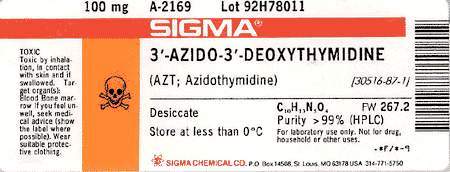
Label on bottles of AZT for experimental administration to primates and rodents
"Toxic by inhalation, in contact with skin and if swallowed. Target organs(s):
Blood Bone marrow. If you feel unwell, seek medical advice (show the label where
possible). Wear suitable protective clothing."
A positivist approach gives a bad account of the contemporary
natural sciences but has it ever given an account of science? Further features
of positivism identified by Lincoln and Guba are that it is value free and
there is an assumption of an objective reality which can be logically deduced.
Feyerabend (1972) talks about the work of Galileo and accuses him of "propaganda"
and 'psychological tricks". Galileo could not use argument alone to convince
his critics because his ideas flew in the face of the accepted worldview
so he used political means instead Feyerabend argues: "if the old forms
of argumentation turn out to be too weak a cause, must not these defenders
either give up or resort to stronger, more 'irrational' means?" When Galileo
discovered the moons of Jupiter he did not contact a few colleagues and
discuss it with them, nor did he publish his fndings in a learned journal.
He wrote a pamphlet about them, in Italian, with pictures, got it printed
up himself sold them in the streets and it became a best seller. Feyerabend
argues that progress in science cannot and has never been a result of a
logical approach but has always needed an element of political persuasion.
Paul Kennedy
In a time of universal deceit, telling the truth becomes
a revolutionary act.
George Orwell
You may not be able to change the world, but at least
you can embarrass the guilty.
Jessica Mitford
The upside of democracy is that every citizen has the right of access to information, the right to express, exchange and debate different points of view and, finally, to a vote. The downside, of course, is that each citizen is burdened with the responsibility of having to think for himself. That, in a nutshell, is what the investigative magazine noseweek is about, and why, prompted by the author of this book nearly two years ago, noseweek published a series of articles titled Rethinking AIDS.
For the first time South Africans were exposed to a critical re-evaluation of HIV and AZT undertaken by a number of very eminent scientists.
Clearly, many South Africans, reared in a society where for half a century they were forbidden to think for themselves, now find it too onerous a responsibility. They long for the quick fix. If AIDS is a problem, there must be a pill for it - which the government must pay for. Anyone, be it politician or pharmaceutical company, who is prepared to offer them that assurance, no matter how recklessly, is eagerly assumed to be right - because that lets us off the hook and instantly makes us feel good. The fact that it may not make the AIDS sufferers feel any better is, apparently, of no consequence.
Conversely, anyone who raises questions about AIDS exposes our vulnerability, and clearly makes many people, including the president of the South African Medical Research Council and the editor of the Mail and Guardian, very, very angry. Some abandon any attempt at thought - such as Sunday Times writer Laurice Taitz, who, in reporting the AZT controversy, gaily took it upon herself to declare to her readers: "the truth is the drug is not toxic." Read this book and you will know why I say the Sunday Times clearly does not take AIDS seriously when it assigns a writer of Ms Taitz's intellectual ability to the subject. And that when Dr William Makgoba, president of the Medical Research Council, declares he has read nothing critical about the effects of AZT on infants, this is a reflection not of the state of science on the matter, but of his own arrogant indolence.
Anthony Brink is a citizen who takes his rights and his responsibilities seriously. He has written a book for every intelligent citizen to read. If you are not a member of those professions; do not be intimidated by the medical and pharmacological terminology. Simply stick with the argument. It is devastatingly clear.
Reading this debate about AZT between Brink, a Pietermaritzburg advocate, and Dr Des Martin, president of the Southern African HIV-AIDS Clinicians Society, leads one to reflect on the question: "What is an expert?" Dr Martin may have the credentials of expertise, but Brink has the intelligence, investigative zeal and adherence to the principles of scientific enquiry that make for authority on this subject. He has tracked and digested every important reference to AZT in contemporary medical literature. The result is a comprehensive and alarming review of the findings of medical researchers on the clinical use of the drug.
AZT was originally prescribed in high doses on its own as a therapy for people who tested HIV-positive. Other journalists have reported the fraudulent nature of the clinical trials on which this usage was based. When independent, much larger trials eventually showed that when HlV-positive individuals who showed no sign of illness used AZT, it significantly increased, rather than decreased, their chances of developing AIDS - and of dying - this regimen was quietly dropped. That this has not yet become a major medical scandal is testament to the power and resources of pharmaceutical giant Glaxo Wellcome, and, by extension, the industry as a whole.
Now there are new, even more dangerous claims made for AZT, supported by well-funded lobbies. Anthony Brink demonstrates the sort of ability and dedication needed to properly scrutinise those claims. If you have any better information and arguments, let me know.
Martin Welz
Editor, noseweek
Cape Town.
Dedications and acknowledgements
To Thabo Mbeki, President of the Republic of South Africa,
for his sterling moral and political leadership in the AZT controversy in South
Africa; to Dr Manto Tshabalala-Msimang, National Minister of Health in South
Africa, for equal integrity and political courage; to Dr Ian Roberts, former
special advisor to the Minister of Health, for passing this debate on; to my
family for enduring a completely preoccupied and distracted husband and father
during the hundreds of hours stolen from them to research and write this work;
to my late father Robin Brink, whose enthusiasm for his medical negligence law
practice seems to have infected me with a similar interest in medical malfeasance;
to Arthur Wilke, my late grandfather by marriage, who developed my fascination
for microbiology as a boy; to journalists Martin Williams, Martin Welz, Martin
du Plessis, Vivienne Vermaak and Albertus van Wyk for their commitment to ventilating
the little-known facts about AZT in South Africa; to John Lauritsen, Michael
Ellner, Celia Farber and Joan Shenton for pioneering exposes of the drug; to
Dr Manu Kothari, Professor of Anatomy at Seth Gordhandas Sunderdas Medical College,
King Edward Memorial Hospital, Mumbai, India, for the deepest spiritual and
intellectual inspiration; to my friend in politics, Lluis Botinas of Barcelona,
Spain, executive director of Plural-21, for amour-piercing discussions about
the ideological and metaphysical substrates of modern medicine that made the
AZT disaster not merely possible but its logical consummation; to Ivan Illich
for his incendiary Medical Nemesis: The Expropriation of Health; to Bob
Leppo for sponsoring the cost of self-publishing this book (too hot for the
establishment publishing houses); to Dr Peter Duesberg, Professor of Molecular
Biology at the University of California at Berkeley, for kind encouragement
- fundamental disagreements about 'HIV' notwithstanding; to Dr Val Turner, consultant
emergency physician at the Royal Perth Hospital, for invaluable friendly advice
guidance throughout this project; to Dr Todd Miller, molecular pharmacologist
at the University of Miami, for similar help; to Eleni Papadopulos-Eleopulos,
biophysicist at the Department of Medical Physics, Royal Perth Hospital, for
everything!; and finally, to my very many unnamed friends in this subject world-wide
for your assistance and personal support.
It is very difficult, and perhaps entirely impossible,
to combat the effects of brainwashing by argument
Paul Feyerabend
Men, it has been well said, think in herds; it will be seen that they
go mad in herds, while they only recover their senses slowly, and one-by-one.
Charles Mackay
The great enemy of the truth is very often not the lie - deliberate,
contrived and dishonest - but the myth, persistent, persuasive and unrealistic.
John F. Kennedy
He is passionately involved in this fight of his and
does not see or sense what it involves! with the result that he will be
tripped up and will get himself into trouble, together with anyone who supports
his views. For he is vehement and stubborn and very worked up in this matter,
and it is impossible whenever he is around, to escape from his hands. And
this business is not a joke, but may become of great consequence, and the
man is here under our protection and responsibility.
Piero Guicciardiardini, Tuscan ambassador to Rome, complaining to Ferdinando,
Archduke of Tuscany, in December 1615 about Galileo's criticism of the Ptolemaic
theory of planetary motion.
In the David Lynch movie Blue Velvet, Geoffrey Beaumont returns to visit his friendly middle-American hometown Lumberville. Dawdling around in a field he comes across a severed human ear. He finds himself drawn into investigating a surreal criminal netherworld, and is propelled towards dreadful discoveries. For me, stumbling on to AZT has been a bit like that, and my enquiry into the history and pharmacology of AZT has been a Carrollian tour through a chamber of horrors. It's not the first time that medicine has gone mad, but I think that in time the marketing of AZT as an 'anti-HIV' drug will be judged the gravest pharmaceutical disaster since the days of strychnine, arsenicals, and mercurous chloride.
Having interested South Africa's leading investigative journalist Martin Welz in AZT and other trouble with HIV-AIDS medicine, I was commissioned in October 1998 to write an article for his whistleblowing journal noseweek. After I had done so, Welz decided to publish a general introductory article featuring AIDS sceptic Nobel laureate Kary Mullis first, and to go to press about AZT in a later issue (see January 2000 edition). At this time an intense public controversy was raging about the economics and morality of the South African government's decision not to provide AZT to rape victims and HIV positive pregnant women. The angry condemnation that the government drew for this decision from AIDS activists, journalists, opposition politicians, doctors, health workers and others was premised on the conviction that AZT was a life-rescuing miracle drug. The look of it was that desperate supplicants were being denied the sacrament. As the ensuing debate did not concern the drug's safety or efficacy, I thought publication of my critique shouldn't be delayed so I sent it to several South African newspapers. Martin Williams at the helm of the Citizen took the lead and published AZT: A Medicine from Hell on 17 March 1999.
South Africa's leading AIDS treatment authority, Dr Desmond Martin, rose to the piece and mounted a rebuttal two weeks later, entitled AZT: A Medicine from Heaven.
My rejoinder AZT and Heavenly Remedies was printed the following day. I thereafter revised and extended it substantially to incorporate discussion of important papers in the medical press excluded by the newspaper's space constraints, as well as a torrent of research papers published subsequent to our newspaper debate. Dr Martin's contentions about the 'AIDS epidemic' are treated separately in Appendix I to my reply.
After reading this debate, South African President Thabo Mbeki caused a local and international furore when on 28 October 1999 he ordered an enquiry into the safety of AZT. The following month, Dr Helen Rees and Dr Precious Matsoso, respectively the president and director general of the South African Medicines Control Council, received copies of both this debate and of the seminally important examination of the molecular pharmacology of AZT by Papadopulos-Eleopulos et al, published in a special supplement to the journal Current Medical Research and Opinion in mid-l999. This paper is discussed at the end of my reply to Dr Martin in my literature review AZT and Heavenly Remedies. Neither the toxicity data discussed in this debate nor the Perth group's explosive review seemed to have made any impression on these ladies. On 11 May 2000, Dr Rees responded to a warning issued by the European Medicines Evaluation Authority concerning "life-threatening skin and liver reactions" and other "potentially lethal side effects" of Nevirapine (Viramune), currently being marketed aggressively in South Africa. After the deaths of several black women on antiretroviral trials (including Nevirapine), she remarked nonchalantly that "many AIDS medications could cause liver and other problems. But the combination therapy can make a huge difference to people's lives." One wonders how the Medicines Control Council would have reacted had the victims been white. To her great credit, when she learned of the deaths, South African Minister of Health Dr Manto Tshabalala Msimang intervened directly and terminated the trials. Incredibly, "an uproar in South African medical circles" was reported in response to her move to prevent the deaths of more women. (On Sunday 13 August 2000 she announced that she had declined to make Nevirapine available to HIV positive pregnant women, and directed that it should not be used outside approved research environments.)
Dr Tshabalala-Msimang has rejected two reports on AZT by the MCC on the grounds that they deal inadequately with the drug's toxicity. On 15 March 2000, in the course of a radio interview, she expressed her dissatisfaction with the failure of a third report to address the issue of AZT's long term risks, and said that she had commissioned further investigation. But from the minister's forthright negative public statements on AZT and the even stronger sentiments emanating from Mbeki's office, it would seem to be 'game over' for those calling on the government to buy and supply it to pregnant women and rape victims.
In preparing the manuscript I decided to retain its original case-answer-reply debate format for two reasons. First, AZT: A Medicine from Hell serves as an easy introduction to the subject and a handy summary of the case against the drug, which I elaborate in my detailed reply to Dr Martin under the title AZT and Heavenly Remedies. Second, AZT: A Medicine from Heaven stands as an authoritative statement of the case for AZT by South Africa's leading AIDS doctor and academic AIDS expert. This lends balance to my treatment of the subject, and better equips readers to form their own conclusions. The research papers discussed in AZT and Heavenly Remedies are cited in an informal manner for the lay readership I had in mind, but they are sufficiently identified to enable any interested reader to locate them. Excerpts from the literature are precisely quoted however, and I have retained American spelling and journal house-styles regarding the use of upper and lower case in the titles of papers.
Concerning my polemical style and sardonic tone, I should explain that I wrote with politicking in mind. (It's a trick I picked up from Galileo. Unable to sell his discovery of the moons of Jupiter to his peers ("demonic visions" they said), he took to pamphleteering to the lay public instead.) This is because, after some dismal early encounters, I realised the futility of engaging with 'the experts', and decided to bring this appallingly dangerous drug to the attention of our political leaders and investigative journalists instead. My apprehensions were confirmed by the responses of 'the experts' to Mbeki's extraordinary initiative in directing an enquiry into the safety of AZT. On their own showing they hadn't examined the important recent medical literature on AZT with which the President was au fait and which founded his concerns, and they condemned him ignorant of it. Among them are Dr William Makgoba, president of the Medical Research Council, and South Africa's most eminent pharmacologist, Professor Peter Folb of the University of Cape Town. Consulted by Nature correspondent Michael Cherry to comment on the Perth group paper after Mbeki sent it to Cherry and asked him whether he'd read it, Folb contributed a disgracefully glib, uninformed, unreferenced, and tendentious opinion. Mbeki fittingly rejected it.
How South Africa's leading medical experts failed to meet their responsibilities to President Mbeki and to the South African public in the AZT controversy is a tale told in the latter part of AZT and Heavenly Remedies. We'll also examine the performance of some prominent journalists, AIDS activists, church leaders, the leader of the official opposition in parliament, and a judge of the Supreme Court of Appeal. And finally, Mbeki's remarkable knowledge of AZT's pharmacology and his insights into the inarticulate dynamics of the controversy are revealed in his own words, in letters and interviews quoted in full. He also gives the world an exemplary lesson in democracy in practice - the importance of independent entry, and the dangers posed by unthinking deference to 'the experts' in any institution or profession, especially the buffoons who run the medical show here.
No thanks from me to South Africa's AIDS activists and Human Rights lawyers, all of whom have looked away - one of whom said that she could not afford to examine the issues raised by me or she would be out of a job, and another who opined that I was a public menace and should be killed.
I'm frequently asked why this subject seized my interest. At heart I'm a science geek. I had a provisional patent when I was ten, and was keenly interested in chemistry and microscopy as a boy. From impressive experiments with high-explosives to triple-stained microscopic slides and photomicrographs of blood, assorted microbes and cross-sections of my grandmother's appendix, I drifted into audio electronics and equipped a recording studio and concert sound rig with most of the gear home-made. On my father's ill advice, I took Latin at school but biology has long been my fascination. Part of it has been that the more I read and the more I reflect on it, the more textbook biology drifts from fact and begins to resemble the holy doctrines of the Roman Catholic Church, supporting aggressively defended commercial and professional empires. I'm also one of those annoying inquisitive types with little respect for 'authority.' Being interested in cancer, the immune system and all that, I closely followed the drama of HIV-AIDS from the very beginning. Having accepted everything I read about it hook, line and sinker for years, I was inspired to examine the scientific foundations of the infectious AIDS paradigm afresh when I discovered in late 1996 that two of the most accomplished biologists in our time, Nobel laureates Walter Gilbert and Kary Mullis (discussed in my piece The AIDS Apostates) did not subscribe to it. That led me on to AZT. An irresistible imperative then possessed me. I couldn't just carry on with my picnic while a child was drowning, so I jumped in. Or to mix metaphors, it was like finding a grave in my garden, and then more the deeper I dug. Or watching good neighbours carted off by secret police, never to be seen again. Not the kind of thing one can look away from. Not me anyway.
After the conclusion of my brief newspaper debate with Dr Martin, I was moved to amplify my reply to him by the publication of a sudden flood of papers during the rest of 1999 and in 2000 - all with serious implications for the continued medical use of AZT, but none of which were surfacing in the public discourse about the drug. The death of a legal colleague after a single month's course of AZT in combination with a similar drug, 3TC, was an added impetus. That's how this book grew, its thread ripped undone and a new patch sewn in every time another paper on AZT came out in the medical press. And with every development in the controversy on the home front.
Because I amplified AZT and Heavenly Remedies considerably after it was printed in its original form, I thought it proper to afford Dr Martin an opportunity to respond. I wondered what he would make of the Olivero papers on the transplacental carcinogenicity of AZT, the Ha, Blanche and De Martino papers on AZT's foetal toxicity (and many more have since come in), and the vast survey of the literature on AZT and analysis of its pharmacology by Papadopulos-Eleopulos et al, which decisively debunks its manufacturer's claims. Dr Martin's colleague, fellow virologist Dr John Sim, intercepted the invitation, declined it, and proffered a sympathetic psychiatric diagnosis that I suffer mental perturbation. For an amusing exercise in Foucaultian deconstruction, Dr Sim's response is a priceless little treasure, and I have put it up as Appendix II.
On 28 June 2000, Cape Town architect Richard Hepner, the editor of the Health Independent, asked Dr Martin again whether he would like to refute or comment on my extended reply, AZT and Heavenly Remedies specifically the kernel of it, an excerpt I had prepared entitled Is AZT safe for babies? He declined the offer and said he stood by his piece AZT: A Medicine from Heaven, and suggested that Hepner simply publish it again. Offered the same opportunity, fellow AZT advocate Professor Gary Maartens at Groote Schuur Hospital in Cape Town asked Hepner, "What's in it for me?" and likewise declined it.
The value of this work, I hope, has been to systematise a large body of clinical and research data on AZT, render it in prose transparent to nonexperts and to launch it into the popular domain. I daresay the 'AIDS experts' could learn a thing or two from it too, but for reasons you'll see, I'm not optimistic. For locating the papers I've cited, all credit to David Crowe, Peter Duesberg, Bryan Ellison, Celia Farber, Billi Goldberg, Neville Hodgkinson, Matt Irwin, James Jerome, Heinrich Kremer, John Lauritsen, Todd Miller, Eleni Papadopulos-Eleopulos, David Rasnick, Val Turner, and Penn Xarwalyczha.
ANTHONY BRINK
Pietermaritzburg
15 November 2000
Sometimes legends make reality, and become more useful
than the facts.
Salman Rushdie
Again and again I am brought up against it, and again
and again I resist it: don't want to believe it, even though it is almost
palpable: the vast majority lack an intellectual conscience; indeed, it
often seems to me that to demand such a thing is to be in the most populous
cities as solitary as in the desert
Friedrich Nietzsche
Gentlemen, I beseech you. In the bowels of Christ, think
it possible that you might be wrong.
Oliver Cromwell
October 1998
The more ignorant, reckless and thoughtless a doctor is, the higher his reputation soars, even amongst powerful princes.
Praise of Folly
Desiderius Erasmus (c. 1466 -1536),
Dutch humanist.
National Health Minister Nkosazana Zuma has been condemned
by just about everyone recently for her heartless decision not to make a drug
called AZT available at State expense to HIV-positive pregnant women. It reduces
the risk, so it's said, of the transmission of HIV from mother to child. Politicians
and journalists from left to right have joined moist-eyed, handwringing doctors
pleading for the free provision of AZT to these women, their babies cruelly
deprived and doomed to die, they say.
In all the fuss about the minister's decision on AZT, no one has stopped to ask, "So what the hell is this stuff anyway?"
In 1964, a chemist, Jerome Horwitz, synthesised a sophisticated experimental cell poison for the treatment of cancerous tumour cells (1). It was called Suramin, or Compound S. Its formal title is 3'-azido-3'-deoxythymidine zidovudine for short - but everyone knows it by its nickname, AZT.
It works like this. Thymidine is one of the four nucleotides (building blocks) of DNA, the basic molecule of life. AZT is an artificial fake, a dead ringer for thymidine. As a cell synthesises new DNA while preparing to divide in order to spawn another, AZT either steals in to take the place of the real thing, or else disrupts the delicate process by interfering with the cell's regulation of the relative concentrations of nucleotide pools present during DNA synthesis. That's the end of the cell line. Cell division and replication, wrecked by the presence of the plastic imposter, comes to a halt. Chemotherapeutic drugs such as AZT are described as DNA chain terminators accordingly (2). Their effect is wholesale cell death of every type, particularly the rapidly dividing cells of the immune system and those lining our guts. Horwitz found that the sick immune cells went, but with so many others that his poison was plainly useless as a medicine. It was akin to napalm-bombing a school to kill some roof-rats. AZT was abandoned. It wasn't even patented. For two decades it l collected dust, forgotten - until the advent of the AIDS era.
As soon as Dr Robert Gallo made his famous announcement at a press conference on 23 April 1984 that his virus was the probable cause of AIDS, the race was on to find a pharmaceutical weapon against it. The stratospheric profit potential (since borne out) of being the first past the post was on everybody's mind. Obviously, if an already synthesised drug could be applied to the malady, it would short-cut most of the road-race there. AZT was fished off the shelf, along with numerous other abandoned brews, and put to some in vitro tests. It demonstrated a bright alchemical sparkle. On the basis of a reassuring but fallacious assertion that AZT was specifically antagonistic to HIV, and a thousand times more toxic to the latter than human cells generally, the drug went to clinical trials. The chaos into which the trials degenerated is a tale too long to tell here. It wouldn't be extravagant to call them fraudulent (3). (Subsequent trials consistently turned in opposite results.) At best, they were so incompetently staged that the data gathered under them were useless, save to note that one in five subjects taking AZT needed repeated blood transfusions to keep going. Small surprise, since the label on bottles of AZT supplied to laboratories bears a skull and cross-bones decal and cautions, "Toxic by inhalation, in contact with skin and if swallowed. Target organ(s): Blood, bone marrow...Wear suitable protective clothing."
Four months after the trials started, they were called off prematurely, on an interpretation of provisional results deemed positive for the drug by the trial overseer. Which is odd for a drug claimed to be on double-blind test, with neither doctor nor patient supposed to know who was on what, but there we are. Next it went before the FDA, to be approved in record time under huge political pressure from the gay lobby. Strong reservations were expressed at the hearing about its dreadful toxicity. The chairman's vote against it was defeated. As the most poisonous drug ever licensed by the FDA for indefinite use, and with the conviction apparently that the terrible new disease needed a terrible medicine, AZT was approved for use in extreme AIDS cases only for which you might want to read, in cases of people very ill with their presenting AIDS indicator disease, fungal pneumonia or what have you.
Scarcely a year later, in the orgy of stupidity that characterises the AIDS age, AZT was officially recommended for administration to entirely healthy people, whose misfortune it was to register positive to an HIV antibody test. Since the drug destroys the very immune cells allegedly attacked by HIV, the introduction of AZT as a treatment regimen for asymptomatic HIV-positive people saw the AIDS mortality rate among the previously well take off like a rocket. Five years and countless deaths later, and only after the disastrous results of the European Concorde trials were reported, was this murderous treatment recommendation reversed. AZT, it was found, did no good. Of course not. On any intelligent consideration of its pharmacological action, AZT could never be 'antiviral', any more so than arsenic could have cured the scurvy for which it was administered to sailors, and later to troops in the trenches in the First World War.
In Europe and the US, HIV-positive 'long term survivors' quietly gather to form groups, having sloughed off the terror of the death sentences imposed on them by their doctors. Here's the strangest thing. Without exception, what they find they all have in common is that they all eschewed (or quickly gave up) AZT, related nucleoside analogues like 3TC, and protease inhibitors. Some have pondered the unthinkable: that nearly all medically managed AIDS cases, always terminal, represent that balefully familiar phenomenon in the history of medicine, iatrogenocide - to be killed by the cure. Their reasoning becomes less obscure when one reads the AZT package insert. To do so might tempt one to wonder impertinently whether AZT isn't AIDS by prescription. Indeed, such perverse conjecture is actually confirmed in capitals: AZT use "MAY BE ASSOCIATED WITH HEMATOLOGIC TOXICITY INCLUDING GRANULOCYTOPENIA AND SEVERE ANEMIA" (massive destruction of white and red blood cells respectively3, and "PROLONGED USE OF RETROVIR HAS BEEN ASSOCIATED WITH SYMPTOMATIC MYOPATHY (gross atrophy of muscle tissue) SIMILAR TO THAT PRODUCED BY HUMAN IMMUNODEFICIENCY VIRUS". As to the latter claim, history will judge whether the thousands of healthy HIV-positive people who embarked on their metabolic poison treatment and wasted away (just as the AZT insert predicted) would have died had they ignored doctor's orders and thrown their pills away. Here the syphilis story is instructive.
Before the introduction of mercury and arsenic salts as a treatment for this clap, the organic brain damage and dementia that signalled 'tertiary-' or 'neuro-syphilis' was quite unknown to medicine. When penicillin replaced the older decoctions, it then disappeared. The moral is hard to miss.
One sane notion in that otherwise mad dance with death that chemotherapy for cancer involves is that you stop before you drop. Since healthy cells are always killed in the crossfire, the idea is to rescue the patient from going over the cliff along with the target bad cells, by taking him off the drug in the nick of time. That iron rule is broken in AIDS treatment. You're going to die, you're told, so better take the bitter medicine to the bitter end, to stave off the evil day. But as AZT heads like a heat-seeking missile for one's immune and energy transporting cells ("target organs: blood, bone marrow", remember?) dying of AIDS on AZT is a racing certainty. No one has ever been cured by AZT, but it sells like hot cakes all the same, still the most widely prescribed AIDS drug, and it reaps profits counted in billions.
Ever irrepressible as a medicine following one failure after another, in 1994 AZT was proposed as a treatment for pregnant women to prevent the transmission of HIV from mother to child, or so it was touted. Until then, it had been staunchly contraindicated during pregnancy. Generously underwritten by the drug's manufacturer, the study, ACTG 076, in which this startlingly novel use of AZT was tried, epitomises the junk-science that characterises so much AIDS research. Of 477 babies born to HIV-positive mothers in the trial, 13 in the AZT-treated group were born antibody-positive, against 40 in the placebo group. Apart from the lunacy of basing a decision to dose HIV-positive mothers with a cell-toxin as lethal as AZT on such feeble numbers, the underlying assumption that an HIV-positive test result predicts inevitable illness and death is a canard of modern medicine which, surprisingly, wants for evidence. Most babies 'seroconvert' to HlV-negative in any event, medicated or not. The other overarching myth is that the mere presence of antibodies in one's bloodstream signifies an active infection. Isn't it elementary that we carry antibodies to all sorts of pathogens that we have met and defeated? Isn't this first-year stuff? Advocates of AZT confess to being completely in the dark to account for the vaunted HIV blocking effect they claim. The reason why administering vitamin A instead works precisely the same magic might be a pointer to something less interesting: stressed health, thanks to chronic poor nourishment and living conditions. As for the positive immune signals a 'short course of AZT' can generate, poison ingestion provokes an immune reaction as the body rises to the insult. This is old hat.
Thrown to the wind have been all the safeguards set up to ensure that the Diethylstilbestrol and Thalidomide tragedies would never happen again. Before the hysteria of the AIDS age, women were enjoined even to avoid drinking beer during pregnancy. A recently reconfirmed active carcinogen, and teratogen too - cells not killed outright are nastily maimed - AZT freely crosses the placental barrier, so the package insert tells us cheerfully. Has anyone here paused to question whether a growing foetus comprising rapidly dividing cells should be exposed to a random terminator of DNA chain synthesis? Apparently not. Certainly not the recipients of Glaxo Wellcome's largesse from its slush fund of millions for those who make AIDS their business in this country. Nor our doctors carrying out bold medical experiments on the foetuses of pregnant black women - whose unlucky dice gives them a positive registration to the irredeemably and hopelessly non-specific 'HIV-antibody' test. Of course anyone in the game crying foul, and drawing attention to the reams of literature in the medical journals about the harm caused by AZT, especially to the young, is going to find himself sent off and defunded for keeps. Were it not for the amazing collapse of critical intelligence in the AIDS age, Glaxo Wellcome's heart-warming contributions to 'the fight against AIDS', with its research grants and cut-prices - described by the Mail and Guardian as a "bouquet of assistance" - might have been seen less as philanthropy than commerce, pure and simple. As it has achieved so successfully abroad, what better way to fix its local market than by buying off our medical establishment and 'AIDS activist' crowd with lolly aplenty to fund their dumb projects? And by enticing our government with current discounts for its rancid wares, in order to hook longer-term contractual commitments.
The AIDS Law Project at Wits currently busies itself with plans to sue the minister in the High Court for an order compelling her to respect "pregnant women's rights to AZT", and dole it out on the house. Then again, its 'AIDS activist' lawyers gratefully take junkets to AIDS conferences in holiday cities overseas at Glaxo Wellcome's expense. The 'human rights' they pursue might be better served were these legal crusaders to call off their foolish case and think of ways best to bite the hand that feeds them: Several actions for loss of support have been launched against Glaxo Wellcome in England and the USA, arising out of the deaths of family members killed by their doctors' prescriptions of AZT (5).
Although she has justified her perplexing decision on AZT on the basis of financial considerations exclusively, saying she would rather spend her money on "AIDS education", one day Health Minister Nkosazana Zuma will be praised for her great prescient wisdom in keeping AZT away from pregnant women and their foetuses. A bit like much-lauded Dr Francis Kelsey, whom Kennedy honoured for her wise perspicacity in sparing the USA the Thalidomide calamity, when in truth her only notable trait was her fortuitously inefficient foot-dragging in obstructing the start of the FDA approval process.
It's high time that everyone involved in this nightmarish mess went off to do some basic homework in the subject in which they have so much to say for themselves.
(1) Horwitz, J.P., Chua, J. and Noel, M: Nucleosides. V. The monomesylates of 1-(2'-Deoxy-beta-D-lyxofuranosyl)thymine, Journal of Organic Chemistry 29: 2076-2078 (1964). However, an American biochemistry professor with whom I have corresponded privately makes a documented prior claim to the first synthesis of AZT in the autumn of 1961. He prefers both to remain anonymous and not to upset the settled history based on the first to publish. He mentioned to me that he employed AZT as an experimental cell-poison against leukaemic blood cells, and against the bacteria Salmonella Potsdam and E. coli. (Studies in the '90's have confirmed AZT's activity against all three.) He pointed out that after publishing his paper, Horwitz investigated the activity of AZT against Jensen tumour cells, and not against leukaemic blood cells as I reported originally in line with the conventional history. He also criticised my repetition of the claim that Horwitz abandoned AZT because of its toxicity (see for example the excerpt from Radford's article immediately below). He said the reason was its inactivity against target cancer cells, while the acute toxicity of AZT emerged only later. Actually, Horwitz has made contradictory statements about this. Reviewing this essay, he remarked, "...you are justified in sounding a warning against the long-term therapeutic use of AZT, or its use in pregnant women, because of its demonstrated toxicity and side effects. Unfortunately, the devastating effects of AZT emerged only after the final level of experiments were well underway, that is, the experiments which consisted of giving AZT to large numbers of human patients over a long period of time. Your effort is a worthy one... I hope you succeed in convincing your government not to make AZT available..."
In an enthusiastic article about the pharmaceutical industry in the UK, Tim Radford wrote in the Guardian on 30 March 2000, "They settled on an anticancer drug which had proved too toxic to use against cancer: It was AZT... Since DNA is a ubiquitous part of life, compounds that act against it can potentially stop life forms like bacteria, like viruses, like humans. Of course, they can cause cancer as well, so balancing the risks is an essential part of the fascination." The fascinating risks for the development of cancer posed by the administration of AZT are examined extensively in my reply to Dr Martin, AZT and Heavenly Remedies.
(2) DNA chain formation termination - described in this paragraph - is generally understood to be the basic pharmacological action of AZT. Glaxo Wellcome asserts in its PRODUCT INFORMATION release about AZT, "In vitro, zidovudine triphosphate has been shown to be incorporated into growing chains of DNA by viral reverse transcriptase. When incorporation by the viral enzyme occurs, the DNA chain is terminated." In a glitzy CD dished out at the 13'h International AIDS Conference in Durban, Glaxo Wellcome claims similarly: "Nucleoside Reverse Transcriptase Inhibitors - NRTIs - [like AZT are] phosphorylated by cellular enzymes... competitively inhibit viral DNA synthesis [and are incorporated] into the DNA thus terminating DNA synthesis."
This conventional model of AZT pharmaco-kinetics is accepted by a vociferous critic of the drug, Dr Peter Duesberg, professor of molecular biology at the University of California at Berkeley. His criticisms go principally to the unacceptable toxicology profile of AZT, and do not take issue with its manufacturer's claims about its mode of action. Accordingly, in Inventing the AIDS Virus he writes, "While on AZT, Bergalis once told a reporter she hoped to also get dideoxyinosine (ddI), another experimental AIDS drug. This drug and ddC, two products of cancer chemotherapy research, work in precisely the same way as AZT. Chemically altered building blocks of DNA, they enter the growing chain of DNA while a cell is preparing to divide and abort the process by preventing new DNA building blocks from adding on... So, like AZT, ddI and ddC kill dividing cells and have similar toxic effects. They destroy white blood cells and therefore can cause AIDS." Jay Levy, professor of medicine and director of the Laboratory for Tumor and AIDS Virus Research at UCSF (and unlike Duesberg, a vocal protagonist of the orthodox HIV-AIDS model) said in Newsday on 12 June 1990, "AZT can only hasten the demise of the individual. It's an immune disease and AZT only further harms an already decimated immune system." Duesberg's most recent and most detailed critique of AZT, co-authored with pharmacology biochemist David Rasnick Phd, is contained in The AIDS Dilemma: Drug diseases blamed on a passenger virus, published in Genetica in mid-1998. It can be read on the Internet.
As Mycek et al put it in their text Pharmacology (2nd ed.), it is trite that before the drug can be incorporated into DNA, "AZT must be converted to the corresponding nucleoside triphosphate by mammalian thymidine kinase in order for it to exert its antiviral activity." Recognising this, Glaxo Wellcome claims, "Within cells, zidovudine is converted to the active metabolite, zidovudine 5'triphosphate (AztTP), by the sequential action of cellular enzymes." But numerous investigations since AZT was approved by the FDA in the US have found that AZT is triphosphorylated in vivo very inefficiently, and at least one order of magnitude lower than necessary for its claimed anti-HIV effect. Consequently viral DNA chain termination by the incorporation of metabolically altered AZT into DNA in place of natural thymidine is insignificant in relation to other activities of the drug, inter alia as a potent oxidising agent. This subject will get a close look in my reply to Dr Martin, AZT and Heavenly Remedies. AZT also disrupts cell division by perturbing the relative levels of natural nucleotide pools, with the drug acting as a 'sink' and sponging up phosphate molecules essential to the process. Starved of these molecules and denied the energy they provide, dividing cells die.
This pivotal criticism of the conventional model of the pharmacology
of AZT - namely that AZT is not in fact triphosphorylated as Glaxo Wellcome
claims it is - is made and elaborated extensively in a paper discussed in my
reply to Dr Martin, A Critical Analysis of AZT and its Use in AIDS by Papadopulos
Eleopulos et al, published in mid-1999 as a special supplement to the
academic medical journal Current Medical Research and Opinion. Like Duesberg
and Rasnick's paper mentioned above, it is archived on the website www.virusmyth.com.
Librapharm also has it posted at:
http://www.librapharm.co.uk/cmro/vol_15/supplement/main.htm
(3) The way in which AZT was approved and reached the market as an AIDS drug has been closely researched and reported by John Lauritsen (Poison by Prescription: The AZT Story, and The AIDS War), Celia Farber (Sins of Omission, The AZT Scandal), Bruce Nussbaum (Good Intentions), Elinor Burkett (The Gravest Show on Earth), Peter Duesberg ('With therapies like these who needs disease' in Inventing the AIDS Virus) Martin Walker (Dirty Medicine and HIV, AZT, Big Science & Clinical Failure) and Steven Epstein (Impure Science: AIDS, Activism, and the Politics of Knowledge). It's an amazing story, and is certain to haunt Glaxo Wellcome in litigation sooner or later. Some of this writing can be read on the Virusmyth website mentioned above.
(4) In his address to the National Council of Ministers on 28 October 1999, during which he ordered an investigation into the safety of AZT, President Mbeki mentioned these lawsuits. Glaxo Wellcome's representatives in South Africa immediately denied them. A few days later, the President's office asked me for details. I referred to the English cases of Threakall and others, and the American Nagel and McDonnell cases, all of which had been reported in the press. A month later however, in a telephone call from Susan Threakall's English solicitor Graham Ross, I was informed that her action, his lead case, had been withdrawn a couple of months earlier. In March 2000, Paul Headlund, the American attorney who had handled the Nagel and McDonnel cases, told me that the claims had not been pursued Glaxo Wellcome was therefore technically correct in disputing Mbeki's statement that there were cases concerning AZT pending against it at that time. What Glaxo Wellcome omitted to mention was that a month earlier a court in Maine in the US had dismissed a bid by health authorities to compel Valerie Emerson to administer AZT to her son after her daughter had died on the drug, and held, "She feels that she has willingly and in good faith surrendered up the life of one child to the best treatment medicine has to offer and does not want to do the same with the next. Nikolas has made significant strides recently in gaining weight and overcoming developmental deficits, and appears happy and healthy. She does not want to see this child take on the pallor and pain of a sick and dying child."
A claim is currently in preparation against Glaxo Wellcome for the widow and minor son of an attorney in South Africa killed by a single month's course of AZT and 3TC treatment. The action will be the first worldwide in which the integrity of Glaxo Wellcome's claims about the molecular pharmacology of AZT and the adequacy of the information provided about its hazards will be examined by a trial court in the light of the Papadopulos Eleopulos et al review paper and others canvassed in my reply to Dr Martin. It will be the plaintiffs' case that AZT is an unreasonably dangerous drug with no therapeutic or palliative value as an 'antiretroviral' whatsoever. For another action involving AZT poisoning, but brought on a different basis, see An AIDS Case: A look at the test for 'the virus itself' in the appendices to this debate.
Desmond J Martin
31 March 1999
THE Southern African HIV/AIDS Clinicians Society responds to an article AZT: A Medicine from Hell, by Anthony Brink, published in the Citizen on March 17.
Human Immunodeficiency Virus (HIV) disease is a major global health problem and is associated with a significant morbidity and mortality.
The number of people infected with HIV is rapidly increasing; recent estimates indicate more than 30 million adults and 1,1 million children are infected worldwide. In South Africa it is estimated that in excess of three million people are infected. It has been predicted that 40 million persons, including four to five million children, will have acquired the infection by the year 2000. Mother-tochild transmission, the major cause of HIV infection in infants, has led to a 30 percent increase in the mortality rate of infants and children in recent years.
The introduction of highly active anti-retroviral therapy (HAART) has been good news. In the US the age-adjusted death rate among people with HIV in 1997 was less than 40 percent of what it was in 1995. This experienced was mirrored in other Western nations where dramatic declines in morbidity and mortality as a result of the increasing use of combination anti-retroviral therapy has occurred; many of these regimens contain AZT.
When AZT and other nucleoside analogues were first introduced they were used as monotherapy (a single drug was used). Clinical experience quickly showed that the effect of a single drug was short-lived, as resistance to the drug developed. It was then shown that by using a combination of drugs, a more lasting effect was obtained.
BENEFICIAL
An added advantage of combination therapy was that the drugs acted at different stages of the replication cycle of the virus. This option therefore made sense; the risk of drug resistance was drastically reduced and long-lasting beneficial effects have been recorded. AZT together with 3TC and a protease inhibitor is a combination that has been found to be highly effective.
Impaired quality of life associated with the progression of HIV disease has a profound effect on the patient and leads to an increase in the direct medical and non-medical costs of illness. Published studies have shown that patients on combination therapy with AZT and 3TC have been able to maintain or more importantly improve their quality of life.
So effective are combination anti-retroviral regimens in reducing the complications of the disease that there are anecdotal reports emanating from the US that Aids wards are being emptied of their patients and in some instances wards have been closed. Clinicians are now treating patients in outpatient settings and the status of the disease has changed to that of a chronic manageable disease.
It is however, in the arena of prevention of HIV infection that AZT has produced dramatic results.
Worldwide, approximately 500 000 infants become infected each year as a result of mother-to-child transmission. In some African countries 25 percent of pregnant women are infected with HIV. Without preventative therapy up to a third of their babies may become infected; many of these children will die in their early years.
In 1994 a clinical trial conducted in the US and France (ACTG 076) demonstrated that AZT given to mothers during their pregnancies, intravenously during labour and orally to their babies for six weeks reduced the risk of mother-to-child transmission by 67 percent. This regimen has been adopted as the "standard of care" in the US.
However, it is unsuitable for developing countries because of its complexity and cost.
To address the problem the Ministry of Health in Thailand introduced a trial of simpler and less expensive regimens of AZT to prevent mother-to-child transmission. This trial showed that a simpler regimen of AZT given orally to mothers in the last weeks of pregnancy reduced the risk of transmission by 50 percent. This short course AZT regimen (so-called Thailand regimen) is much more suitable for developing countries than the US-protocol because it is much easier to administer and less costly ($50 v $800).
Preliminary data from United Nation Aids Programme (UNAids)- sponsored studies have also demonstrated that even more abbreviated, affordable, AZT containing regimens may be equally effective.
Another instance where preventative AZT therapy is commonly used is in the event of a health-care worker (HCW) sustaining an occupational exposure to blood or body fluids from an HIV infected person (e.g. needle-stick injury).
These occurrences are usually charged with much emotion and HCW's are, quite justifiably, entitled to appropriate post-exposure prophylaxis to be commenced as soon as possible after the injury. A multinational study conducted among occupationally exposed HCW's demonstrated a 79 percent reduction in the risk of acquiring HIV infection when AZT was used as post-exposure prophylaxis.
TOXICITY
The toxicity of AZT is a very real issue however, the toxicity (particularly bone marrow toxicity) is usually noted inpatients with advanced HIV disease whose bone marrow function may already be impaired by HIV disease. Toxicity does not appear to be a problem during short-terrn use (post exposure prophylaxis or mother-to-child transmission prevention).
Nevertheless vigilance and monitoring on the part of the clinician is necessary If toxicity occurs the drug should be stopped and other drugs substituted and any appropriate management should occur. Toxicity in most cases is reversible In addition, careful monitoring of babies whose mothers took AZT during pregnancy has failed to show any significant abnormal findings.
Thus AZT in combination with other drugs has proved to be invaluable for the treatment of those already infected with HIV and has also proved to be a potent preventative agent in the mother-to-child setting and for occupational exposures For these very reasons the drug AZT deserves the accolade: AZT: a medicine from heaven.
Desmond J Martin is president of the Southern African HIV/Aids
Clinicians Society.
Note: Dr Martin has no conflict of interest and has not received financial sponsorship
from Glaxo Wellcome.
What can you do against the lunatic...who gives your arguments a fair hearing
and then simply persists in his lunacy?
Winston Smith, in Nineteen Eighty-Four
George Orwell
[1] AZT - pure poison? Nonsense, retorts Dr Martin, with the avuncular bedside reassurance of doctor who knows best. AZT, he proclaims, is God's own medicine.
[2] In his letter covering his response to my essay AZT: A Medicine from Hell, Martin rebukes the editor of the Citizen for his "gross irresponsibility" in publishing my piece without having first obtained the views of "the established experts." In this reply, we'll have a look at what experts from the top drawer of the AIDS research establishment have to say about AZT, the kind of guys who get to publish in the world's most splendid medical and scientific journals.
[3] The first clinical report from practising doctors that something was terribly wrong with Dr Martin's Heavenly Medicine was filed by Dr Laura Bessen and her colleagues in March 1988. In a letter to the New England Journal of Medicine headed Severe Polymyositis-like Syndrome Associated with Zidovudine Therapy of AIDS and ARC, they reported, "All patients had an insidious onset of myalgias, muscle tenderness, weakness, and severe muscle atrophy favouring the proximal muscle groups. Physical examinations revealed varying degrees of muscle weakness and grossly apparent atrophy. Weight loss due to muscle loss was uniformly noted; in one patient, the loss was a striking 18kg." Bessen et al noted, "We did not observe this illness before zidovudine was available. . . " It sure wasn't the HIV, because fortunately for the patients they were treating, the doctors found that "the syndrome was ameliorated after the drug was stopped." But the patient doesn't always recover: In their review paper Mitochondrial toxicity of antiviral drugs in Nature Medicine in 1995, Lewis and Dalakis noted, "In some cases, reversal of symptoms corresponds to cessation of therapy; in others toxicity persists..." They also drew the important distinction: "It is self-evident that ANAs [antiviral necleoside analogues] like all drugs have side-effects. However the prevalent and at times serious ANA mitochondrial toxic side-effects are particularly broad ranging..."
[4] Two months after Bessen's letter, Gorard et al reported their observation; of Necrotising myopathy and zidovudine in the Lancet: "A 24-year-old woman presented in January 1988 with a 2-week history of progressive leg weakness and difficulty in walking. She had been found to be HIV antibody positive in April 1986, and in October 1986, Pneumocystis carinii pneumonia developed. After the pneumonia she had been on zidovudine 200 mg 4 hourly and had required three blood transfusions for consequent myelosuppression [white blood cell depletion]. On examination there was proximal weakness but no wasting of the upper and lower limbs, tenderness of the shoulders and thighs, and preserved deep tendon reflexes. Her gait was waddling and she was unable to rise out of a chair without using her arms...7 days after zidovudine withdrawal, her proximal weakness and muscle tenderness had improved significantly, and muscle force was clinically normal at follow-up 2 months later." In September in the same journal, Helbert et al published their findings on Zidovudine-associated myopathy: "A severe proximal myopathy, predominantly affecting the legs, seems to be a significant complication of long-term zidovudine therapy, even at reduced doses; it affected 18% of our patients who had received treatment for more than 200 days. Other drugs could not be implicated. The pathogenesis is obscure; the myopathy resolves on cessation of zidovudine, but not on dose reduction..." For some people anyway. After just a month's course of AZT treatment, a colleague of mine lost most of his muscle mass and died several months later weighing 42kg. A client has suffered permanent leg muscle damage and can no longer walk more than short distances without experiencing the fall-down fatigue of a marathon runner at the end of his race.
[5] Beset, Gorard, Helbert and their colleagues' clinical observations were investigated and reported by Dalakas et al in 1990 in the New England Journal of Medicine. Comparing the myopathy caused by AZT with that presumed to be caused by HIV, they concluded that "long-term therapy with zidovudine can cause a toxic mitochondrial myopathy, which...is indistinguishable from the myopathy associated with primary HIV infection... Before 1986, when zidovudine (formerly called azidothymidine) was introduced, the number of patients with HIV-associated myopathy was small, and myopathy was considered a rare complication of HIV infection. During the past two years, an increasing number of patients receiving long-term zidovudine therapy have had myopathic symptoms such as myalgia (in up to 8 percent of patients), elevated serum creatine kinase levels (in up to 15 percent), and muscle weakness. These symptoms generally improve when zidovudine is discontinued." In 1994, Dalakas et al elaborated on this in their paper in Annals of Neurology with the title summing it up, Zidovudine-Induced Mitochondrial Myopathy is Associated with Muscle Carnitine Deficiency and Lipid Storage: "The use of zidovudine (AZT) for the treatment of acquired immunodeficiency syndrome (AIDS) induces a DNA depleting mitochondrial myopathy, which is histologically characterized by the presence of muscle fibres with 'ragged-red'-like features, red-rimmed or empty cracks, granular deterioration, and rods (AZT fibres)... We conclude that the muscle mitochondrial impairment caused by AZT results in (1) accumulation of lipid within the muscle fibres owing to poor utilisation of long-chain fatty acids, (2) reduction of muscle carnitine uptake by the muscles, and (3) depletion of energy stores within the muscle fibres." In Clinical Pharmacology (1997, 8th ed.) Laurence, Bennet, and Brown say about AZT, "A toxic myopathy (not distinguishable from HIV-associated myopathy) may develop with long term use." In fact whether muscle wasting ever occurs among HIV-positives who avoid AZT and related drugs is doubtful: Cooker et al mentioned in AIDS in 1991 that "A clinically significant myopathy that precedes the development of zidovudine associated mitochondria myopathy has been a rarity in our experience." In February 1999, in Neurotoxicology, Waclawik et al published their investigation of whether the direct muscle cell toxicity of AZT is aggravated by retroviral infection. And found in the negative, as the conclusion in the title tells: Zidovudine [AZT] myotoxicity: quantitative separation of AZT effects on proliferation and differentiation of muscle cells in vitro. Lack of myotoxicity potentiation by retrovirus.
[6] Till et al reported their investigation of AZT-muscle damage in Annals of Internal Medicine in 1990 under the pointed title Myopathy with Human Immunodeficiency Virus type 1 (HIV-1) infection: HIV-I or zidovudine?: "Results of quadriceps muscle biopsies done on our patients who responded to zidodvudine withdrawal showed severe myopathic changes without evidence of inflammatory infiltrates. Electron microscopy revealed many ultrastructural changes, including destruction of the sarcomere profile with zband change in the form of streaming and rod bodies. Muscle mitochondria showed wide variation in size, swelling, degeneration and laminar bodies...There have been 40 case reports of patients who have developed while taking zidovudine (including our 5 symptomatic patients). Zidovudine therapy was discontinued in 34 of these patients and 26 improved." Arnardo et al reported their comparison of muscle biopsies from HlV-positive patients treated with AZT and those who had not in the Lancet in 1991. In the AZT exposed tissues they observed "inflammatory myopathy with abundant ragged-red fibres (RRF)... No abnormal mitochondria were noted histologically in samples from the HIV-positive patients who had not received zidovudine." Pezeshkpour et al reported a similar comparison in Human Pathology in the same year, "...muscle biopsy specimens from [HIV positive] patients show a variety of features, including phagocytosis, degeneration or necrosis of muscle fibres, endomysial or perimysial inflammation, cytoplasmic bodies, and nemaline (rod) bodies. Following the introduction of zidovudine (AZT) for the treatment of the acquired immunodeficiency syndrome (AIDS), the number of HIV-positive patients with myopathic symptoms has increased. Zidovudine has been implicated as the cause of the myopathy because these symptoms generally improve when AZT is discontinued." Upon a comparative analysis they found "specific structural changes [to muscle tissue] associated only with AZT, but not with HIV [and that] mitochondrial abnormalities are unique to AZT-treated patients. Since mitochondrial DNA is specifically reduced, the structural changes [to AZT-exposed muscle tissue] noted on electron microscopy are probably associated with mitochondrial dysfunction. Zidovudine, a DNA chain terminator that inhibits the mitochondrial y-DNA polymerase is toxic to muscle mitochondria." Any doubts were settled by Mhiri et al in Annals of Neurology, also in 1991. Their comparative study "identified a distinct clinicopathological picture of zidovudine-induced myopathy associated with mitochondrial dysfunction", hence the title: Zidovudine Myopathy: A Distinctive Disorder Associated with Mitochondrial Dysfunction.
[7] In their paper Massive Conversion Of Guanosine To 8-Hydroxy-Guanosine In Mouse Liver Mitochondrial DNA By Administration Of Azidothyrmidine published in Biochemical and Biophysical Research Communications in 1991, Hayakawa et al confirmed, "Recently, acquired mitochondrial myopathy caused by AZT therapy in patients with AIDS was reported: typical ragged red fibres and paracrystalline inclusions in mitochondria were seen in biopsied muscle specimens from such patients. As there is ample evidence indicating that mitochondrial myopathy is phenotypic expression of mutant mtDNA, the authors intended to establish an animal model of the disease as well as to elucidate the mechanism of mtDNA mutation by examining mouse liver mtDNA after administration of AZT." They found that "oral administration... for four weeks converted dG [deoxyguanosine, another nucleotide, i.e. basic building block of DNA] in liver mtDNA [mitochondrial DNA] hydrolysate massively to 8-OH-dG [the oxidised, destroyed form of the DNA nucleotide]. Even below 1/10th the dose given to patients (AZT 1mg/kg/day) 25.2% of the total dG was converted to be 8-OH-dG. 38.1% of the total dG was converted to 8-OH-dG by AZT, 5mg /kg/day [half the human equivalent dose]....This suggests that orally administered AZT interrupts mtDNA replication. Another possible cause is that mis-terminated mtDNA would result in impaired mitochondrial inner membrane, leading to production of OH which induces formation of a DNA protein cross-link involving cytosine and tyrosine. Such cross-link disturbs the extraction of mtDNA resulting in its low recovery from mitochondria... Recently it was reported that a single 8-OH-guanine residue inserted in a viral genome induced a G.A mispair during replication leading to the G.C to T.A transversion mutation, reflecting structural and conformational changes imposed by the adducted purine within the DNA helix. MtDNA exists in the matrix of mitochondria, so that the leak of oxygen radicals from impaired respiratory chain with AZT attacks guanine residue converting to 8-OHguanine, leading to further mtDNA mutation. There is a general consensus that mitochondria are less efficient in repairing DNA damage and replication errors than the nucleus. For example they lack excision repair and recombinational repair mechanisms. The higher steady state of oxidative damage in mtDNA than in nuclear DNA is most likely due to a copious flux of oxygen radicals, inefficient repair, and the nakedness of mtDNA. Thus oxidative damage of mtDNA can be accumulated during even short periods of AZT administration. Several point mutations found in MDT of patients with mitochondrial myopathy could be originated from the oxygen damage of MDT. Conformational changes in the DNA helix by the adducted Purina would promote deletion of MDT, which is common in degenerative neuromuscular diseases. The animal model of mitochondrial myopathy with AZT administration reported here seems to be useful for elucidating the mechanism of MDT mutations leading to myopathy. However, for AIDS patients, it is urgently necessary to develop a remedy substituting this toxic substance, AZT." In 1991, in Neuromuscular Disorders, Chariot and Gherardi published a supporting paper Partial Cytochrome c Oxidase Deficiency and Cytoplasmic Bodies in Patients with Zidovudine Myopathy, "Long term therapy with [AZT] can induce a toxic myopathy associated with mitochondrial changes." Most recently, in their paper Zidovudine-induced experimental myopathy: dual mechanism °f mitochondrial damage in the Journal of Neurological Science in July 1999, Masini et al "investigated the in vivo effect of AZT in an animal model species (rat) not susceptible to HIV infection. Histochemical and electron microscopic analyses demonstrated that, under the experimental conditions used, the in vivo treatment with AZT does not cause in skeletal muscle true dystrophic lesions, but rather mitochondrial alterations confined to the fast fibers. In the same animal models, the biochemical analysis confirmed that mitochondria are the target of AZT toxicity in muscles" particularly "mitochondria energy transducing mechanisms." Do you think the manufacturer paid any heed to any of this? With all that money rolling in, you must be joking.
[8] The burden of these reports is plain: AZT rots your muscles. As it does so, the patient enjoys Martin's "quality of life" while he inexorably slips away with the wasted appearance of a concentration-camp victim. Compounding this is the fact that at the same time that his muscle tissue is being poisoned and is dying off, the patient literally starves to death, thanks to the decimation of the cells that line his gut walls. This hampers the digestion of what food is retained in the gut following intense biliousness and diarrhoea after AZT ingestion. (A client of mine reported, "The worst experience of my life.") Throw a protease inhibitor into the 'cocktail', and protein digestion is fouled into the bargain, by inhibiting cathpepsin, an essential digestion enzyme. When the patient dies, as he inevitably must, the image of the gaunt white AIDS patient who horribly and mysteriously wastes away is reinforced in the popular consciousness. Another AIDS case for the statistical tally. And to add to the quilt. Of course nobody cared much about disease-caused wasting in Africa, commonplace from time immemorial where poverty-linked tuberculosis, malaria and gut illnesses are endemic, until its opportunities for research grants popped up when this wasting was renamed 'slim disease' or AIDS. In the AIDS age, rural poor don't die of the privations of poverty any more, they die of promiscuity. The 'AIDS experts' shift the cause of disease from outside to inside. How convenient in the age of the 'global economy'.
[9] How rapid a poison is AZT? Some people last a couple of years. On the other hand my colleague was killed by a single month's course of AZT (stretched over two because he found it so unbearable). This is no mystery in the light of numerous investigations of how quickly the poison sets in. In February 1999, in Free Radical Biological Medicine, Szabados et al looked at the Role of reactive oxygen species and poly-ADP-ribose polymerase in the development of AZT-induced cardiomyopathy in rats: "The short term cardiac side-effects of AZT (3'-azido-3'-deoxythymidine, zidovudine) was studied in rats to understand the biochemical events contributing to the development of AZT-induced cardiomyopathy. Developing rats were treated with AZT (50 mg/kglday) for 2 wk and the structural and functional changes were monitored in the cardiac muscle. AZT treatment provoked a surprisingly fast appearance of cardiac malfunctions..." In 1991 in Laboratory Investigations, Lamperth et al reported Abnormal skeletal and cardiac muscle mitochondria induced by zidovudine (AZT) in human muscle in vitro and in an animal model within three weeks of experimental exposure to "AZT at doses equivalent to the total daily dose used in acquired immunodeficiency syndrome patients. After 19 days, the AZT-treated myotubes in tissue culture exhibited abnormal mitochondria characterized by proliferation..., enlarged size, abnormal cristae and electron-dense deposits in their matrix. The changes were partially reversible after AZT withdrawal. Rats treated with AZT developed weight loss, lOO-fold elevation of creatine kinase, and increased serum lactate and glucose." Corcuera-Pindado et al reported Histochemical and ultrastructural changes induced by zidovudine in mitochondria of rat cardiac muscle in the European Journal of Histochemistry in 1994: "We carried out an ultrastructural and histoenzymatic study in rat cardiac muscle. Groups of animals (3 rats per group) were given drinking water with or without AZT (1 or 2 mg AZT/ml). After 30, 60 and 120 days, the hearts were studied by light and electron microscopy... The ultrastructural study showed a disruption of cristae and an increased size of mitochondria in rats treated with AZT for 30- and 60-days." Lewis et al reported that Zidovudine induces molecular, biochemical, and ultrastructural changes in rat skeletal muscle mitochondria in the Journal of Clinical Investigations in 1992: "Molecular changes in a rat model of AZT induced toxic myopathy in vivo helped define pathogenetic molecular, biochemical, and ultrastructural toxic events in skeletal muscle and supported clinical and in vitro findings. After 35 d of AZT treatment, selective changes in rat striated muscle were localized ultrastructurally to mitochondria, and included swelling, cristae disruption, and myelin figures. Decreased muscle mitochondrial (mt) DNA, mtRNA, and decreased mitochondrial polypeptide synthesis in vitro were found in parallel. Mitochondrial molecular changes occurred in absence of altered abundance of cytosolic glyceraldehyde-3phosphate dehydrogenase, or sarcomeric mitochondrial creatine kinase mRNAs."
[10] In his answer to my essay, Martin admits that AZT destroys bone marrow, but then hedges: HIV "may" be the real culprit. This is a tired old tale rehashed. Mercury and arsenic salts - doctors' favourites for ages poisoned the patient, whose death was then blamed on unbalanced humours or germs. That AZT destroys bone marrow is frankly declared by its manufacturer. So let's not fudge. In 1987 in Annals of Internal Medicine, Gill et al reported Azidothymidine Associated with Bone Marrow Failure in the Acquired Immunodefciency Syndrome (AIDS): "Four patients with [AIDS], and a history of Pneumocystis carinii pneumonia developed severe pancytopenia [marked decrease in all types of blood cells]... 12 to 17 weeks after the initiation of azidothymidine therapy... Partial bone marrow recovery was documented within 4 to 5 weeks in three patients, but no marrow recovery has yet occurred in one patient during the more than 6 months since AZT treatment was discontinued." In the same year in the New England Journal of Medicine Richman et al reported The Toxicity of Azidothymidine (AZT) in the Treatment of Patients with AIDS and AIDS Related Complex: "Anemia developed in 24% of AZT recipients and 4% of placebo recipients (P<0.001). 21% of AZT recipients and 4% of placebo recipients required multiple red-cell transfusions (P<0.001). Neutropenia (<500 cells per cubic millimeter) occurred in 16% of AZT recipients, as compared with 2% of placebo recipients (P<0.001)." The next year, Walker et al followed up in Annals of Internal Medicine reporting Anemia and erythropoiesis in patients with the acquired immunodeficiency syndrome (AIDS) and Kaposi sarcoma treated with zidovudine: "In the current study, transfusion-dependent anemia occurred in 6 of 15 patients with AIDS and Kaposi sarcoma who were receiving zidovudine therapy. A11 6 affected patients required their first blood transfusion between 3 and 9 weeks after starting zidovudine therapy, and each required 4 to 14 units of packed erythrocytes to maintain a hemoglobin level above 100 g/L over a 12-week study." Consistent with this, Costello reported in the same year, in the Journal of Clinical Pathology that, "Blood transfusion is often necessary in patients with AIDS, especially in those receiving AZT, a drug which produces severe anaemia in a proportion of recipients. Forty nine (36%) of 138 patients treated with AZT required blood transfusion at least once." For AIDS doctors slow to the point, Harrison's Principles of Internal Medicine spells it out: "[AZT], used for treating [HIV], often causes severe megaloblastic anemia...caused by impaired DNA synthesis." Even in the modern age where AZT dosing levels are now hugely reduced, in 1998, in the New England Journal of Medicine, Hymes et al investigated and reported The Effect of Azidothymidine on HlV-related Thrombocytopenia, and found again: "The hematocrit [red blood cell count] decreased in the same patients...with three of eight patients requiring red-cell transfusion by the fourth week of treatment." So did Mocroft et al in their paper in AIDS in 1999: Anaemia is an independent predictive marker for clinical prognosis of HlV-infected patients from across Europe: "We found that 78.2% of the [HIV-infected] patients with mild or severe anaemia at baseline had received zidovudine".
[11] In their 1988 paper in the British Journal of Haematology, entitled, 3'-Azido-3'-deoxythymidine inhibits proliferation in vitro of human haematopoietic progenitor cells, Dainiak et al reported their investigation of "the mechanism by which cytopenias develop [i.e. cell depletion, which is]...a serious, dose limiting toxicity of AZT therapy..." Observing that "Anaemia [during AZT therapy] appears to be due to bone marrow suppression [and] nearly one half of patients treated with AZT for [HIV]associated disease develop transfusion-dependent anaemia due to bone marrow depression", they concluded from their study that "AZT is a potent inhibitor of haematopoiesis in vitro, and that erythroid progenitors are particularly sensitive to its action. These results may explain the marrow hypoplasia that occurs during AZT administration in vivo."
[12] AZT reaches and can destroy foetal bone marrow too. In the May 1998 issue of the Pediatric Infectious Diseases Journal, Watson et al at the University of Rochester Medical Center in New York reported the case of an HIV-negative baby born to a positive mother who had been treated with a HAART cocktail of AZT, 3TC and a protease inhibitor, suffering "high output congestive heart failure secondary to profound anemia." The paediatricians excluded "infection, nutritional deficiencies, congenital leukemia and congenital red blood cell aplasia in the child" and considered the "cause of the life-threatening anemia in our infant...to be in utero erythroid marrow suppression by one or more of the antiretroviral agents administered to the mother."
[13] Martin alleges that "toxicity in most cases is reversible." This optimistic jive was flatly contradicted by Mir and Costello just a year after AZT was approved. They reported their concern in the Lancet in 1988 that "bone marrow changes in patients on zidovudine seem not to be readily reversed when the drug is withdrawn. These findings have serious implications for the use of zidovudine in HIV positive but symptom-free individuals."
[14] Writing in AIDS in 1997, Kelleher et al noted, "Lack of strong evidence exists for sustained immune reconstitution by current therapies [comprising AZT and other drugs, and AZT may] unmask silent opportunistic infections." Not only can AZT "unmask silent opportunistic infections", it can exacerbate clinically conspicuous ones. Havlir and Barnes reported in February 1999 in the New England Journal of Medicine that HIV-positive tuberculosis patients treated with [AZT-based] 'antiretroviral therapy' developed "paradoxical worsening of disease...in up to 36 percent of [them], characterized by fever, worsening chest infiltrates on radiograph, and peripheral and mediastinal lymphadenopathy. . . [whereas] only 7 percent of patients who received antituberculosis therapy but not antiretroviral therapy had paradoxical reactions." On 18 September 2000, Reuters released a report Doctors describe AIDS patients ' medical paradox. It could have been written by a deadpan standup comedian: "Some AIDS patients whose ravaged immune systems have been boosted by taking cocktails of powerful medicines [not even the manufacturers claim this] have been suffering a surprising increased susceptibility to infections, researchers said on Monday. Scientists at Thomas Jefferson University in Philadelphia labeled as a medical paradox their discovery that AIDS patients whose conditions had been improving [according to surrogate markers, not actual health] thanks to treatment with drug cocktails had been coming under attack from opportunistic infections that ordinarily should not have been much of a problem. In a study published [in September] in the journal Annals of Internal Medicine, the researchers said the sometimes-fatal 'immune reconstitution syndrome' stemmed from an inflammatory reaction by the newly strengthened immune system to bacteria or viruses already present in the patient. The researchers said the causes of the syndrome were unknown. The researchers said they were startled by the fact that the infections were affecting patients who had been benefiting from so-called highly active antiretroviral therapy (HAART) involving the use of combinations of powerful anti-HIV (human immunodeficiency virus) medicines. The doctors described learning of patients with a typical infection suffered by those with HIV - mycobacterium avium infection... 'No one is exactly sure what to do against this syndrome yet,' DeSimone said... More than a year ago, researchers began to see patients with HIV, the virus that causes AIDS, developing infections at times that caught them off guard. The Jefferson doctors said they decided to search the medical literature and speak with colleagues to learn whether others had seen similar developments. They said doctors at other hospitals mentioned infections such as CMV retinitis, an AIDS-related blindness..." A subject to which we will return later. In the case of children, apart from being poisonous to their blood cells, McKinney et al found that AZT didn't alleviate their secondary infections. In their paper A multicenter trial of oral zidovudine in children with advanced human immunodeficiency virus disease published in the New England Journal of Medicine in 1991, they reported, "Although no control group was available for direct comparison, the improvement in the children in this study closely paralleled the observations in controlled studies of adults receiving zidovudine... Children treated with zidovudine continued to have bacterial and opportunistic infections." Of the eighty eight children in the study, "One or more episodes of hematologic toxicity occurred in 54 children (61 percent) and neutropenia (neutrophil count, <0.75X10^9 per liter) in 42 (48 percent)." So why prescribe it?
[15] Martin's happy claim that AZT cocktails afford "long-lasting beneficial effects" was refuted in November 1997, when Lemp et al reported in the Journal of Acquired Immune Deficiency Syndrome and Human Retrovirology that with HAART (Highly Active Antiretroviral Therapy), "the treatment benefit is temporary and confers no long-term survival advantages." Obviously. How could it possibly? Would you nurse your wilting pot-plant with weed-killer? In the clever age, whatever happened to common sense? At last some lay folk are waking up; Steven Gendin wrote an article in the January 1999 issue of the AIDS-drugs-promoting rag POZ, candidly entitled If the virus doesn't get you, the drugs you take will. He's seen enough of his friends fade away on AZT to know. In July 2000 he went himself at the age of 34, dead of heart failure - which we will examine below.
[16] That AZT is entirely ineffective as a therapy was borne out clearly by the large-scale Concorde trials in Europe, reported by the Coordinating Committee in the Lancet in April 1994: "A total of 172...participants died [169 while taking AZT, 3 while on placebo] ...The results of Concorde do not encourage the early use of zidovudine in symptom-free HIV-infected adults." Embarrassingly for Wellcome, and disastrously for its share prices, the fabulous results of the chaotic American study that had preceded FDA approval of AZT couldn't be reproduced. The drug was found to have no clinical benefits. Predictably, "Representatives of the Wellcome Foundation who were also members of the Coordinating Committee...declined to endorse this report" and insisted on gerrymandering the reach of its grim conclusions. Even so, the adverse implications of the trial for AZT could not be avoided. One glaring finding was that AZT's "severe side-effects", even in cases of patients on low doses quashed any apparent therapeutic value as suggested by raised CD4 cell-counts - about which the Committee noted that the results "also call into question the uncritical use of CD4 cell counts as a surrogate endpoint for assessment of benefit from long-term antiretroviral therapy." Emphasising the worthlessness of CD4 cell counting in Annals of Internal Medicine in 1996, Fleming and DeMets described it as being "as uninformative [an indication of immune status] as a toss of a coin." Not that anyone took any notice. Today, patients terrified by their doctors' mournful announcements of their low cell counts - still taken as a signal of collapsing health and imminent demise - are urged to start with 'antiretrovirals' like AZT, following which the prophesy will be faithfully fulfilled. For example, Harrigan et al reported in AIDS in July 2000 that "Triple therapy for HIV infected patients... do not have any unique effects on CD4 cell counts independent of reductions in plasma viral load", according to Reuters; "The data appear to contrast with recent evidence suggesting that such regimens are able to maintain an immunologic benefit even after plasma viral rebound... The team examined the correlation between CD4 cell counts and plasma viral load over 52 weeks using data from 3 randomized clinical trials... The studies compared dual nucleoside therapy with triple combination therapy that included a protease inhibitor, with or without a nonnucleoside reverse transcriptase inhibitor. The data presented in these randomized double-blinded trials suggest that the specific antiretroviral regimen used neither increases nor decreases the strength of the correlation between the change in CD4 cell count and the change in plasma viral load." CD4 cell counting continues to the present day, as if it means anything. And the evidence mounts against multi-drug therapy, a topic deferred for a later look.
[17] Notwithstanding the dark clouds looming over AZT at the
end of the Concorde trials, Wellcome released ebullient press statements quite
at variance with the negative findings that the trial overseers were later to
report in the Lancet. But the company could hardly endorse a finding and broadcast
to the world that a flagship money-spinner didn't live up to its billing. To
obfuscate the drug's demonstrated~therapeutic irrelevance, and keep a good thing
going for the company's bottom line, Wellcome pulled a sharp move. To protect
its delinquent product, it immediately threw its support behind a new gimmick
called 'combination therapy'. Henceforth the dose was slashed in half or more,
and AZT was to be marketed as a drug combined with others - all equally ineffective
on their own, as if to mix two or three toxic duds would be to conjure them
miraculously into a medicinal marvel. It's a treatment approach that is now
falling to pieces, as we'll see when we review the recent literature about HAART
cocktails later on. But before we leave the subject of mixing your drinks, just
in is a paper by Havlir et al in the July 2000 issue of the Journal
of Infectious Diseases warning for heaven's sake don't take AZT and 4TC
together. Reuters Health reported: "Combination treatment with zidovudine
and stavudine results in worse outcome than treatment with stavudine alone,
according to the results of a 48-week multicenter study...The researchers conclude
that stavudine and zidovudine should not be used together in any antiretroviral
regimen." Now you tell us.
[18] In fact, not only was AZT found to be useless at the end of the Concorde trials, it turned out to be positively harmful: Phillips et al reported in a letter to the New England Journal of Medicine in March 1997 that "Extended follow-up of patients in one (AZT) trial, the Concorde study, has shown a significantly increased risk of death among the patients treated early." In another paper in that year, Impact of treatment changes on the interpretation of the Concorde trial, White et al highlighted in AIDS that "participants of open-label ZDV [AZT] still had four to five times the incidence of ARC/AIDS/death of participants on blinded therapy [of which approximately half were on AZT and half on placebo] ... The unadjusted hazard of ARC/AIDS/death was 4.6 times higher for participants [in the deferred group] who had received ZDV...after adjustment for latest CD4 this became 1.6 ... There was a suggestion of a benefit in terms of [slower] progression to ARC, AIDS or death [with AZT], no effect on progression to AIDS or death, and a suggestion of an increase in mortality." Walker summed it up in his essay HIV, AZT, big science & clinical failure, "...the Concorde trial results showed conclusively that asymptomatic antibody-positive individuals who took AZT, died more quickly and in greater number than those simply affected by AIDS-defining illnesses." As Marginal structural models to estimate the causal effect of zidovudine on the survival of HlV-positive men in the September 2000 issue of Epidemiology by Hernan et al suggested too: "Our analysis included the 2,178 men who attended at least one visit between visits 5 and 21'while HIV positive, and who did not have an AIDS-defining illness and were not on antiretroviral therapy at the first eligible visit. By the end of the follow-up (media duration-69 months), 1,296 men had initiated zidovudine treatment and 750 had died", from which the researchers drew the dazzling conclusion of "a detrimental effect of zidovudine."
[19] The negative Concorde trial results were entirely on par with those of an earlier French trial. In 1988 in the Lancet, Dournon et al had published a study of AZT, conducted at the Claude Bernard Hospital in France. It was wider and longer than the American Fischl trial that had preceded FDA approval, and at the end of it the researchers found AZT to be "disappointing." They noted, "The bone marrow toxicity of AZT and the frequent need for other drugs with haematological toxicity meant that the scheduled AZT regimen could be maintained in only a few patients... by six months, these values [i.e. initial modulation of p24 antigen levels] had returned to their pretreatment levels and several opportunistic infections, malignancies and deaths occurred" - by nine months, about a third dead, another third very sick. But most significantly for the idea that AZT exerted an anti-HIV effect, "full-dose AZT for 2 months did not eliminate antigenemia in patients with pre-treatment p24 levels of 200 U/ml or higher...[so] in AIDS and ARC patients, the rationale for adhering to high dose regimens of AZT, which in many instances heads to toxicity and interruption of treatment, seems questionable." It bears emphasising that the dose was 200mg every four hours, the standard officially recommended dose, and the same as the dose given during the pre-approval Fischl trial in the US, yet the reported outcome was completely different.
[20] It is worth quoting at length from the Claude Bernard Hospital AZT trial report because it is very illuminating: "AZT was started at full dose in 260 patients, 64 with ARC and 196 with AIDS. In 58 of these patients, AZT had to be stopped at least once for a minimum of 7 days. In 142 other patients, dosage was reduced by half because of leucopenia (79), leucopenia and (32), anaemia (20), rash (3), vomiting (3), headaches and insomnia (2), myalgia (2), or hepatitis (l). 3 patients reduced the dose with no medical reason. Later on, progression of toxicity led to suspension of AZT (for at least 7 days) in 85 of the 142 patients whose treatment had been reduced to half dose. Thus AZT was stopped at least once in 143 (55%) patients who began the full-dose regimen. Because of their initial haematological status 105 (28.8%%) patients were treated from the start with half-dose AZT- toxicity led to cessation of treatment in 71 (67.6%) cases."
[21] One can't help wondering whether the fact that the French trial was performed independently, and beyond the reach and control of the drug's manufacturer, might not have had something to do with it. Indeed, Professor David Warrell, UK chairman of the Concorde trials, commented on Wellcome's efforts to skew the final Concorde report as follows: "What we learnt I suppose, and we shouldn't have been surprised, is that when the wrong result is produced for a famous and flourishing company on which a great deal of financial expectation rests, the company's representatives are going to be under a great deal of pressure, and the interpretation of those results is going to be 'stressed'; there is going to be an attempt perhaps to blunt the message, to modify, to make a more mellow conclusion from results which seem to be inescapable in their implications."
[22] Martin's absurd statement that AZT and 3TC "improves quality of life" is just stale advertising propaganda quoted mindlessly from some glossy ad. The trouble that doctors have with patient 'non-compliance' is notorious, due to the intolerable, excruciating 'side effects' that most people experience on these drugs. Numerous papers have detailed these problems, most recently for example, Nicholson: Managing side effects: practical advice on dealing with side-effects of antiretroviral therapies in AIDS Treatment Update, October 1998. In 1994, Lenderking et al of the Harvard School of Public Health, reporting their Evaluation of the Quality of Life Associated With Zidorudine Treatment in Asymptomatic Human Immunodeficiency Virus Infection in the New England Journal of Medicine, found "a reduction in the quality of life due to severe side effects of therapy" and the "severe adverse events" it caused, which were "life-threatening in some cases." Without intended irony, AIDS expert Dr. Lori Swick pointed out in The Toronto Star in September 1999 that "One of the major barriers to effectively treating HIV is that most people do not feel sick at the time they are offered anti-HIV medications. In fact, it is only after starting the medications that they begin to feel sick." Well, of course. Jerry Cade MD, who serves on the US Presidential Advisory Council on HIV/AIDS agrees. In the April 2000 edition of A+U, an AIDS magazine in the US, he stated, "In the face of extreme drug side effects, some patients ... are becoming extremely ill from the medications." On 12 July 2000 Business Today quoted AIDS don Anthony Fauci, director of the US National Institute for Allergies and Infectious Diseases telling the 1 3'h International AIDS Conference in Durban about the desirability of interrupting the 'antiretroviral' treatment with 'drug holidays': "The patients in the study are absolutely delighted to spend half their time off therapy... Clearly, even our most vigorous efforts to eradicate (the virus) had been unsuccessful." The report went on, "Most patients have a difficult time staying on their anti-HIV drugs because the effect wears off or the side effects become intolerable. Side effects can include everything from fever to headaches, from nausea to anemia. Many patients therefore cannot take the drugs... A separate study reported Tuesday by Scott Holmberg of the U.S. Centers for Disease Control and Prevention shows how intolerable treatments can be." Glaxo Wellcome however would prefer you sick without a break until you go. Its PRODUCT INFORMATION release for Combivir (AZT and 3TC) states, "Patients should be advised of the importance of taking COMBIVIR as it is prescribed" i.e. "One COMBIVIR tablet...twice a day."
[23] The truth of the matter is that AZT makes you feel like you're dying. That's because on AZT you are. How can a deadly cell-toxin conceivably make you feel better as it finishes you, by stopping your cells from dividing, by ending the vital process that distinguishes living things from dead things? Not for nothing does AZT come with a skull and cross-bones label when packaged for laboratory use.
[24] These are some of AZT's 'side effects' listed by its manufacturer: Body as a Whole: abdominal pain, back pain, body odor, chest pain, chills, edema of the lip, fever, flu syndrome, hyperalgesia; Cardiovascular: syncope, vasodilation; Gastrointestinal: bleeding gums, constipation, diarrhea, dysphagia, edema of the tongue, eructation, flatulence, mouth ulcer, rectal hemorrhage; Haemic and Lymphatic: Iymphadenopathy; Musculoskeletal: arthralgia, muscle spasm, tremor, twitch; Nervous: anxiety, confusion, depression, dizziness, emotional lability, loss of mental acuity, nervousness, paresthesia, somnolence, vertigo; Respiratory: cough, dyspnea, epistaxis, hoarseness, pharyngitis, rhinitis, sinusitis; Skin: acne, changes in skin and nail pigmentation, pruritus, rash, sweat, urticaria; Special senses: amblyopia, hearing loss, photophobia, taste perversion; Urogenital: dysuria, polyuria, urinary frequency, urinary hesitancy.
[25] A typical encounter with "A world of antiretroviral experience" promised children in an AZT advertisement in the Lancet in 1991 was described in an article by Gayle Melvin, KIDS WITH AIDS, run in several newspapers in the US and Canada in September 1998: "Robert Swanson's medicines came with horrible side effects: nausea, diarrhea and blinding headaches... Robert would secretly skip a dose of medicine. 'I'd find his pills all over the place, in his room, in the dirty clothes', Britten says... 'When you think of medicine, you think of something that makes you better, but I don't feel better when I take it,' Robert says. 'l'd rather feel good and let the virus take over than feel bad and take the medicine.' ...Tina [takes] AZT,...ddC and Viracept, a protease inhibitor...three times a day. Then she waits to get sick. 'My head will start to hurt all over, like a pounding. I get dizzy. Sometimes I throw up,' she says in her sweet, girlish voice. She gets sick every time? 'Every time', says Tina... As they go through their teens, these children face [the] challenges [ofl taking responsibility for their...often debilitating medical regimen."
[26] Gay playwright Larry Kramer, founder of prominent AlDS-activist group ACT-UP, was interviewed on WebMD on 7 January 2000. As he made plain, he's not opposed in principle to drug treatment for AIDS diseases; on the contrary he said, "I have felt it...important, ... to concentrate all my energy on fighting for a cure, fighting for drugs." He had many revealing observations from the ground about current therapies, mostly AZT-based 'cocktails': "I think, for those of us who follow the literature, the medical literature...what's appearing more and more, is terribly frightening reports that the proteases, the cocktails simply are not working in a larger and larger percentage of people, and that these new drugs that are coming out right, left, and centre have such horrendous side effects that people simply are beginning to refuse to take them...We're finding out, for instance, that 50 percent of people who take certain drugs die from liver disease rather than AIDS, because the drugs are so harsh on the liver... unfortunately, ...most of the activists, the AIDS activists, who speak for us now are so in the pockets of the bureaucracy of the drug companies ..., that they have become almost fascist in ramming their treatment notions down the rest of us. The research that is done today is pretty much dictated by a small handful of pea brains called Treatment Action Group, TAG, which has a stranglehold on what is researched, what the drug companies release, how it's tested, and ... the guidelines [for] all of this poison... we really must start putting pressure on the pharmaceutical companies to make us drugs that don't have such horrible side effects... And more and more people I know are refusing to take drugs at all, which is very interesting. They'd rather just not feel that sick. ...And the other thing that nobody pays any attention to is that we simply do not have any data - sufficient data - to know which of these drugs works and in which combination. The drug company makes the drug, unleashes it on the world, goes on to merrily develop another poison without continuing to test the stuff that's out there. There is no database that is worth anything... If after only two years, the combination therapies are beginning to make people so sick and kill them, how are you supposed to take them for the rest of your life? Get real... I said to a friend of mine, David Sanford, who's editor of the Wall Street Journal, who has AIDS, and who just feels so awful from all of these drugs, and I said 'why don't you get out there and say I feel awful from all these drugs?' ...I think it's very interesting that I am hearing about more and more patients who are simply stopping taking the medicine. They're just too uncomfortable." Also participating in the interview was Dr. Richard Marlink, senior research director and lecturer at the Department of Immunology and Infectious Diseases at the Harvard School of Public Health, and executive director of the Harvard AIDS Institute. He heartily agreed with Kramer's concern that "the fact that that database does not exist anywhere" and thought it was "a national crime."
[27] The extreme liver toxicity of AZT mentioned by Kramer
has long been observed, and it has recently been formally acknowledged again.
In 1989, in Annals of Internal Medicine, Dubin et al found Zidovudine-induced
hepatotixicity: "We report a patient who experienced acute cholestatic hepatitis
on initial exposure to and rechallenge with zidovudine and, as a result, was
unable to receive further therapy with the drug... Seven days [after starting
AZT therapy] the patient presented with a 2-day history of intermittent fevers
and abdominal discomfort... Seven days [after re-starting AZT therapy once the
initial symptoms resolved] the patient again experienced fever, right upper
quadrant pain, nausea, and headache... One month later [after discontinuing
AZT] the liver function tests had almost completely returned to normal and remained
without significant abnormalities." In 1990, during a stint at Mount Sinai School
of Medicine, Professor Allen Arieff reported several cases of fatal lactic acidosis
among patients treated with AZT. Reports of AZT-generated liver disease were
also fielded by the National Institutes of Healm. The numerous cases turned
up by FDA epidemiologist Joel Freiman led to the FDA demanding that Burroughs
Wellcome issue an advisory to leading infectious disease specialists in the
US about the danger that AZT treatment posed to the liver. Which it did in 1993.
It went unheeded. Perhaps because the AZT PRODUCT INFORMATION advisory still
says, "There are insufficient data to recommend dose adjustment of Retrovir
in patients with impaired hepatic function."
[28] On 19 November 1999 Reuters Health reported that "Liver disease has become the leading cause of death among HIV patients at a Massachusetts hospital, [according to] a report issued on Friday...[by] Dr. Barbara McGovern, a professor at Tults University School of Medicine and a member of staff at Lemuel Shattuck Hospital in Jamaica Plains, Mass. The findings were reported... at the annual meeting of the Infectious Diseases Society of America in Philadelphia. McGovern said HIV patients who take a powerful combination of AIDS drugs called highly active antiretroviral therapy (HAART) were at particular risk because of the drugs' potential toxicity to the liver. One-third of HIV patients with underlying liver disease at Lemuel Shattuck have had to stop taking HAART." In the same month, in their paper HIV Treatment-Associated Hepatitis, Orenstein and LeGall-Salmon reported in The AIDS Reader that "Severe hepatitis has been reported with all of the currently available classes of antiretroviral agents."
[29] In a case report published in August 2000 in Infections in Medicine entitled Lactic Acidosis Secondary to Nucleoside Analog Antiretroviral Therapy, Khouri and Cushing explain why drugs in the AZT class so hammer the liver: "There are several reports of lactic acidosis and microvesicular steatosis-associated nucleoside analog toxicity in HIV-infected patients... The patients were treated with zidovudine and had a high mortality rate... Seven reports have described the syndrome of lactic acidosis in 25 patients with HIV/AIDS... Of the total, 21 were receiving treatment with zidovudine, and I was receiving treatment with stavudine, lamivudine, and indinavir. Sixteen (64%) of the patients were female, and 18 (72%) died... The nucleoside analog antiretroviral agents. . . inhibit mitochondrial DNA (mtDNA) polymerase in cell culture.... Zalcitabine, stavudine, zidovudine, and didanosine all have an effect on mtDNA synthesis... Inhibition of mtDNA can lead to a variety of metabolic abnormalities. These are largely the result of a derangement in pyruvate metabolism. After formation by glycolysis, pyruvate is metabolized in the mitochondria by pyruvate dehydrogenase (PDH) to acetyl coenzyme A (CoA). Pyruvate may be reduced to lactate by lactate dehydrogenase, and it may also be used in gluconeogenesis... Inhibition of mtDNA causes a disorder of oxidative phosphorylation by making the mitochondrial respiratory chain dysfunctional and unable to break down acetyl CoA. This dysfunction shifts pyruvate metabolism toward the other pathways, reduction to lactate and gluconeogenesis. The lactate cannot be cleared as rapidly as it is being produced, and the resultant excess causes an acidosis. The increased gluconeogenesis causes hyperglycemia. Even though the inhibition of polymerase g makes the respiratory chain dysfunctional, PDH is fully functional and makes acetyl CoA. The overproduction of acetyl CoA, without utilization in the respiratory chain complex, pushes it out of the mitochondria and into the cytoplasm, where it serves as a substrate for fat production... Inability to metabolize acetyl CoA also leads to increased circulating levels of the ketones acetoacetate and b hydroxybutarate... Suggested mechanism and manifestations of mitochondrial dysfunction. (A) The nucleoside analog antiretroviral agents inhibit mitochondrial DNA (mtDNA) polymerase g in cell culture. Inhibition of mtDNA makes the mitochondrial respiratory chain dysfunctional and unable to break down acetyl coenzyme A (CoA). This shifts pyruvate metabolism toward the other pathways, reduction to lactate and gluconeogenesis. The lactate cannot be cleared as rapidly as it is produced and the resultant excess causes an acidosis. (B) The increase of pyravate leads to increased gluconeogenesis in the liver, resulting in secondary diabetes mellitus. The gluconeogenesis stimulates insulin production. (C) The overproduction of acetyl CoA without utilization in the respiratory chain complex pushes it out of the mitochondria to the cytoplasm, where it serves as a substrate for fat production. (D) The overproduction of lactate causes lactic acidosis. The gluconeogenesis causes the secondary diabetes mellitus and hyperinsulinemia, the hyperinsulinemia causes insulin resistance, and fat synthesis causes fatty liver and weight gain.... The predicted clinical manifestations of mitochondrial dysfunction are fatigue from decreased levels of adenosine triphosphate production, lactic acidosis, ketoacidosis, secondary diabetes mellitus, and fatty liver and weight gain caused by hyperglycemia."
[30] As for the fabled power to prevent pregnant women transmitting
HIV to their foetuses that Martin claims for AZT, Bennet warned in Mandatory
testing of pregnant women and newborns: a necessary evil? in AIDS/STD Health
Promotion Exchange 1998 that "At present, data regarding the effects of
ZDV (AZT) use on vertical transmission rates are inconclusive and incomplete.
In addition, the long-term effects of ZDV use during pregnancy and after birth
on the woman and any resulting child are yet to be discovered. The possibility
has not yet been ruled out that this 'risk-reducing' measure may not be effective
and may prove detrimental to the health of both mother and child."
[31] Bennet's caveat has moved from the hypothetical to the tragically real. In February 1999, French researcher Stephane Blanche announced at the Sixth Conference on Retroviruses and Opportunistic Infections that the drug had apparently killed two babies in an AZT trial that he and colleagues were conducting. Both had fallen sick at four months and had died of mitochondrial dysfunction and neurological defects - conditions ordinarily very rare. In September 1999, in his research team's paper in the Lancet entitled Persistent mitochondrial dysfunction and perinatal exposure to antiretroviral nucleoside analogues, he reported: "We analysed observations of a trial of tolerance of combined zidovudine and lamivudine and preliminary results of a continuing retrospective analysis of clinical and biological symptoms of mitochondrial dysfunction in children born to HIV- I infected women in France.... Eight children had mitochondrial dysfunction. Five, of whom two died, presented with delayed neurological symptoms (epilepsy, massive cortical necrosis, cortical blindness, spastic tetraplegia, cardiomyopathy and muscle weakness) and three were symptom-free but had severe biological or neurological abnormalities. Four of these children had been exposed to combined zidovudine and lamivudine, and four to zidovudine alone. No child was infected with HIV-I... Our findings support the hypothesis of a link between mitochondrial dysfunction and the perinatal administration of prophylactic nucleoside analogues... Further assessment of the toxic effects of these drugs is required." On the same theme, in the same issue of the Lancet, Dutch researchers Brinkman et al published a paper recording their view that AZT-class drugs "are much more toxic than we considered previously." Discussing the body-wasting characteristic of AZTtreated patients, they point out that "The layer of fat-storing cells directly beneath the skin, which wastes away...is loaded with mitochondria... other common side effects of [AZT and like drugs are] nerve and muscle damage, pancreatitis and decreased production of blood cells... all resemble conditions caused by inherited mitochondrial diseases." In July 1999, ahead of publication of Blanche et al's report, the Committee on Safety of Medicines in the United Kingdom issued a warning to doctors "about the risk of mitochondrial dysfunction in infants born to HIV infected mothers treated with zidovudine (AZT) to prevent vertical transmission" according to the AIDS information service, www.aidsmap.com: "The warning comes in advance of the publication of data from a French study in which it was discovered that 8 out of approximately 200 infants developed mitochondrial dysfunction following exposure to zidovudine, with or without 3TC treatment, for the prevention of vertical transmission of HIV infection." And without giving further details, on 3 February 2000 Laurie Garrett reported in Newsday, "But two babies have died recently in the United States as a result of AZT-induced destruction of their mitochondria, vital components of all human cells...." Nonetheless, "surprising to outside observers was Mbeki's decision to deny the use of AZT, which is very cheap, to block the transmission of the virus from mother to baby even though the drug was offered at a dramatically discounted rate."
[32] Blanche's hypothesis that AZT - a well-established mitochondrial poison in adults - damaged mitochondria in utero found support in Gerschenson et al's paper in May 2000 in AIDS Research and Human Retroviruses, reporting Fetal mitochondrial heart and skeletal muscle damage in Erythrocebus patas monkeys exposed in utero to 3'-azido-3'deoxythymidine: "3'-azido-3'-deoxythymidine (AZT) is given to pregnant women positive for the human immunodeficiency virus type I (HIV-I) to reduce maternal-fetal viral transmission. To explore fetal mitochondrial consequences of this exposure, pregnant Erythrocebus patas monkeys were given daily doses of 1.5 mg (21% of the human daily dose) and 6.0 mg (86% of the human daily dose) of AZT/kg body weight (bw), for the second half of gestation. At term, electron microscopy of fetal cardiac and skeletal muscle showed abnormal and disrupted sarcomeres with myofibrillar loss. Some abnormally shaped mitochondria with disrupted cristae were observed in skeletal muscle myocytes. Oxidative phosphorylation (OXPHOS) enzyme assays showed dose-dependent alterations. At the human-equivalent dose of AZT (6 mg of AZT/kg bw), there was an approximately 85% decrease in the specific activity of NADH dehydrogenase (complex I) and three- to sixfold increases in specific activities of succinate dehydrogenase (complex II) and cytochrome-c oxidase (complex IV). Furthermore, a dose-dependent depletion of mitochondrial DNA levels was observed in both tissues. The data demonstrate that transplacental AZT exposure causes cardiac and skeletal muscle mitochondrial myopathy in the patas monkey fetus."
[33] American researchers (Culnane et al), who in January 1999 had claimed in the Journal of the American Medical Association that AZT appeared to be safe for babies, were incredulous when Blanche dropped his conference bombshell. Which is odd, because a month earlier a paper in AIDS by Lorenzi et al at Hopital Cantonal Universitaire in Geneva reported that "Following combination antiretroviral therapy administered during pregnancy, most HlV-positive mothers and about half of their children developed one or more adverse events." Of thirty babies, "the most common adverse event was prematurity (ten infants), followed by anaemia (eight). The investigators also noted two cases of cutaneous angioma, two cases of cryptorchidism, and one case of transient hepatitis. Two infants. . . developed. . . intracerebral hemorrhage...[and one,]...extrahepatic biliary atresia."
[34] None of this is really surprising since as early as 1990, Gillet et al had reported in the Journal of Gynecology, Obstetrics, and Biological Reproduction that "concentrations of [AZT] in the liquor and in the fetal blood [of six aborted human foetuses] were higher or equaled those found in the maternal blood." They reiterated accordingly, "The drug remains contraindicated in pregnancy." Not least because the FDA categorises AZT as a 'C'-class drug for safety in pregnancy. With such drugs, it warns, "Safety in human pregnancy has not been determined, animal studies are either positive for fetal risk or have not been conducted, and the drug should not be used unless the potential benefit outweighs the potential risk to the fetus." Stahlmann and Klug concurred in Antiviral Agents: Nucleoside and Nonnucleoside Analogues in Kavlock and Dastron's text, Drug Toxicity in Embryonic Development. Advances in Understanding Mechanisms of Birth defects: Mechanisting Understanding of Human Development Toxicants: "Sufficient data regarding the safety of zidovidine in human pregnancy are not available."
[35] In their paper published in Mutation Research in 1997, Genotoxicity and Mitochondrial Damage in Human Lymphocyte Cells Chronically Exposed to AZT, Argawal and Olivero reported that "AZT induces significant toxic effects in humans exposed to therapeutic doses... Cytogenetic observations on H9-AZT cells showed an increase in chromosomal aberrations and nuclear fragmentation when compared with unexposed H9 cells [and] the mechanisms of AZT induced cytotoxicity in bone marrow of the patients chronically exposed to the drug in vivo may involve both chromosomal and mitochondrial DNA damage." This might explain Kumar et al's 1994 report in the Journal of Acquired Immune Defciency Syndrome and Human Retrovirology of a shocking number of therapeutic and spontaneous abortions, and, in the case of live births, a ten per cent abnormality rate among one hundred and four cases of pregnant women treated with AZT in a hospital in India. The grotesque birth defects included holes in the chest, abnormal indentations at the base of the spine, misplaced ears, mis-shapen faces, heart defects, extra digits and albinism. Such birth defects are not unknown among Western children exposed to AZT in the womb either; interviewed in Zenger's magazine in September 1999, Mary Caffrey, a nurse in the Paediatric Division of the University of San Diego Medical Center, said reassuringly about AZT-generated birth defects, "I know we've seen some webbed fingers...but these birth defects are cosmetic and don't interfere with life." The almost trebled birth defect rate in the state of New York among babies exposed to AZT in the womb was reported by Newschaffer et al in July 2000 in the Journal of the Acquired Immune Deficiency Syndrome. The epidemiologists researched Prenatal Zidovudine Use and Congenital Anomalies in a Medicaid Population "in 1932 liveborn deliveries from 1993 to 1996 to HIV-infected women in the state of New York (NYS), U.S.A. Prevalence of anomalies in the cohort was compared with that of a general NYS population. Within the cohort, adjusted odds of any anomaly were compared by receipt of ZDV and by trimester of first prescription." They found that "The adjusted prevalence of any anomaly in the study cohort was 2.76 times greater than in the general population ... Children of study women who were prescribed ZDV had increased adjusted odds of any anomaly... Children of HIV-infected women in this cohort had a greater prevalence of major anomalies than did the general NYS population..." Doesn't the doctor's Hippocratic promise not to administer poison apply anymore?
[36] The danger for developing foetuses posed by the administration of AZT to pregnant mothers was underscored in 1997 by Ha et al in the Journal of Acquired Immune Defciency Syndrome and Human Retrovirology in their paper entitled Fetal, infant, and maternal toxicity of zidovudine (AZT) administered throughout pregnancy in Macaca nemestrina. The researchers reported, "The AZT animals [Macaque monkeys given AZT during pregnancy] developed an asymptomatic macrocytic anemia, but hematologic parameters returned to normal when AZT was discontinued. Total leukocyte count decreased during pregnancy and was further affected by AZT administration. AZT-exposed infants were mildly anemic at birth. AZT caused deficits in growth, rooting and snouting reflexes, and the ability to fixate and follow near stimuli visually." The latter indications of neurological damage were anticipated in their 1994 paper in the same journal, Fetal toxicity of zidovudine in Macaca nemestrina: preliminary observations. They found that "AZT-exposed infants took three times as many sessions (6) as controls (2) to meet criterion on Black-White Learning, a simple discrimination task (and were)...significantly [worse in locating] the reward..." That's not all they found either: "Postnatal weight increase was significantly lower in AZT-exposed infants... Hemoglobin dropped significantly in the AZT-treated animals after treatment began and remained low until the end of the study... Platelet counts increased significantly in AZT-treated animals during the treatment period but returned to control levels before the end of the study... The mechanism for the elevation of platelet count in AZT-treated animals is unknown... The hematological toxicities reported here are consistent with those seen in 500 mg/day AZTtreated humans." Incredibly, Connor et al in their piece (discussed in my first essay) Reduction of Maternal-Infant Transmission of Human Immunodeficiency Virus Type I with Zidovadine Treatment, the pitiful albeit hugely popular paper in the New England Journal of Medicine in 1994 propounding the administration of AZT to pregnant women, rely on Ha et al's just-mentioned 1994 monkey research report for the comforting conclusion, "Based on these findings, we predict that there would be no significant toxic effects of prenatal AZT exposure (100 mg/dose; 500 mg/day) in humans." In the light of all that was already known about the acute toxicity of AZT, and it would be reinforced by later studies, what better illustration of Erasmus's foresight in the 16th century that the dullest, most ignorant and incautious doctors would become the superstars of the AIDS age, and that for their experiments on pregnant women with cell-poisons they'd be not abjured but celebrated. On trial, no doubt, they would defend their science in radical ideological terms like the doctors at Nuremberg. The evil they perceived called for ruthless measures to root out, and in such struggles conventional civilised restraints on medical experiments on humans fall by the way.
[37] AZT is as poisonous to children as it is to the unborn: In a study in the US, designed by Dr. Janet Englwood, and sponsored by both the National Institute of Allergies and Infectious Diseases and the National Institute of Child Health and Human Development, eight hundred and thirty- nine HIV positive children were divided into three groups and treated with AZT, ddI and a combination of both respectively. The 'AZT alone' wing of the study had to be called off abruptly in February 1995 due to the "more rapid rates of...bleeding and biochemical abnormalities" exhibited by the children in this group. For the reason, here's a clue. In 1997, Benbrick et al reported a study by researchers at several French institutions in the Journal of Neurological Science; comparing AZT with other similar nucleoside analogue drugs used in AIDS treatment, they found that although "all [such drugs] exert cytotoxic effects on human muscle cells and induce function.l alterations of mitochondria...AZT seemed to be the most potent inhibitor of cell proliferation."
[38] Consonant with these findings, in 1997 in the journal Clinical Infectious Diseases, Heresi et al reported fungal infestations (PCP) which developed in the lungs of two HIV-negative babies, born healthy, whose mothers had been treated with AZT followed by the babies themselves for six weeks. No mystery about it. Under the entry 'Retrovir' (AZT's trade name), The Physician's Desk Reference hints delicately, "It was often difficult (in AZT clinical trials) to distinguish adverse events possibly associated with administration of Retrovir from underlying signs of HIV disease or intercurrent illnesses." In similar terms, the 16'h edition of the manual USP Dl: Drug InSormation for the Health Care Professional published in 1996 by the United States Pharmacopeial Convention states that "it is often difficult to differentiate between the manifestations of HIV infection [again presumed] and the manifestations of zidovudine. In addition, very little placebo controlled data is available to assess this difference." To put a point on it, AZT itself can cause AIDS-defining illnesses. Its critics have been saying so for years. What else is one to make of Buchbinder et al's finding reported in AIDS in 1994 that "Only 38% of the HLP (healthy long-term (>10 years) positives) had ever used zidovudine or other nucleoside analogues, compared with 94% of the progressors"? Or Washington University's Assistant Professor of Medicine Dr Carl Fichtenbaum's observation about Mycobacterium avium complex disease in his article I Hear You Knockin' in the magazine Research Initiative Treatment Action: "Mycobacterium avium complex disease is one of the most common Ol's [opportunistic infections] in persons with advanced HIV disease. It has been observed in 15 to 40% of persons with HIV infection. The incidence of MAC began rising in 1987 in persons with AIDS. From 1981 to 1987, 5.3% of persons with AIDS reported to the CDC had MAC disease. Of note, the incidence increased from 5.7% in 1985-86 to 23.3% in 1989-90. Thus, MAC disease has become one of the most frequent OI events occurring in individuals with CD4+ Iymphocyte counts <50 cells/mm3." Funny how the disease incidence suddenly ballooned coincidentally with the introduction of AZT as an AIDS drug in 1987.
[39] In a remarkable illustration of how AIDS doctors miss the grisly evidence of the iatrogenic cause of their patients' disease right in front of their eyes, Swanson et al published a report in AIDS in 1990 entitled Factors influencing outcome of treatment with zidorudine of patients with AIDS in Australia: "Zidovudine was reasonably well tolerated in this study... 27% [remained] on full dose at the end of the first year of therapy. The full daily dose (1.2 g) was received by 68 patients (24%) for the entire duration of their time on therapy. Of these full-dose patients, six died within 6 weeks of commencing therapy...l72 patients (56%) developed a new AlDS-defining condition during therapy; 130 patients [42%] developed the condition more than 6 weeks after commencing zidovudine therapy... Anemia was the most frequently reported adverse experience during ~udine therapy. Transfusions were reported necessary for 155 patients (50%) while on zidovudine, 91 patients (representing 29% of the total) required transfusions on more than one occasion." With a similar detached Josef Mengele tone, in Prolonged zidorudine therapy in patients with AIDS and advanced AIDS related complex, Fischl et al reported a year earlier in the Journal of the American Medical Association, "58% of all subjects with AIDS and AIDS related complex receiving zidovudine experienced granulocytopenia of grade 3 or higher... Serious anemia occurred in 32% of all subjects receiving zidovudine...and could be typically managed by dose attenuation, temporary dose interruption of zidovudine therapy and/or red blood cell transfusions... 12% of subjects...had an episode of thrombocytopenia after the initiation of zidovudine therapy... Ten patients had liver enzyme levels elevated...and were managed with dose attenuations or interruptions of zidovudine therapy... One report of a grand mal seizure, two events associated with cardiac dysfunction, and five reports of myopathy were the only new serious potentially drug-related adverse events reported during extended periods of zidovodine administration."
[40] In the June 1999 issue of the New England Journal of Medicine, Learmont et al reported the interesting case of eight "transfusion recipients...infected with...HIV-l...from a single donor before 1985... Since then, two subjects died of causes unrelated to HIV-I infection. The [cause of ~ death of one other subject, in 1987 [is- indeterminate, and the five other] recipients are still asymptomatic 14 to 18 years after infection and have not received antiretroviral therapy." Wonder of wonders. Likewise, in the July 1999 issue of the Journal of Medical Virology, Candotti et al's study of sixty eight 'long term non-progressors' mentioned coincidentally that none were on "antiretroviral therapy". This tallies with the observation of prominent AIDS researcher Dr Jay Levy, Professor of Medicine at the University of California at San Francisco, in the Lancet in 1998 that "long-term survivors of HIV" have all avoided 'antiretrovirals'. Similarly Dr Donald Abrams, Professor of Medicine and director of the AIDS program at San Francisco General Hospital, noticed in 1996: "I have a large population of people who have chosen not to take any antiretrovirals... I've been following them since the very beginning... They've watched all of their friends go on the antiviral bandwagon and die." In the same year and in the next, two papers in the Journal of Infectious Diseases took a formal look at the curious relationship between keeping off 'antiretroviral therapy' and staying alive. Hogervorst et al noted that "None of the LTAs [long term asymptomatics] received any antiviral drugs during the study; however, 3 [of 6] rapid progressors...were treated with zidovudine. . . [and] a rapid progressor was treated with didanosine during the study." Montefiori et al found similarly: "LTNPs [Long-term non-progressors] were defined as having documented HIV-I infection for >7 years, CD4 cell counts of >600 cells/cubic mm, and no symtpoms related to HIV-I infection. With the exception of [two of nineteen] patients, no patients had ever received antiretroviral therapy."
[41] In 1997, The Canadian Pharmaceutical Association warned in its Compendium of Pharmaceuticals, "The long-term consequences of in-utero and infant exposure to zidovudine are unknown. The long-term effects of early or short-term use of zidovudine in pregnant women are also unknown." Likewise, the US Centers for Disease Control's April 1998 Guidelines for the Use of Antiretroviral Agents in Pediatric HIV Infection cautioned, "Data from clinical trials that address the effectiveness of antiretroviral therapy in asymptomatic infants and children with normal immune function are not available... The theoretical problems with early therapy include the potential for short- and long-term adverse effects, particularly for drugs being administered to infants aged <6 months, for whom information on pharmacokinetics, drug dosing, and safety is limited... [and] clinical trial data documenting therapeutic benefit from [antiretroviral therapy] are not available."
[42] However, in his paper in AIDS in May 1999, Rapid disease progression in HIV-I perinatally infected children born to mothers receiving zidovudine monotherapy during pregnancy, Professor de Martino, Coordinator of the Italian Register of HIV Infected Children at the Department of Paediatrics, University of Florence in Italy reported that "Comparison of HIV-I-infected children whose mothers were treated with ZDV with children whose mothers were not treated showed that the former [AZT treated] group had a higher probability of developing severe disease (57.3%...versus 37.2%)...or severe humune suppression (53.9%...versus 37.5%...) and a lower survival [rate] (72.2%...versus 81.0%...)." De Martino's findings accorded with a report in 1996 by the American National Institute of Child Health and Human Development regarding the clinical outcome of AZT treatment of HIVpositive babies: "In contrast with anecdotal clinical observations and other studies indicating that zidovudine favorably influences weight-growth rates, our analysis suggests the opposite [and] our findings suggest that the widely held view that antiretroviral treatment improves growth in children with HIV disease needs further study." In June 2000, De Souza et al published consistent findings in AIDS concerning the Effect of prenatal zidovudine on disease progression in perinatally HIV-l-infected infants. Their objective was to "determine the influence of prenatal zidovudine (ZDV) prophylaxis on the course of HIV- I infection in children by comparing the clinical outcome of infants born to HIV- 1-seropositive mothers who did versus those who did not receive ZDV during pregnancy. METHODS: Medical records of HIV-Iseropositive mothers and their infants were reviewed retrospectively. Participants were divided according to maternal ZDV use: no ZDV (n = 152); ZDV (n = 139). The main outcome measure was rapid disease progress~on (RPT2gin the infant, defined as occurrence of a category C disease or AIDSrelated death before 18 months of age. RESULTS: HIV vertical transmission rates were significantly different (no ZDV versus ZDV: 22.3% versus 12.2%; p = .034). Among infected infants, the RPD rate was 29.4% in the no ZDV group compared with 70.6% in the ZDV group (p = .012), and prematurity was significantly associated with a higher risk of RPD (p = .027). CONCLUSIONS: The rate of RPD was significantly higher among perinatally infected infants born to HIV-infected mothers treated with ZDV than among infected infants born to untreated mothers..." The following month, in the July 2000 issue of the Journal of Infectious Diseases, Kuhn et al reported likewise in their study of 325 HIV-positive children born between 1986 and 1997 until death or diagnosis with AIDS: Disease progression and early viral dynamics in human immunodefciency virus-infected children exposed to zidovadine during prenatal and perinatal periods. Their findings were summarised by Reuters Health: "Among infected children who did not receive ART before AIDS diagnosis, 44% developed AIDS or died before age 12 months when they were exposed to prenatal or perinatal zidovudine. However, among HIV-infected infants not exposed to zidovudine prophylaxis, rate of death or progression to AIDS was only 24%... Zidovudine exposure before birth or perinatally appears to accelerate disease progression in HIV-infected infants, but this can be counteracted by early treatment with multidrug antiretroviral therapy (ART)." Blind to her own findings, and like De Martino, Blanche, De Souza and chums, all AZT adherents to the end, Kuhn bubbled to the reporter that AZT is "obviously and absolutely the primary thing that must be done" to prevent 'HIV transmission' to infants. As long as you follow up with more metabolic poisons: "The data showed that those receiving ART subsequent to zidovudine prophylaxis were in fact not compromised in any way." She speculated that "more rapid disease progression in infants who become; infected despite zidovudine prophylaxis may be due to an as-yet-unidentified factor in mothers." As if AZT itself isn't enough to do the trick. Karen Emmons reported in similar vein in her jolly piece in the San Francisco Examiner on 31 May 1999, Thailand wins a round against HIV: "Of the children who were born HIV-positive in Bangkok in the past four years and received the combination drug treatment [AZT and ddI]...one-fourth died in their first year, about 33 percent by their second year, 40 percent by age 3, and then the mortality tapered off." This is a medical victory? On these data, a critical journalist might have reported an iatrogenic drug disaster.
[43] That's just what some observers think AIDS in the US largely to have been, and if one looks at the CDC's AIDS mortality figures read against the frequency of AZT use there, it's not hard to see why. AIDS deaths trebled between 1988 and 1989 with the recommendation that AZT be given to asymptomatic HIV-positives; they rose steadily by 1994/5 to fifteen times what they had been prior to the introduction of AZT as an AIDS drug in 1986/7, and then fell precipitously - by 1997 to less than half of the 1994/5 death rate following the slashing of the recommended dose by two thirds, and the abandonment of AZT-monotherapy in favour of 'combination therapy', still toxic but not as immediately so. At the first meeting of President Mbeki's International AIDS Advisory Panel of orthodox and dissident AIDS experts convened in Pretoria over 6 and 7 May 2000, Dr. Claus Koehnlein, a German physician on the panel, told journalist Celia Farber, "I remember vividly the early years, and seeing those AZT patients, and they just had no bone marrow left and that was it... we killed a whole generation of AIDS patients with AZT. Especially in the early high doses of 1200 and 1500 milligrams. That was just murder." On 3 February 2000, in an article Experts Warn Against Using AZT On Pregnant Women, the Inter Press Service reported him making similar points at an AIDS conference in New Delhi, India: "Since AZT can directly cause several of the 30 AIDS-indicator diseases which form the basis for AIDS diagnoses in the U.S, it logically follows that AZT can cause AIDS when administered to an asymptomatic HIV-positive individual... In his experience, most HlV-positive patients who were placed on AZT rapidly suffered immune-deficiency and developed symptoms which were commonly ascribed to AIDS. And most of the cases he knew of resulted in death. Koehnlein described AZT as a 'highly toxic and worthless drug approved by the U.S Food and Drug Administration on the basis of fraudulent research and which continues to he promoted in spite of it being responsible for tens of thousands of deaths'." In fact there was no argument about it when during the AIDS Advisory Panel's deliberations at the first meeting another panelist, pharmaceutical biochemist Dr David Rasnick, said that AZT had "killed a lot of people." He reported to our amazement during a tea break, "That was quite openly stated and nobody disagreed with it. I would put the figure at least tens of thousands killed, at the doses they were giving people in the early years." Pharmacologist Dr Andrew Herxheimer, Emeritus Fellow of the Cochrane Centre in the UK and WHO advisor on essential drugs for developing countries, was on the panel too, invited for his expertise on drug toxicity. He told medical documentary producer Joan Shenton, "I think zidovudine was never really evaluated properly and that its efficacy has never been proved, but its toxicity certainly is important. And I think it has killed a lot of people. Especially at the high doses. I personally think it not worth using alone or in combination at all." The peculiar part of it is that having been found to be too poisonous and ineffective as a monotherapy for adults by 1994, AZT should thereafter be commended as such for babies in utero. For black and yellow people in 'developing countries' at any rate: On 30 January 1998, the CDC advised in its Morbidity and Mortality Weekly Report that "when considering treatment of pregnant women with HIV infection, antiviral monotherapy is now considered suboptimal for treatment; combination drug therapy is the current standard of care." About which we'll chat in a moment.
[44] One would think that this mountain of toxicity data would give pause to doctors plying the drug on pregnant women, but apparently not in the debased scientific atmosphere of the AIDS era. One wonders whether the First Precept of the Nuremberg Code - informed consent - formulated after the Nazi medical experience, is ever observed with such dangerous experimental treatment. Any bets on whether these women are told, for instance, of Olivero et al's report in 1997 in the Journal of Acquired lmmune Deficiency Syndrome and Human Retrovirology bluntly headed AZT is a Genotoxic Transplacental Carcinogen in Animal Models? The researchers reported that "In new-born monkeys and mice, AZT was incorporated into DNA of many fetal tissues... AZT appears to be a moderately-strong transplacental carcinogen... [and in] adult mice, lifetime AZT administration induces vaginal tumors at a 10-20% incidence." Or of the same researchers' other paper in 1997 in the Journal of the National Cancer Institute entitled Transplacental effects of 3'-azido-2:3'-dideoxythymidine: tumorigenicity in mice and genotoxicity in mice and monkeys? In the light of earlier rodent studies which found AZT "to be carcinogenic in adult mice after lifetime oral administration", the research team, all scientists with the US National Cancer Institute, were concerned to assess "the transplacental tumorigenic and genotoxic effects of AZT in the offspring of...mice and...monkeys given AZT orally during pregnancy." Pregnant mice and monkeys were given AZT in the second halves of their gestational terms. After exposure to the drug in the womb, the offspring of these animals were not further treated. By one year of age, the mice exposed to AZT in utero "exhibited statistically significant, dose-dependent increases in tumor incidence and tumor multiplicity in the lungs, liver, and female reproductive organs. AZT incorporation into nuclear and mitochondrial DNA was detected in multiple organs of transplacentally exposed mice and monkeys. Shorter chromosomal telomeres were detected in liver and brain tissues from most AZT-exposed new-born mice but not in tissues from fetal monkeys." The researchers concluded, "AZT is genotoxic in fetal mice and monkeys and is a moderately strong transplacental carcinogen in mice examined at I year of age. Careful long-term follow-up of AZT-exposed children would seem to be appropriate." Since "AZT is unequivocally a transplacental genotoxin and carcinogen [and] given transplacentally to mice, benzopyrene produced lung and liver tumour multiplicities similar to those observed [with AZT]", the researchers recorded their concern that "the current practice of treating HIV positive women and their infants with high doses of AZT could increase cancer risk in the drug-exposed children when they reach young adulthood or middle age."
[45] Following the publication of these findings, Glaxo Wellcome's lawyers raced to hedge the company against legal claims arising from the development of cancers in such children, by amending its PRODUCT INFORMATION sheet under the section PRECAUTIONS: Information for Patients: Carcinogenesis, Mutagenesis, Impairment of Fertility. On 4 March 1998, to the sentence "The long-term consequences of in utero and infant exposure to Retrovir are unknown" was added the phrase "including the possible risk of cancer." And the Olivero studies were deemed ominous enough to warrant mention in a substantial new paragraph.
[46] But as AIDS journalist Laurie Garrett reported in Newsday on 3 February 2000 (apparently quoting Kevin De Cock of the US Centres for Disease Control), "Nobody is keeping track of the thousands of women and babies who have received AZT or nevirapine to see what - if any - side effects might turn up in the HIV-negative among them years after taking the drugs."
[47] Nor does it seem very likely that HIV-positive pregnant women will be told of Olivero et al's paper in AIDS in January 1999, reporting the research of a major collaborative investigation by several institutions in the US, overseen by the National Cancer Institute. In view of the 1997 animal research findings mentioned above, the researchers were concerned to establish whether their observations applied to humans, that is, whether AZT administered to HIV-positive pregnant women was incorporated into their DNA and that of their babies. It was found that it was. The ramifications of this for the potential human carcinogenicity of AZT were conveyed in the researchers' recommendation that "the biologic significance of ZDV-DNA damage and potential subsequent events, such as mutagenicity, should be further investigated in large cohorts of HIV-positive individuals [because]...these data raise the possibility that the presence of extensive ZDV incorporation into human DNA may be cumulative, with potential long-term consequences such as mutagenicity and tumorigenicity." At the lst National AIDS Malignancy Conference held in the US in 1997, Olivero emphasised that "pound-for-pound" the doses of AZT they gave to the animals were close to doses given to HIV-positive pregnant women - in fact the monkeys were given less.
[48] And it sure would be surprising were these women - advised to go on a bracing 'short course' of AZT treatment - to be told about the findings reported in Mutation Research in July 1999: 3'-azido-3'-deoxythymidine transplacental perfusion kinetics and DNA incorporation in normal human placentas in similar terms perfused with AZT by Olivero and Poirier of the Laboratory of Cellular Carcinogenesis and Tumor Promotion, US National Cancer Institute, and Parikka and Vahakangas of the Department of Pharmacology and Toxicology, University of Oulu, Finland. Concerned because "transplacental exposure studies demonstrated that AZT is a moderate to strong transplacental carcinogen in mice [and] the consequences of transplacental AZT exposure to the fetus remain unknown", the researchers investigated "the extent and kinetics of AZT transfer across the human placenta." They reported, "Since AZT crosses the human placenta and becomes rapidly incorporated [within 2 hours of AZT perfusion] into DNA of placental tissue in a dose-dependent fashion, [this suggests] that even short exposures to this drug might induce fetal genotoxicity... In previous studies AZT has been shown to produce both large-scale DNA damage and point mutations. Skin tumors induced in mice by transplacental AZT initiation and subsequent topical promotion had mutations in Ha-ras Exon I codons 12 and 13, but these mutations were not observed in liver and lung tumors from mice given the same exposure. The fact that the recommended treatment involves AZT use for the last 6 months of pregnancy, suggest that human fetuses may also sustain AZT-DNA damage... the consequences of any fetal exposure to a nucleoside analog, in utero, remain unknown and a long-term follow up of children prenatally exposed seems to be appropriate." It certainly would - in the light of Poirer et al's new paper currently in press for publication in the Journal of Acquired Immune Deficiency Syndrome and Human Retrovirology in 2000: Incorporation of 3 '-azido-3 '-deoxythymidine (AZT) into fetal DNA, and fetal tissue distribution of drug, after infusion of pregnant late-term rhesus macaques with a human- equivalent AZT dose. And Diwan et al's report in Toxic Applied Pharmacology (Vol. 15) in 1999: Multiorgan transplacental and neonatal carcinogenicity of 3 '-azido-3 '-dideoxythymidine in mice.
[49] Protagonists for the supply of AZT to HIV-positive pregnant women base their fervent case on the finding that the babies of these women given AZT are less likely to be born HIV-positive than those of mothers not so treated. In the popular view, this evinces successful AZT interdiction of HIV transmission from mother to child (on the fallacious assumption that the mere presence of antibodies invariably signifies an active rather than a defeated infection). But since the CDC reported in its Morbidity and Mortality Weekly Report on 30 January 1998 that AZT causes "only a minimal...reduction in maternal and antenatal HIV/RNA copy number", i.e. the 'viral load' in HIV positive mothers, reduced levels of 'HIV antibodies' reportedly observed in the blood of infants exposed to AZT in utero are better and more obviously explained in terms of AZT's broad cellular toxicity: In common with all chemotherapeutic agents, AZT is particularly deadly to rapidly dividing cells like lymphocytes - which generate antibodies. By inhibiting Iymphocyte replication in mothers and their foetuses or neonates, AZT reduces antibody production generally, thus giving rise to a lower number of reactive 'HIV antibody test kit' results among neonates exposed to AZT in the womb or after birth. As Separation Scientific's manual for its DB HIV Blot 2.2 antibody test tells us, "infants may test positive for HIV-1 due to passive transfer of maternal antibodies which may persist for several months" so anxiously testing them after birth with HIV antibody test kits is perfectly futile. And you can't properly use PCR tests 'to test for the virus itself' as one sometimes hears, because the manual for the only such test licensed by the FDA for use in clinical practice, the Roche Amplicor HIV-I Monitor Test (for measuring 'viral load') warns that it is "not intended to be used as a screening test for HIV-1 or as a diagnostic test to confirm the presence of HIV-I infection." As for so-called qualitative PCR HIV tests, they are so notoriously non-specific that Roche admonishes that its Amplicor HIV-I Test, a 'qualitative assay', is "For research use only. Not for use in diagnostic procedures." In the Practising Midwife in 1999, Chrystie confirmed in an article Screening of pregnant women: the case against that "Those laboratories which undertake HIV screening and confirmation assays understand fully the technical problems associated with PCR and other amplification assays and it is precisely for those reasons that PCR is NOT used as a confirmatory assay (as discussions with any competent virologist would have informed them)." Rich et al reported Misdiagnosis of HIV infection by IIIV-I plasma viral load testing: A case series in Annals of Internal Medicine in 1999: "Plasma viral [RNA] load tests were neither developed nor evaluated for the diagnosis of HIV infection...Their performance in patients who are not infected with HIV is unknown." The text-book excuse for this is contamination, but An AIDS Case in the appendices to this debate reveals much more challenging problems with 'HIV-PCR testing'. One day it will occur to some bright young doctor to test babies born to HIV-negative mothers for 'HIV antibodies'. Or a group of spinsters in a poor rural reserve. Or underfed prepubescent children there. He or she is likely to be in for a shock at how many are HIV-positive. And that might serve as a spur to a long overdue re-examination of the real meaning of reactive 'HIV antibody' test results. But that's a scandal on which we had best not get started in this discussion of AZT. Whatever 'HIV-positive' actually signifies, one can only wonder at doctors' eagerness to feed this poison to HIV-positive pregnant women in the light of Semba et al's study of the effects of Vitamin A administration to such women, published in 1993 in Archives of Internal Medicine. Mothers given Vitamin A had less HIV positive babies than the control group, and the results were better than those achieved in the Connor AZT study, ACTG 076 published a year later in the New England Journal of Medicine. But then Western medicine has always been partial to the violent option. Or maybe it's just that there's no role for doctors or money to be made from providing food-aid and vitamins to the poor.
[50] The dangers of AZT for babies and neonates have fallen on deaf ears at the Perinatal AIDS Unit of the Chris Hani-Baragwanath Hospital in Johannesburg. Dr James McIntyre dismissed this critique thus: "I have read the piece with interest, although little agreement with your arguments (sic)." Which I suppose is why he felt no compunction about pitching for AZT (for a pleasing fee no doubt) from the pulpit of an awesome temple - pillars and everything - set up by Glaxo Wellcome in the centre of the Exhibition Hall at the Durban AIDS Conference on 10 July 2000. Despite Mbeki's cautionary announcement about AZT in October 1999, paediatrician Dr David Johnson gushed on television two months later, "When used for mother to child transmission, it's an absolute lifesaver. It saves, has the potential to save millions and millions of babies." But Dr Glenda Gray, director of the unit, takes the cake. She told the Washington Post on 16 May 2000, "If they're not going to provide us with AZT then the best thing that the government can do is to ask us to strangle them all at birth." The kind of remark one might expect from someone whom I watched covering her mouth and giggling like like a schoolgirl, uncomprehending as Professor Manu Kothari from Seth Gordhandas Sunderdas Medical College, King Edward Memorial Hospital, Mumbai, India addressed the second meeting of the AIDS Advisory Panel and bestowed it with insights of the most rousing profundity.
[51] We seem to be face to face with a replay of the Diethylstilbestrol debacle, but far worse. A synthetic oestrogen-like hormone, DES was heartily prescribed to pregnant women "for routine prophylaxis in ALL pregnancies... 96 per cent live delivery with desPLEX in one series of 1200 patients - bigger and stronger babies, too. No gastric or other side effects with desPLEX - in either high or low dosage." So puffed a typical advertisement in a medical journal in 1957:

To quote Nora Cody speaking in Bethesda, US at the National DES Research Conference in July 1999, "30 years ago today DES was still being prescribed to pregnant women in this country and, indeed, around the world. By 1969 scientists had studied this scientific substance for over three decades. Over and over, they had found cancer in laboratory animals. In the famous Dieckmann study in 1953, they had discovered that DES was completely ineffective in preventing miscarriage and in fact more harmful than a placebo. Yet for all of this scientific inquiry, there was a fundamental failure, and DES showed us the terrible potential for human tragedy from scientific discovery." Hundreds of thousands of people were exposed to DES in utero, leading to a variety of adverse health consequences especially among women. These included an elevated risk of developing clear cell adenocarcinoma of the vagina or cervix (a rare cancer virtually non-existent in non-exposed women of similar age), an increased incidence of structural changes in their reproductive organs (virilisation), an increased risk for infertility, and a higher risk for ectopic pregnancy, miscarriage, and preterm labor and delivery. New York attorney Ron Benjamin, specialising in toxic torts and defective drug liability, told me over the telephone in May 2000 that he had recently pulled $13m from a jury in a DES injury case he had handled. I predict an avalanche of claims against Glaxo Wellcome arising from AZT poisoning that will prove as uncontainable as the run of asbestosis claims which nearly brought down Lloyds of London - as reported in Time in February 2000.
[52] Reporting to the US Surgeon General in 1970, the Ad Hoc Committee on the Evaluation of Low Levels of Environmental Chemical Carcinogens recommended that "Any substance which is shown conclusively to cause tumors in animals should be considered carcinogenic and therefore a potential cancer hazard for man... No level of exposure to a chemical carcinogen should be considered toxicologically insignifcant for man. For carcinogenic agents a 'safe level for man' cannot be established by application of our present knowledge..." Have the rules changed? Is AZT too big to ban - under the Delaney Amendment outlawing potentially carcinogenic drugs in the US? Or are the rules about exposing patients to likely carcinogens just relaxed a bit when they are female and pregnant? Or black or gay?
[53] For those of us who like to trust that medical experts in high places know what they are doing and think straight, the following statement by Dr. Ellen Cooper, Principal Researcher of the Women and Infants Transmission Study in the US, might come as a bit of a shock. Quoted in Mothering magazine in September/October 1998, she said, "We don't know what the long-term effects of AZT use during pregnancy might be, but so far we have seen virtually no adverse effects in the short term... Not one single tumor. Not one... I mean [the children] have cancers, lymphomas, and other problems like that...but there's no reason to link those cancers to AZT." Her reticence about coming to terms with the horror she helped spawn makes sense, seeing that she was a director of the FDA on the panel that approved AZT.
[54] The likely carcinogenicity of AZT, demonstrated by recent studies, is actually no news at all. Way back in December 1986, a review of numerous AZT studies entitled Review & Evaluation of Pharmacology & Toxicology Data was submitted to the US Food and Drug Administration by its in-house toxicology analyst Dr Harvey Chernov. He reported - apart from the observation that AZT was toxic to bone marrow and caused anaemia in all species of experimental animal, and humans too - that AZT "was found weakly mutagenic in vitro in the mouse lymphoma cell system. Dose-related chromosome damage was observed in an in vitro cytogenetic assay using human lymphocytes", and AZT was found to be active in the Cell Transformation Assay, a stock test for carcinogenic potential. He emphasised, "This BALB/c-3T3 nepotistic transformation assay was performed according to standard operating procedure. Concentrations of AZT as low as 0.1 meg/ml reduced the number of cells in culture after a 3-day exposure. A statistically significant increase in the number of aberrant 'foci' was noted at concentration of 0.5 mcg/ml. This behaviour is characteristic of tumor cells and suggests that AZT may be a potential carcinogen. It appears to be at least as active as the positive control material, methylcholanthrene." As Chernov explains it, "A test chemical which induces a positive response in the Cell Transformation Assay is presumed to be a potential carcinogen." Naturally he advised the FDA against approving AZT, but his report was buried. Indeed, it had to be flushed out of the FDA's files by resort to the machinery of the federal Freedom of Information Act some years later. In 1994, in Cancer Research, Olivero et al published more AZT-rodent carcinogenicity findings: Vaginal epithelial DNA damage and expression of preneoplastic markers in mice during chronic dosing with tumorigenic levels of 3'-azido-2',3'-dideoxythymidine (AZT): "...we have found positive correlations between the dose of AZT administered to female CD-I mice, the incorporation of AZT into vaginal DNA, the hyperproliferation of the vaginal epithelial basal layer, and the aberrant expression of alpha-6 integrin toward the epithelial suprabasal strata of the vagina, a target organ for carcinogenesis in mice. These results suggest that there is an ordered progression of abnormal events leading to tumorigenesis in vaginal epithelial tissues."
[55] Chernov's bleak predictions for the human carcinogenicity of AZT have since come true. But you'd never know it reading the tortured spin of AZT promoters Broder et al in their piece, Clinical Pharmacology of 3'Dideoxythymidine and Related Dideoxynucleosides, published in the New England Journal of Medicine in 1989. Conceding that "it is of particular concern that the drug may be carcinogenic or mutagenic" and "its long term effects are unknown", the authors state, "zidovudine may be associated with a higher incidence of cancers in patients whose immunosurveillance mechanisms are disturbed simply because it increases their longevity." Just muse on that as a vignette illustrating the quality of reasoning exhibited by AIDS scientists, and then before you dry your eyes, consider this - from the same illustrious peer-reviewed journal: In 1988, in their paper Effect of continuous intravenous infusion of zidovudine (AZT) in children with symptomatic HIV infection, Pizzo et al claimed that AZT boosted the IQ of twenty one HIV-positive children by fifteen points. But "Transfusion was required in 14 patients because of low levels of hemoglobin. Dose-limiting neutropenia occurred in most patients who received doses of 1.4 mg per kilogram per hour or more... Regardless of the starting dose, nearly all patients had a transient drop in their neutrophil counts within 10 days of the initiation of AZT therapy... The major limitation of the therapy was hematologic toxicity both the hemoglobin concentration and the white-cell count... In three of the five children who died, evidence of a response to AZT, particularly neurodevelopmental improvement, was present at the time of death." In declaiming these AZT-boosted "neurodevelopmental" improvements, the excited researchers had the decency at least to mention that the kids made brainy by AZT also happened to die. But not Burroughs Wellcome, which seized on and punted this garbage as a selling hook for AZT when advertising it in the Lancet: "Helping keep HIV disease at bay in children. Generally well tolerated; Improved cognitive function..."
[56] Actually, AZT doesn't make you clever, it makes you stupid. You may have heard of'AIDS-dementia'. It's like 'neuro-syphilis' - which no one gets anymore, now that penicillin has taken over from arsenic and mercury salts to kill syphilis spirochaetes. (The Oxford Companion to Medicine admits, "...nearly all the late symptoms of syphilis were really due to mercury poisoning.") To be told by a doctor that you're about to die would knock the best of us off the psychological rails. Certainly I've seen this in three AIDS based cases I'm conducting. At the least of it, the diagnosis per se can precipitate a health collapse, as a glance at Ader, Felten and Cohen's text, Psychoneuroimmunology reveals. And the widow of my colleague killed by AZT can confirm. Bacellar et al reported in the journal Neurology in 1994 that "the risk of developing HIV dementia among those reporting any antiretroviral use (AZT, ddI, ddC, or d4T) was 97% higher than among those not using this antiretroviral therapy... In addition, the findings of our analysis seem to confirm previous observation of a neurotoxic effect of antiretroviral agents... Iinked...to the development of toxic sensory neuropathies, usually in a dose-response fashion." Remember the sensory and mental disturbances mentioned above on the package blurb as being among AZT's 'side effects'? You know, the ones caused by the poisoning of your nerves and brain? Which caused a client of mine, among other unpleasant things, to lose his sense of taste. Heald et al mentioned some of them in their paper in AIDS in 1998, Taste and smell complaints in HlV-infected patients. In a discussion of mitochondrial myopathy, Robbin's Pathologic Basis of Disease mentions mitochondrial encephalomyopathy. The Concise Oxford Medical Dictionary tells us that encephalomyopathy is "extensive destruction of nerve cells throughout the nervous system [causing] widespread disease of brain and spinal cord."
[57] In the May 1999 issue of Clinical Infectious Diseases, Fichtenbaum et al at the Washington University School of Medicine described the cases of three patients who developed progressive multifocal leukoencephalopathy after four to eleven months of HAART. Despite a change in their treatment, the research team "observed no improvement [in two of the cases]... Neurologic deterioration continued, and [the] patients died within 2 months." They concluded that the condition can "develop while using HAART" notwithstanding test results suggesting "a good virologic response to antiretroviral therapy." That the drugs themselves caused the brain and neurological damage, they didn't consider. Apparently Fichtenbaum and his portly pals found the logical leap too wide to hazard. But not Research Initiative Treatment Action in their piece headed Just Sweat it Out: Physical therapy's role in the HIV pandemic under the chapter The Nervous System and Physical Therapy: "Peripheral neuropathy pain, which occurs in 40 to 60% of people with AIDS, is one of the most common causes for referral to physical therapy and is often one of the most neglected. Symptoms of peripheral neuropathy include burning, numboess, and/or a tingling sensation of the extremities. Lower extremity involvement is more common than upper extremity involvement. Problems with ambulation, balance, and compensatory low back pain are also commonly associated with peripheral neuropathy." Since there isn't a jot of evidence that HIV attacks nerve cells, but ample evidence that nucleoside analogues like AZT, 3TC, d4T, ddI and ddC do, the article concedes that "peripheral neuropathy may be directly related to [such] pharmacological agents..."
[58] If it's not good for your head, AZT is not great for your heart either. Lipshultz pointed out in the New England Journal of Medicine in 1998 that "possible mechanisms [for heart muscle disease among HIV-positive patients] include cardiotoxicity as a result of antiretroviral therapy..." And in their paper in Nature Medicine in 1995, Mitochondrial toxicity of antiviral drugs, Lewis and Dalakas mention heart disease among the many manifestations of drug toxicity caused by 'antiviral' nucleoside analogues (ANAs) like AZT, noting that "the prevalent and at times serious ANA mitochondrial toxic side effects are particularly broad ranging with respect to their tissue target and mechanisms of toxicity: Haematalogical; Myopathy; Cardiotoxicity; Hepatic toxicity; Peripheral neuropathy." On 24 February 2000, in a report Zidovudine causes cardiomyopathy in animal model, Reuters Health mentioned Lewis et al's rodent study findings that "Pathological changes occurred in the hearts of all the animals following 35 days of AZT treatment", namely the "structural and functional changes of mitochondrial cardiomyopathy." Nothing new. In 1992 in Annals of Internal Medicine Herskowitz et al published Cardiomyopathy Associated with Antiretroviral Therapy in Patients with HIVInfection: A Report of Six Cases: "Symptomatic congestive heart failure has been described as part of the spectrum of human immunodeficiency virus (HIV)-related cardiac disease [but] studies have failed to show HIV genomic material in endomycocardial biopsy samples taken from patients with HIV-associated mycocarditis and clinically established congestive heart failure. Other etiologies should be considered, such as drug-induced cardiotoxicity, as suggested by the recent finding of zidovudine-induced cardiomyopathy in rats and zidovudineinduced skeletal myopathy in humans." Lewis et al confirmed Herskowitz's apprehensions in Circulation Research two years later, their findings summed up in the title: Cardiac Mitochondrial DNA Polymerase-y Is Inhibited Competitively and Noncompetitively by Phosphorylated Zidovadine. In the August 2000 issue of European Journal of Medical Research, Rickerts et al investigated the Incidence of myocardial infarctions in HlV-infected patients between 1983 and 1998: the Frankfurt HIV-cohort study and found "The incidence of MI in HIV infected patients increased in our cohort after the introduction of HAART." In the same month, in the International Journal of STD & AIDS, Koppel et al reported "A significant number of the HAART patients had very high levels of Lp(a) and various combinations of increased lipid values associated with considerably increased risk for CHD [coronary heart disease]. The elevation of Lp(a) did not relate to any other clinical or laboratory parameter than to LDL-cholesterol." On the other hand, in September 2000, the New England Journal of Medicine published a study by Lipshultz et al. Reuters reported: "New tests of the Glaxo Wellcome AIDS drug AZT show that, unlike infant monkeys exposed to the drug, it does not damage the heart of human newborns... The drug... had been shown to cause some heart abnormalities in infant monkeys whose mothers had been exposed to it while pregnant. Studies in children have produced mixed results." The study involving 185 babies found that, "infants born to HIV-infected women and exposed to zidovudine were no more likely to have abnormal [hearts]...than were infants who did not have zidovudine treatment." Of course, biopsies of cardiac tissue weren't taken to determine whether it had suffered the same kind of damage seen in adults and in animal studies. The children's hearts were not conspicuously harmed. Which is not saying very much. Especially since cardiomyopathy was one of the abnormalities in AZT-exposed babies reported by Blanche et al in the Lancet in September 1999. But the curious thing about the Lipshultz report is the wide press it enjoyed in the newspapers and in discussion forums on the Internet, unlike a host of other recent negative findings about AZT. As if it decisively vindicated AZT from the dense surrounding countryside of papers returning adverse data.
[59] It would appear that AZT and chemically related drugs can blind you too. In the Journal of Infectious Diseases in March 1999, Karavellas and Plumm reported their investigation of "the likelihood of the development of a new ocular inflammatory syndrome (immune recovery vitritis, IRV), which causes vision loss in AIDS patients with cytomegalovirus (CMV) retinitis, who respond to HAART. We followed 30 HAART-responders with CD4 cell counts of >/=60 cells/mm3. Patients were diagnosed with IRV if they developed symptomatic vitritis of >/=1+ severity associated with inactive CMV retinitis. Symptomatic IRV developed in 19 (63%) of 30 patients...over a median follow-up from HAART response of 13.5 months... These data suggest that IRV develops in a significant number of HAARTresponders with CMV retinitis..." It's amazing. Some 'successfully' treated AIDS patients go blind. A brand-new disease construct comes into being: 'Immune Recovery Vitritis'. Roche hawks its 'anti-CMV medication', with advertising directed specifically at gay men whose sight has been wrecked by drug damage to their ocular nerves. In an echo of the Japanese Clioquinol disaster, cytomegalovirus is blamed for the blindness, not the HAART drugs, notwithstanding their well-established neuro-toxicity.
[60] During a polio-like epidemic in the sixties in Japan, Subacute Myelo-Optico-Neuropathy or SMON caused blindness, paralysis and death in thousands of cases. The Japanese medical research establishment approached the crisis on the footing that some new unknown infectious agent was responsible. Echo-, Coxsackie- and lenti-viruses were put in the dock in turn. Professor Shigeyuki Inoue at Kyoto University's Institute for Virus Research claimed that a virus he had identified (coincidentally in the same herpes-class as the common-place and generally harmless cytomegalovirus) was the cause of SMON, and it was accepted as such in the 1974 edition of the American textbook, Review of Medical Microbiology. With modern medicine's bias to germs as the causes of disease, entirely overlooked was the possibility that the epidemic was caused not by a contagion but by a toxin - until the epidemiological anomalies became uncontainable for the viral culprit theory. Finally, an anti-diarrhoereal drug, Entero-Viaform containing Clioquinol was found to be the cause. Inadequately tested, it turned out to be neuro-toxic. When it was banned, the plague ceased, and in the litigation that followed its manufacturer Ceiba-Geigy was taken to the cleaners.
[61] But back to cancer. Pluda and colleagues, all researchers with the US National Cancer Institute, no less, reported in 1990 in Annals of Internal Medicine that on AZT, your chances of developing Iymphoma relative to the rest of the population went up 50 fold: "The estimated probability of developiog pNon-Hodgkins] Iymphoma [in patients taking AZT alone, or in combination] by 30 months of therapy was 28.6% and by 36 months, 46.4%." The authors considered "a direct role of therapy itself" for the development of the disease, and warned, "Zidovudine can act as a mutagen." On 20 July 2000 Associated Press released a piece by Emma Ross entitled AIDS Treatments Studied, mentioning a Danish research report in the same month in the Lancet. Examining the cases of 7300 European HIV patients, she said the study (by Ludgren et al) had found that the percentage contracting "nonHodgkins Iymphoma had quadrupled since the [HAART] drugs were introduced six years ago." Of course the rest of her story had a different spin, but it is the data, not opinions, that count.
[62] In the light of these reports, is it truthful for AZT manufacturer Glaxo Wellcome to persist with the assertion, as it does in its AZT package insert that, "It is not known how predictive the results of rodent carcinogenicity studies may be for humans"? After all, "At doses that produced tumors in mice and rats, the estimated drug exposure [for mice] ...was [only about] 3 times...the estimated human exposure at the recommended therapeutic dose of 100 mg every 4 hours." And how frank is Glaxo Wellcome in disposing of Chernov's positive Cell Transformation Assay findings with the bald unelaborated statement in the same package insert, "In an in vitro mammalian cell transformation assay, zidovudine was positive at concentrations of 0.5 1lg/ml and higher"? How many doctors, let alone patients, appreciate from this that as little as half a millionth of a gram per millilitre of AZT came up positive in a standard drug-industry screeningtest for potential drug carcinogenicity? And what risks for patients this portends?
[63] In AIDS in May 1999, Grulich et al reported a 16-year study of cancer incidence among people given an AIDS diagnosis in New South Wales, Australia. The researchers noted that among more than 3600 AIDS diagnoses, fully one quarter of the patients had developed cancers including those of lung, skin and lip, leukaemia and Hodgkins Disease - none of which are 'AIDS indicator diseases'. "There was an increased incidence of several other forms of cancer, some of which are known to occur at increased rates in transplant recipients who have received immunosuppressive therapy." Presumably these patients had been dosed according to the standard 'antiretroviral' treatment protocol - AZT alone or in combination with related drugs. All of which, like 'immunosuppressive therapy', are destructive of the cells of the immune system. They observed: "The incidence of Hodgkin's Disease increased significantly at the time of AIDS diagnosis." Since the disease sets in after the diagnosis is made and the treatment begins, the sensible doctor might wonder about the medicine. Such enquiry might be stimulated by Zietz et al's paper in June 1999 in the New England Journal of Medicine reporting An unusual cluster of cases of Castleman's disease during highly active antiretroviral therapy for AIDS. Most patients with this "rare. . . Iymphatic hyperplasia...disease" typically present with "multicentric Iymphadenopathy... an interfollicular predominance of plasma cells... and progressive systemic symptoms or with a more localized, indolent disease that can often be cured by local excision." In the four cases reported, the patients suffered "Fever, weakness, generalized enlargement of Iymph nodes, and marked polyclonal gammopathy... [and three] died within a week after the diagnosis." Speculating about the possible causes - the virus HHV-8 is tentatively mooted - the authors note that in all cases "symptoms of multicentric Castleman's disease started after the initiation of highly active antiretroviral therapy..." Sure they did. Just as Simone et al reported in Annals of Internal Medicine in September 2000: Inflammatory Reactions in HlV-I-Infected Persons after Initiation of Highly Active Antiretroviral Therapy: "Inflammatory reactions involving opportunistic infections, AIDSassociated malignant conditions, and other noninfectious diseases have recently been described in patients infected with HIV-I. These conditions often appeared shortly after the introduction of HAART and were associated with pronounced reductions in plasma HIV-I viral load and increases in CD4(+) T-lymphocyte counts." In other words the drugs seem to fix your symptomless HIV but make you very sick. Only in the AIDS age! In his article in the Bay Area Reporter in San Francisco on 9 November 2000, Cancer and AIDS, Matt Sharp noted: "...rates of non-AIDS-defining cancers that are not reportable AIDS conditions are apparently on the rise according several reports. Steve Deeks, noted clinician and AIDS researcher from San Francisco General Hospital, has compiled information from a cohort of AIDS patients from the hospital that shows cancer is the leading cause of death out of 64 deaths in the past three years. Also, the San Francisco Department of Public Health is reporting that in 1995-1997, non-defining AIDS cancers are 2.3 percent of total AIDS deaths in San Francisco, almost doubled from the previous reporting period in 1991-1994. Other studies are also showing an increase in cancers that may be related to other risk factors and the fact that people with HIV are simply living longer. Nevertheless, data has been hard to come by because of the way deaths are reported in people with HIV. Few have been alerted to the unusual trends in non-AIDS defining malignancies because of inefficient surveillance, lack of interest and support, and possibly denial. Researchers at the University of Texas compared non-AIDS malignancies in a cohort of people with HIV to the general population and found an increase in cancers similar to that in transplant patients. Another review of data from the University of Texas Southwestern Medical Center in Dallas shows that the spectrum of non-AIDS defining malignancies is expanding. The team stressed the importance of better tracking of the biology and numbers of these non-AIDS cancers in HIV and compare them to the general population. The CDC reported that cancers such as rectal, testicular, oral, leukemia, laryngeal, uterine, and connective tissue cancer, reported in a period between 1990 and 1995, really before the advent of [multiple] antivirals, were more common in people with HIV [almost certainly treated with AZT monotherapy, the standard treatment at the time] than in the general population."
[64] In October 1998, at a conference in the US sponsored by the World Health Organization, experts from all over the world convened under the aegis of the International Agency for Research on Cancer to examine the potential carcinogenicity of AZT. At the end of their colloquium, AZT was classified a "possible human carcinogen." The panel would doubtlessly have put it less tentatively had many of the most significant research reports on AZT-carcinogenicity mentioned in this review been published before the conference and not after it. Like this one:
[65] In February 1999, researchers with the National Toxicology Program of the Department of Health and Human Services in the US delivered a report entitled TR-469 Toxicology and Carcinogenesis Studies of AZT (CAS No. 30516-87-1) and AZT/a-Interferon A/D B6C3FI Mice (Gavage Studies). They concluded, "Under the conditions of these 2-year gavage [oral force feeding] studies there was equivocal evidence of carcinogenic activity of AZT in male mice based on increased incidences of renal tubule and harderian gland neoplasms in groups receiving AZT alone. There was clear evidence of carcinogenic activity of AZT in female mice based on increased incidences of squamous cell neoplasms of the vagina in groups that received AZT alone or in combination with -interferon A/D. Hematotoxicity occurred in all groups that received AZT. Treatment with AZT alone and AZT in combination with -interferon A/D resulted in increased incidences of epithelial hyperplasia of the vagina in all dosed groups of females." Under the heading GENETIC TOXICOLOGY, the investigators reported, "AZT is mutagenic in vitro and in vivo. It induced gene mutations in Salmonella typhimurium strain TA102. AZT induced sister chromatid exchanges in cultured Chinese hamster ovary cells. In vivo studies with male mice administered AZT by gavage showed highly significant increases in micronucleated erythrocytes in bone marrow and peripheral blood after exposure periods that ranged from 72 hours to 14 weeks." How many studies will it take?
[66] Debunking Martin's claims as to the efficacy of AZT for "post-exposure prophylaxis" would take more space than the joke warrants. Put it this way. There are no smart-bomb drugs for viruses, especially retroviruses like HIV, claimed by 'AIDS experts' not merely to infect our cells but to actually get into our DNA. As Nobel laureate retrovirologist and former director of the US National Institutes of Health, Dr. Harold Varmus put it in June 1998, "Trying to rid the body of a virus whose genome is incorporated into the host genome may be impossible." Any honest, competent GP will tell you that viruses are beyond medicine's reach. With viral diseases you take it easy and hope for the best. Presuming of course you have the disease you've been told you do, but just what HIV antibody test results really tell is another story, and what an unbelievable scientific shambles it is. In its PRODUCT INFORMATION advisory, Glaxo Wellcome says about claims for AZT as a preventative drug for "post-exposure prophylaxis": "Patients should be advised that therapy with Retrovir has not been shown to reduce the risk of transmission of HIV to others through sexual contact or blood contamination." In their paper in AIDS in August 2000, Post-exposure prophylaxis with highly active antiretroviral therapy could not protect macaques from infection with SIV/HIV chimera, Le Grand et al pointed out that, "To date, only one study has reported that zidovudine (ZDV) alone may protect from occupational post-exposure infection with an efficacy estimated at 81%. [Cardo et al of the Centers for Disease Control and Prevention Needlestick Surveillance Group: A case-control study of HIV seroconversion in health care workers after percutaneous exposure in New England Journal of Medicine 1997.] However, a retrospective case-control study is not the optimal design for assessing the efficacy of such strategies, thus limiting the significance of this observation." In their experiment on macaques monkeys to determine the efficacy of post exposure prophylaxis following deliberate infection, they found that it didn't work: "This is the first demonstration that post-exposure prophylaxis of HIV transmission with a therapeutic design recommended in humans could not protect macaques from experimental challenge with a pathogenic lentivirus closely related to HIV-1."
[67] Overlooked by just about everyone is a fundamental biochemical reason why AZT can never in principle be a prophylactic agent to prevent HIV infection. It is rudimentary that HIV is a retrovirus, so the experts tell us. And that retroviruses have RNA not DNA at their core. RNA differs from DNA in that in place of thymidine, it has uracil as one of its nucleotides. AZT, (a fake thymidine stand-in) is claimed by the experts to disrupt the formation of proviral DNA by substituting itself in place of natural thymidine. But only after it has infected the cell does the process start, the 'AIDS experts' tell us, in which HIV is reverse transcribed into DNA; which enters cellular DNA as 'provirus'; which is then transcribed into viral RNA; which orchestrates the formation of new viral particles; which bud off the cell membrane and go off to infect other cells. It is therefore only after infection - on this conventional model of infection and treatment - that AZT can be antagonistic to HIV, by inhibiting replication. AZT cannot be absorbed into cell-free HIV before it has infected target cells. As Glaxo Wellcome's own www.treathiv.com site tells us, "All anti-HIV medications attack the virus inside the CD4 cell where the virus is trying to make copies of itself" - in other words, after infection.
[68] Wait, says the AIDS expert. CD4 cells have a limited life span. If AZT prevents HIV replication for the few days that the cell is alive, it can prevent new HIV particles from being formed until the cell and the virus die together. Mull on the sense of that theory. Think how many millions of CD4 cells that AZT (suitably metabolised to make this possible) will have to enter to prevent HIV replicating in each one. You might wonder: If all or most of one's millions of CD4 cells need to absorb AZT to stave offHIV replication, will they be harmed? Glaxo Wellcome's suggestion that AZT is overwhelmingly more specifically antagonistic to HIV and other retroviruses than human cells just isn't true. Several studies have found this - reviewed and confirmed in 1995 by Chiu and Duesberg, reporting in Genetica their investigation of The toxicity of azidothymidine (azt) on human and animal cells in culture at concentrations usedfor antiviral therapy: "AZT, a chain terminator of DNA synthesis originally developed for chemotherapy, is now prescribed as an anti-human immunodeficiency virus (HIV) drug at 500 to 1500 mg/person/day, which corresponds to 20 to 60 ,aM AZT. The human dosage is based on a study by the manufacturer of the drug and their collaborators, which reported in 1986 that the inhibitory dose for HIV replication was 0.05 to 0.5 ,uM AZT and that for human T-cells was 2000 to 20.000 times higher, i.e. 1000 `1M AZT. This suggested that HIV could be safely inhibited in humans at 20 to 60 ~M AZT. However, after the licensing of AZT as an anti-HIV drug, several independent studies reported 20 to 1000-fold lower inhibitory doses of AZT for human and animal cells than did the manufacturer's study, ranging from I to 50 I1M. In accord with this, life threatening toxic effects were reported in humans treated with AZT at 20 to 60 ,uM. Therefore, we have re-examined the growth inhibitory doses of AZT for the human CEM T-cell line and several other human and animal cells. It was found that at 10 ~M and 25 `1M AZT, all cells are inhibited at least 50% after 6 to 12 days, and between 20 to 100% after 38 to 48 days. Unexpectedly, variants of all cell types emerged over time that were partially resistant to AZT. It is concluded that AZT, at the dosage prescribed as an anti-HIV drug, is highly toxic to human cells." As Martin Walker put it in his essay describing Burroughs Wellcome's AZT marketing campaign, HIV, AZT, big science & clinicalfailure, "After almost four years of licensed use, it was accepted that AZT had a 1,000 times higher toxicity than had been quoted by Burroughs Wellcome in the Data Sheet Compendium or cited in the Physicians Desk Reference in 1986. At an end cost of £10,000 per patient per year, Wellcome attempted to keep the dosage as high as possible. By 1993, however, dosages per day had been reduced by most doctors from 1,200 mg to 500mg." There's another problem with the use of AZT as a prophylactic agent: Although Glaxo Wellcome describes AZT as an "antiviral agent active in vitro against retroviruses including ...HIV", it also points out in its package insert that "The HIV infection is unlikely to be completely eradicated by zidovudine treatment because the viral genome is integrated into the host DNA." So, on this model, once the few days or weeks of prophylactic drug treatment to inhibit HIV replication is ended, HIV is free to take off and replicate unhindered. Of course if you stay on the medicine indeEnitely, it's going to be tickets for you because as South African-born Dr Joseph Sonnebend has seen in his physician's practice in New York, "AZT is incompatible with life."
[69] Schmitz et al's paper Side effects of AZT prophylaxis after occupational exposure to HIV-infected blood in Annals of Hematology in 1994 might dampen the ardour of AZT "post-exposure prophylaxis" proponents: AZT was supplied to fourteen health care workers "exposed to HIV contaminated blood through needle sticks and similar accidents." Three abandoned the treatment early because of its unendurable toxicity. Eleven held the course for a month. Four of them developed severe neutropenia. One developed a lung infection. The study itself was called off early before more harm was done. Robbins' pathology text explains, "The symptoms and signs of neutropenias are those of bacterial infections [and] the most severe forms of neutropenias are produced by drugs." Hello? In the same year an article in AIDS Scan by Tokars et al on AZT prophylaxis (discussing a paper in Annals of Internal Medicine 118; 1993) reflected the findings of the US CDC: "Adverse symptoms, most commonly nausea, malaise or fatigue, and headache, were reported by 75% of workers using zidovudine; 31% of workers did not complete planned courses of zidovudine because of adverse events." And in a third report in the same year, Modern Medicine of South Africa carried an article by Robinson (discussing a paper in March 1993 in Clinical Infectious Diseases) headed Don 't start AZT prophylaxis for health care workers exposed to HIV. It reported, "No studies show that zidovudine prophylaxis is effective... Anecdotes suggest that prophylactic zidovudine does not prevent infection despite prompt and intensive administration. Zidovudine is known to have a number of potential toxicities... 25% of workers who take zidovudine report intMctable nausea, vomiting, headaches and other effects severe enough to force them to stop their prophylaxis... zidovudine...has unproven efficacy, has defined toxicity, and has unknown future risk." In the Lancet in February 2000, Parkin et al provide fresh confirmation of all this in their paper Tolerability and side-effects of postexposure prophylaxis for HIV infection. More than a third of the recipients of AZT-based combination antiretroviral therapies experienced "intolerable side-effects" like "uncontrollable vomiting", and severe diarrhoea, described by the researchers as "potentially serious."
[70] Following the rape in 1999 of prominent South African AIDS journalist Charlene Smith, an intense debate has raged in the local media about whether the State ought to provide AZT and related drugs to rape victims. However, the US Centers for Disease Control, the fons et origo of most conventional wisdom about AIDS, is not on the side of its protagonists. In CDC Update, dated 29 Sept 1998, it warned, "Potential benefits must be weighed against the risks of drug toxicity [and] the difficulty of compliance with the regimen... Because post-exposure is an experimental therapy of unproven efficacy, it should only be prescribed with the informed consent of the patient, after explanation of the potential benefits and risks. Antiretroviral therapy should never be used routinely..." This advice was based on the conclusions of a conference of experts convened to examine the matter on 24-25 July 1997 in Atlanta. The report of this External Consultants' Meeting on Antiretroviral Therapy for Potential Nonoccupational Exposures to HIV recorded that "no data currently exist about the effectiveness of such therapy for these types of exposures... There are no human studies of antiretroviral drug therapy for sexual, drug use, or other non-occupational exposures to HIV... Potential benefits have to be weighed against the significant health risks and costs associated with this therapy for nonoccupational exposures. First, these medications can have severe side effects... Second, efficacy is unknown... This therapy should never be routine. It is... complicated...[and] is NOT a 'morning-after pill'."
[71] Even Glaxo Wellcome - not ordinarily shy to exploit anxious and vulnerable new markets discourages rape victims from swallowing AZT; its South African medical director Dr Peter Moore warned on the television programme Carte Blanche on 7 November 1999 that AZT was "not registered" and "not recommended" for 'anti-HIV prophylaxis' following rape. This is surprising honesty from a company whose representatives have lied repeatedly to the South African public since President Mbeki directed on 28 October 1999 that the safety of AZT be investigated on the basis that "there is a large volume of scientific evidence...that [AZT] is harmful to health. These are matters of great concern to the government as it would be irresponsible for us not to heed the dire warnings which medical researchers have been making." In the Josef Goebbels tradition of public relations, Glaxo Wellcome protested that there is no cause for concern about AZT, that there is nothing new in the medical literature to warrant questioning its safety, that there has been no litigation about it, and that AZT has brought "quality of life to millions of AIDS sufferers around the world." Just like Arbeit Macht Frei. Perhaps Glaxo Wellcome's directors actually believe the propaganda churned out by their spin departments, like National Party politicians during apartheid, unreached by adverse reports raining in. One gets this impression from an exchange between Minister of Health, Dr Manto Tshabalala-Msimang and medical director of Glaxo Wellcome SA, Dr Peter Moore, in South African investigative film journalist Vivienne Vermaak's expose, The truth on AZT, shown on e-TV on 12 December 1999. Moore's simpering performance on television was a pathetic sight, especially set against Dr Tshabalala-Msimang's curt rebukes:
Moore: We find it unusual that these allegations of safety aspects on AZT have suddenly arisen in South Africa. They have not surfaced in any other country around the world, in over a 100 countries where the drug is registered. There is no other regulatory body at the level of the Medicines Control Council which is reviewing AZT because of safety concerns.
Tshabalala-Msimang: If it is the first time, then somebody has to start.
Moore: I have never seen that [skull and crossbones] label before [on bottles of AZT supplied by Sigma Corporation to research laboratories].
Voiceover: How does Glaxo respond to new research, which claims the drug causes cancer, birth defects and deaths?
Moore: I'm not aware of the data you just mentioned to me.
Voiceover: We asked Glaxo to comment on the finding that almost all long-terrn HIV survivors do not take any anti-AIDS drugs.
Moore: Yes, I haven't seen those statistics, so I can't comment on them.
Tshabalala-Msimang: I don't know what literature they read... Look, Glaxo Wellcome knows exactly. And each and every one of us, if we want to find that information, it is easily available.
Voiceover: The scientific debate is whether AZT kills the cells or not.
Moore: No, it does not kill the cell. What it does, it stops the HIV from replicating. So, the virus is in the cell, it cannot replicate and it is digested by the organelles within the cell. [This is a novel explanation!]
Voiceover: Others disagree, adding the drug cannot target specific enzymes.
Professor Ruben Sher: Now reverse transcriptase is also present in many other functions of the body. So although we were assured originally that it acted only on the HIV reverse transcriptase because it was specific to HIV, it would seem that it is not quite the truth.
Moore: ... I disagree with you that those trials were not properly conducted. They were done according to good clinical guidelines and they were accepted by authorities like the Food and Drug Administration. But I think what we have to do; we have to move away from those original monotherapy trials... Glaxo Wellcome is not killing people with its anti-retroviral medicines. Glaxo Wellcome is not exploiting any individuals for commercial benefit and your third allegation was that Glaxo Wellcome is Iying. Glaxo Wellcome is a reputable company. We do not lie to people. We do not lie to researchers, we do not lie to scientists, we do not lie to physicians and we do hot lie to patients.
Tshabalala-Msimang: What it does, it suppresses the immune system. The very system we want to boost... I wouldn't take AZT, I would not.
[72] South Africa's 'AIDS experts' and other medical notables, in a stupendous display of professional indolence and ignorance, have simply echoed Glaxo Wellcome's line. In these straitened times, one can understand; they wouldn't want to put a major research sponsor's nose out of joint. Here's a sample:
"But immunologist Malegapuru Makgoba, president of the Medical
Research Council (MRC) describes the grounds of Brink's argument as 'nonsensical'.
He adds, 'I've read nothing in the scientific or medical literature indicating
that AZT should not be given to people'."
(Nature November 1999.)
"The enormous impact of antiretrovirals on HlV/Aids... have
increased life expectancy and improved the quality of life of many Aids sufferers
in the developed world... Good scientific evidence exists to show that AZT reduce[s]
mother to child HIV transmission. The benefits of treatment appear to outweigh
the risks."
"...I do not intend to engage in nonsensical debates on AZT... I find the issues
you raise a total waste of energy but perhaps more exciting for ignorant people
in the field."
William Makgoba Phd, president of the South African Medical
Research Council.
There is "no new evidence in the medical literature in the
last year on the adverse effects of AZT."
Dr Salim Abdool Karim, director: HIV
Prevention and Vaccine Research, Medical Research Council, Professor in Clinical
Public Health, Columbia University, and chairman: Scientific Programme Committee,
13th International AIDS Conference, Durban.
"We're making a laughing stock of ourselves. Government
is discrediting the drug because it doesn't want to pay for it. But it's backfiring,
because there is no evidence. . . they will find nothing."
Dr Ruben Sher, HlV Care International.
It's all "complete nonsense ... it's like believing the
earth is flat."
Dr Peter Cooper, head of Paediatrics, Johannesburg Hospital and University
of the Witwatersrand.
"There is no question in the minds of scientists that the
government contributes to a climate that raises the possibility that...antiretrovirals
are toxic."
Professor Jerry Coovadia, Head of the Department of Paediatrics,
Natal University, chairman of the 13t'h International AIDS Conference, Durban.
"I was [being] sarcastic in my comments... ["...impressive
detail. Your researches have been extensive and your comments useful....keep
up the good work."] He chose to misunderstand...and now tries to quote me in
his defence. Yes, it is good that he did his deep reading on the subject understandably,
since it was [a legal colleague] who was HlV+ve and whose death he has attributed
to AZT... It is [antiretroviral drugs] we now need, not studies on long-term
toxicity... I am a promoter of the war against the HIV/AIDS pandemic and not
immersed in the sterile intellectualism of Anthony Brink…"
Dr Costa Gazi, Secretary for Health, Pan African Congress.
"There's no medical or scientific reason whatsoever for
the MCC to review the material. I'm sure the MCC will come out with a balanced
report, but it's nauseating that they're even looking at it."
Professor Gary Maartens,
head of the HIV/Aids Unit, Groote Schuur Hospital, Cape Town.
[73] Best keep Gary's sick-bag handy for when you read what
his fellow AIDS dignitaries overseas reckon about AZT:
"AZT. . . is mildly toxic."
Dr Mark Wainberg, former president
of the International AIDS Society, Professor of Medicine, McGill University,
and Head of AIDS Research at the Jewish General Hospital in Montreal. (In April
2000, the AIDS gauleiter proposed that an exemplary sprinkling of us
troublemakers for the AIDS business should be "locked up" to quell our complaints.)
"To combat a fatal disease, it is perfectly acceptable to
use drugs slightly more toxic than an aspirin."
Dr Joseph Perriens, Head of the Care
and Support Program of the United Nations AIDS program in Geneva.
"I read over your article. It is quite clear... that you
are a fully fledged member of the Duesberg conspiracy...This places you outside
the boundaries of scientific discussion on HIV and AIDS, so I shall not correspond
with you further. Instead, efforts will be made to minimize the damage you could
cause to public health in South Africa if you were to persuade gullible politicians
that your arguments have merit."
Dr John Moore, Aaron Diamond AIDS Research Institute,
New York.
"The positive results of treating people with anti-retrovirals
such as AZT is overwhelming. .. Yes, there are side effects, but the balance
of the equation is so clearly positive... [The government's decision not to
provide the drug is a] mistake from a humanistic perspective. Those who failed
to manage the epidemic properly would be judged harshly by history... President
Mbeki, don't let this be your legacy."
Dr David Ho, scientific director and chief
executive of ficer, Aaron Diamond AIDS Research Institute, New York.
[74] On the other hand our National Minister of Health, Dr Manto Tshabalala-Msimang who evidently took the trouble to read this debate, has been commendably responsive to the tocsins sounded about AZT in the medical literature:
"In a speech last week to the National Assembly, Health Minister Manto Tshabalala-Msimang said that the drug might be toxic and might cause some forms of cancer." (New York Times, November 25, 1999.)
"We have to be very cautious... so that we do not look back 10 to 15 years down the line and find that we had exposed...our people to a dangerous drug."
"We have to be very cautious, very sensitive"
"There is no substantial data that AZT stops the transmission of HIV from mother to child. There is too much conflicting data to make concrete policy."
"Could you with a clear conscience introduce those toxic drugs to a woman and her child? I say no."
"Until we are convinced that the drug AZT is safe, as a responsible government we will not move in that direction."
"There is a lack of information on how the drugs affect these children over time."
"I would not [take AZT]; I wouldn't."
"I don't...subscribe to the theory of just giving medicine and not looking at a woman... her whole health status, because the last thing that I'd like to see is for a medical person to give a particular woman an injection and you never see that woman again. You don't know what complications are there. You don't know what the side-effects are."
"As to rape victims, I have engaged in a dialogue with Glaxo Wellcome, and checked their policy documents. Nowhere does Glaxo Wellcome advocate using AZT to prevent the transmission of HIV to rape victims."
"... I want to dispel this myth [that the only proper way to address AIDS is by implementing large-scale antiretroviral drug programmes] because it is absolutely not true. The pharmaceutical industry and those who have a vested interest in the drug industry fuel this propaganda."
"AZT is a confirmed carcinogen."
"The fact is that some of the mice [given AZT] have contracted cancer. It attacks bone marrow. It is very toxic." To which South African AZT campaigner Charlene Smith, offered the glittering retort, "Stop giving AZT to the damn mice and start giving it to people."
[75] Such is the logic of this doyenne of South African AIDS activists, and darling of the Mail and Guardian. Week after week, its editor Philip van Niekerk excoriates Mbeki in venomous editorials and front page headlines for doubting the quintessentially European suggestion that the African rural destitute, the constituency closest to Mbeki's heart, are mating randomly to death. Former health advisor Dr Ian Roberts told Newsday on 3 February 2000 that "up to 40 percent of all women of reproductive age are infected with HIV in rural parts of KwaZulu-Natal." What HIV-positive signifies or doesn't we'll look at another time.
[76] In the Washington Post on 4 June 2000, Smith reviled Mbeki as "chief undertaker" for denying AZT to rape victims, and claimed, "For years Mbeki has argued - erroneously and dangerously - that AZT itself is toxic." In truth, Mbeki's AZT safety concerns were only announced a few months previously. Anyway, where's the dangerous error? Wasn't AZT designed to kill human cells? None other than the president and chief executive officer of The International Association of Physicians in AIDS Care, Dr Jose Zuniga, appreciates how dangerous this stuff is: "Our association does not advocate universal access to antiretrovirals because in many cases there is no infrastructure to introduce the drugs safely." Likewise, Dr Stefan Vella, current president of the International AIDS Society has warned of "the dangers of parachuting drugs" into countries without an adequate health infrastructure because "you may do more harm than good."
[77] In her Washington Post article Smith then tells a whopper: "In three recent major drug trials in South Africa, antivirals proved startlingly effective in rape victims if given within 72 hours of being raped and for 28 days thereafter. Not one of the hundreds of victims became HIV-positive." News to me. To the MRC's AIDS research boss Dr Karim too: "As far as I know, there have been no trials of any antiretrovirals for rape. I would be very surprised if these did indeed take place." But suppose a register was kept of rape victims given AZT, and none were HIV-positive after the treatment. Unless the experiment was conducted with a placebo wing, it would be impossible to draw any sensible conclusions from it. Is the reasoning so elusive? Had the victims taken a Disprin or drunk Jeyes Fluid the resul t would have been the same in any event. Because in the longest and largest epidemiological study yet conducted to determine the infectivity of HIV, Padian et al reported in 1997 in the American Journal of Epidemiology that it takes an average of about 1000 sexual acts for an HIV-seronegative woman to convert to HIV-positive when keeping company with a seropositive man. And a cool 8000 hits the other way round. In South Africa, it seems, the poorer you are, the luckier you get. Like in Hlabisa, a socially conservative, impoverished rural backwater. It's one in three HIV-positive there, the experts say. Trouble is, any sociologist knows that it's the elites who get around the most, not the economic losers. Houston, we have a problem.
[78] In an empathetic note to Smith posted on 19 April 1999 to an Internet discussion conducted by the Mail and Guardian, Aiden Gregg at Yale pointed out that given South African HIV infection numbers bandied about like "one in ten", together with Padian's low HIV infectivity finding, a woman raped in this country has a one in ten thousand chance of becoming HIV-positive, whereas going on AZT brings about certain poisoning, to a greater or lesser extent, patient to patient. Smith retorted with a slew of miserable non-sequiters, "It is so easy to speak when it is not your life at risk, isn't it? I have two children I love. I have a worthwhile life. I fought to live during the rape. And by taking these drugs I am still fighting to live." To which a judge might respond, "After you have composed yourself, would try again to answer the question." Pietermaritzburg AZT promoter Yvonne Spain (also missing the point of this debate) told me that Smith had said to her that taking the drug was the only thing that had "kept her sane." Who knows?
[79] It's a hard thing to say, but the disconcerting thing about her Survivor's Story, is that Smith's hysterical aversion to defilement with Africa's sex plague seemed to rank above the pain of the invasion. A dominant feature of her account is her frantic endeavour to find chemical absolution: "I keep saying to them and the police, I've got to get AZT fast so that I don't get HIV... I tell her I am fine I just need AZT... I refuse to comply with anything until I get AZT... the doctor comes out, I tell him the time that has lapsed since the rape and that I need AZT fast... And if I have HIV? I pray that I don't, but I believe all of this happened for a purpose, God sent me this challenge, I have to turn this evil into good and that too is why I am speaking out."
[80] Bobbing and weaving, Smith rudely rebuffed a request by Lynn Gannett in New York to speak out with details of the mysterious alleged AZT-rape trials, and hissed, "The lunatic fringe in the AIDS community will not silence me." Honey, we're not trying to, but in your campaign, do you think you could stick to the facts? Because your crazy imagination is causing problems: On 14 June 2000, the South African Press Association reported that on the previous day, "President Thabo Mbeki...questioned Leader of the Opposition and Democratic Party leader Tony Leon's contention that pharmaceutical company Glaxo Wellcome had offered AZT to rape victims at a reduced price. Replying to debate on the presidency's budget vote, Mbeki said no company in the world was licensed to provide AZT for that purpose. Earlier in the debate, Leon had quoted rape victim Charlene Smith as saying that if Mbeki had taken up an offer from the company to provide the drug at the lowest cost in the world, and made it available to rape victims, 10,000 rape survivors would have received the drug. Leon also quoted Smith as saying the company had offered the drug at R200 for 28 days' supply. Mbeki said AZT was not a vaccine and not used in these circumstances. 'Glaxo Wellcome would not have made the offer for AZT to be used in that regard,' he said. 'The company had not applied for a licence and no clinical study had been conducted on the use of AZT for rape victims'."
[81] On her website www.speakout.org.za Smith sells AZT hard. In the teeth of Glaxo Wellcome's disavowal of AZT for HIV prophylaxis after sexual exposure, she urges otherwise, and advises women that if the pills are taken "preferably ONE TO TWO HOURS AFTER THE RAPE, the more effective they will be. These drugs are your first priority after a rape. However, you will first have to be tested immediately after the rape to test whether or not you are already HIV+ (this will only show if you were HIV+ before the rape, as almost a third of women reaching rape clinics already are). If you are already HIV+ it is dangerous to go onto the antiretrovirals after rape, because it is likely that they will make you ill and will interfere with your effective medical care when you get full blown AIDS." Glaxo Wellcome can't be pleased with that last bit. But it sure will like the next from its unpaid saleslady: Don't you worry yourself about the scary toxicity warnings in bold type upper case lettering at the head of Glaxo Wellcome's PRODUCT INFORMATION advisories for AZT and 3TC, Smith counsels. The manufacturer is exaggerating. What's more, as the chilly hemlock does you in, and you can unmistakably feel it, relax, it's only in your head: "These drugs have side effects, but those side effects are not nearly as bad as the package insert leads us to believe they could be - anticipate nausea, a dry mouth, forgetfulness ... however, some of these symptoms are also those of Post Rape Trauma Syndrome." My colleague, killed by a single month's course of AZT and 3TC treatment, told his law-firm partner before he died, "I think the medicine is killing me." A textbook case of HlV-antibody test-kit cross-reactivity, he had registered positive, and was prescribed the drugs to "extend [his] life." He commenced taking the treatment in good health, and immediately became severely ill on it. Within months he died in diapers, wasted away to a skeleton. And he didn't have Smith's trauma to confuse the cause.
[82] Under the heading, "Should pregnant women take these drugs?", Smith feigns uncertainty: "If you are pregnant at the time, you should consult a physician about the use of antiviral drugs for post-exposure treatment." As if he'd know. In truth, Smith already has the answer. Why she conceals it from desperate women who might read her website for advice is difficult to understand. By doing so she exposes pregnant women to a repetition of Amy Brown's tragedy. In October 1999, Smith herself had reported Brown's experience of AZT in the Mail and Guardian. Five months after being raped she came up positive to an HIV antibody test. "I was eleven weeks pregnant and the doctor said Retrovir [AZT] and 3TC are not approved for pregnancy but you have to take it. I lost the baby a week later." Any wonder? Like Methotrexate, another chemotherapeutic drug employed clinically as an abortifacient, AZT is a cytostatica, an antimitotic agent. It inhibits foetai cells from dividing and growing. And ending cell replication is exactly what AZT was designed to do. Nothing more, nothing less. This is why Gill et al claimed success in their use of AZT against blood cells in a study reported in the New England Journal of Medicine in 1995, Treatment of adult T-cell leuknemia-lymphoma with a combination of interferon alfa and ziduvudine. This study is tricky to reconcile with the claim in Glaxo Wellcome's PRODUCT INFORMATION on AZT, to put such concerns to bed, that "human cell lines showed little growth inhibition by zidovudine except at [high concentrations]." And with the fact that in the same breath the advisory warns obliquely that this 'antiretroviral' drug slaughters red and white blood cells, wrecks muscle tissue and hammers the liver.
[83] It's curious that Smith ducks the question of AZT's safety for the unborn and passes the buck to the quack. Because few lines earlier she had scowled, "DO NOT rely on a general practitioner for HIV/AIDS advice in South Africa, most are criminally ignorant about the necessary drugs and treatment." No arguing with that. If after all this you are left thoroughly mixed up by Dr Smith, why, don't hesitate to "PHONE FOR HELP. Glaxo Wellcome HIV/AIDS Helpline (0800 110 605) can answer questions or provide information on HIV infection and AIDS." The folk who'll answer are not doctors, much less virologists, but you can rely on them to explain everything nicely. And for friendly, unbiased advice on whose expensive merchandise to buy too, of course.
[84] So I asked the Glaxo Wellcome HlV/AIDS Helpline, "Should rape victims take AZT?" "Absolutely," Colleen told me, "before the HIV gets into the memory cells." "But," I queried, "Glaxo Wellcome's medical director Dr Peter Moore said on Carte Blanche in November last year that AZT was not registered and not recommended for HIV prophylaxi\s after rape." Confused pause. "He wasn't reported properly," she replied, "and you have to take it with 3TC. You never take AZT on its own." (Guess which pharmaceutical corporation also makes 3TC?) I pointed out, "According to Glaxo Wellcome's current PRODUCT lNFORMATION releases for AZT, 3TC and both drugs in combination (Combivir), none had 'been shown to reduce the risk of transmission of HIV to others through sexual contact...'." In fact, in the case of AZT and 3TC taken in combination, under the heading Description of Clinical Studies, Glaxo Wellcome admit, "There have been no clinical trials conducted with COMBIVIR." None at all. Let alone to test efficacy for rape victims. "No," she explained, "what that means is that if you are HIVpositive, taking AZT will not prevent you from infecting other people." Which is not what Glaxo Wellcome told our Minister of Health when she asked about this. Inquisitive about the extent of Glaxo Wellcome's control over the information fed by these clearing-houses to the worried public, I opened with, "Is there a single central HIV/AIDS Helpline or are there different of fices around the country?" "There are a number of Helplines," she answered, and volunteered, "For this one we have an arrangement with Glaxo Wellcome." As Smith's description "the Glaxo Wellcome HIV/AIDS Helpline" might suggest. "What sort of arrangement?" I asked. "That's private. I can tell you about the services we provide, but the financial side is private. Why are you asking all these questions?"
[85] On 19 June 2000, Dr Andrew Robinson of Glaxo Wellcome in South Africa confirmed to me that "the jury was still out", and that data were being collected to determine whether AZT administered to rape victims had any effect upon HIV-seroconversion. At this stage, he told me, Glaxo Wellcome, had not shifted from the position publicly stated by Dr Peter Moore, namely that AZT is "not registered" and "not recommended" for anti-HIV prophylaxis following rape.
[86] The Sunday Times published part of an exchange of correspondence on the subject of AZT for rape victims between D P leader Tony Leon and Mbeki on 9 July 2000. Mbeki's grip on the subject is astonishing. His 'experts' having let him down, one sees the trouble he has gone to in acquainting himself personally with the nuts and bolts of the controversy. His nose for the racism imbuing the 'African AIDS' construct is evident too, and he pulls the covers off Glaxo Wellcome's rank commercial opportunism in the hysterical climate fanned by Smith. John Kearney, managing director in South Africa, has changed Glaxo Wellcome's tune, we see. He's all for AZT for rape victims now, and appropriately employs the party of big white money to spearhead his company's drive into this new market. This is Mbeki's letter dated I July 2000:
"Dear Tony
Thank you for your letters of June 19 and 27, 2000 relating to the AIDS issue. Thank you also for the copy of the letter of the South African CEO of Glaxo Wellcome, Mr J P Kearney. As you are aware, during the last few months, I have tried to familiarize myself with all elements relating to the HIV-AIDS matter. Necessarily, this has also meant studying as much literature as possible on the question of anti-HIV retroviral drugs. What I said in parliament was based on the information I had managed to garner on the issue you raised. As you correctly indicate, this related to the efficacy of AZT in stopping HIV infection in cases of rape. Your statement, that 80% of women raped by HlV-positive men would not become HIV-positive if they are given AZT, has no scientific basis whatsoever. In this regard, I suggest that, among others, you obtain a copy of the publication of the US CDC, MMWR September 25, 1998/47 (RR17). Among other things, the CDC says: "no data exist regarding the efficacy of (antiretroviral drugs) for persons with nonoccupational HIV exposure..2' (As you must be aware, 'nonoccupational exposure' includes rape.) "Some physicians believe that antiretroviral agents are indicated for persons with possible sexual, injecting-drug-use, or other nonoccupational HIV exposure. However PHS (the US Public Health Service) cannot definitely recommend for or against antiretroviral agents in these situations because of the lack of efficacy data on the use of antiretroviral agents in preventing HIV transmission after possible nonoccupational exposure. Efficacy and effectiveness data and additional epidemiologic information is needed..." and, "Research is needed to establish if and under what circumstances antiretroviral therapy following nonoccupational HIV exposure is effective.`' The CDC makes this equally important statement: "Postexposure antiretroviral therapy should never be administered routinely or solely at the request of a patient. It is a complicated medical therapy, not a form of primary HIV prevention. It is not a 'morningafter pill'." In the same report, the CDC says that: "The risk for HIV transmission...per episode of receptive vaginal exposure is estimated at 0.1% - 0.2%."1n this regard, you might care to consider what it is that distinguishes Africa from the United States, as a consequence of which millions in subSaharan Africa allegedly become HIV-positive as a result of heterosexual sexual intercourse, while, to all intents and purposes, there is a zero possibility of this happening in the US. In your letter to me of June 19, you make the extraordinary statement that AZT boosts the immune system. Not even the manufacturer of this drug makes this profoundly unscientific claim. The reality is the precise opposite of what you say, this being that AZT is immuno-suppressive. Contrary to the claims you make in promotion of AZT, all responsible medical authorities repeatedly issue serious warnings about the toxicity of antiretroviral drugs, which include AZT. For example, in its Report, MMWR May 15, 1998/Vo. 47/No. RR-7. the CDC says: "The selection of a drug regimen for HIV PEP (post-exposure prophylaxis) must strive to balance the risk for infection against the potential toxicity of the agent(s) used. Because PEP is potentially toxic, its use is not justified for exposures that pose a negligible risk of transmission." In this context, please bear in mind the 0. 1% - 0.2% risk of transmission indicated by the CDC with regard to receptive vaginal exposure. The matter is not in dispute between us that AZT is not licensed by the South African MCC for use in rape cases. Further to this, Glaxo Wellcome has not applied to the MCC for such a licence. Indeed, the approved package insert for AZT makes no claim about the efficacy of AZT with regard to rape cases. I would presume that the reason that Glaxo Wellcome has not applied for a licence is precisely because it knows that there is no scientific evidence it could produce to justify this application. It is very strange that you have proven scientific information which Glaxo Wellcome, the CDC, the MCC and every responsible medical authority does not have, that 80% of rape victims in our country would not have become HIV-positive if they had been given AZT. It may be that I underestimate the scientific expertise of which your party disposes. Accordingly, 'I am ready to change my views on this matter, to pay due tribute to such expertise, if it is demonstrated that you do, indeed, have such expertise. If it is necessary, I can present the argument about the obvious logical absurdity of the claim that viral infection can be stopped by the use of drugs, provided that the virus was communicated in circumstances of forced heterosexual sexual intercourse. It is in this context, apart from extant scientific information, that the issue I raised in the National Assembly about AZT not being a vaccine assumes its relevance. The PEP argument about AZT (and other antiretrovirals) cannot be sustained unless vaccine-like efficacy is attributed to these antiretroviral drugs. Accordingly, the statement you make in your 19 June letter that I am "correct to indicate that AZT is not a vaccine, which I (you) did not suggest it was", is inconsistent with your argument that AZT should be used as though it were a vaccine. I am very disturbed at Mr Kearney's statement that your incorrect statements about AZT and rape are "essentially accurate on the scientific aspects of using AZT as post-exposure prophylaxis in individuals who have been raped." I imagine that all manufacturers of antiretroviral drugs pay great attention to the very false figures about the incidence of rape in our country, that are regularly peddled by those who seem so determined to project a negative image of our country. What makes this matter especially problematic is that there is a considerable number of people in our country who believe and are convinced that most black (African) men carry the Hl virus. In addition to this, reflecting a view among these about rape in our country, Charlene Smith was suff'ciently brave, or blinded by racist rage, publicly to make the deeply offensive statement that rape is an endemic feature of African society. This is what she wrote recently in the US Washington Post: "Here, (in South Africa), HIV is spread primarily by heterosexual sex - spurred by men's attitude towards women. We won't end this epidemic until we understand the role of tradition and religion - and of a culture in which rape is endemic and has become a prime means of transmitting the disease, to young women as well as children." The hysterical estimates of the incidence of HIV in our country and sub-Saharan Africa made by some international organisations, coupled with the earlier wild and insulting claims about the African and Haitian origins of HIV, powerfully reinforce these dangerous and firmly-entrenched prejudices. None of this bodes well for a rational discussion of HIV-AIDS and an effective response to this matter, including the use of antiretroviral drugs. Whatever his obligations as the Chief Executive of the company that manufactures AZT, I think it is grossly unethical that Mr Kearney should seek to increase the sales of AZT, and therefore Glaxo Wellcome's profits, by exploiting the justified health concerns of our people. I consider it deeply offensive and contemptuous of our people, our country and its laws that, as you and Charlene Smith say, Glaxo Wellcome should promote the sales of AZT by selling 'cut-price' AZT in our country for use by rape victims, knowing very well that this is in violation of the law and that no scientific evidence exists proving the efficacy of this drug in cases of rape. I have noted the fact that Mr Kearney seeks to achieve his commercial purposes "together with you and your Party." It is amazing and completely unacceptable that you, the Leader of the Official Opposition, should consider all of this, including blatant disrespect for the rule of law, as "irrelevant", the word you use in your letter to me. You will remember that during the debate around the legislation we introduced enabling the parallel import of drugs and medicines, to make these affordable for our population that is deeply mired in poverty, your party was correctly and needlessly very vocal about the necessity to ensure that all pharmaceutical products available to our people should be subject to approval by the MCC. Why is a double standard now being applied with regard to AZT, making the need for the certification of drugs by the MCC "irrelevant"? Only recently, your party has been very strident in demanding respect for the rule of law in Zimbabwe. Why is a double standard now being applied with regard to AZT, making the requirement for observance of the rule of law "irrelevant"? In his letter to you, Mr Kearney says his company is committed "to improve access to drugs for HlV-positive individuals." In more direct and plain language, this means that, consistent with its normal and understandable commercial objectives, Glaxo Wellcome is committed to increase the sales of AZT in our country, in competition with antiretroviral drugs manufactured by other companies. If Mr Kearney did not pursue this objective as vigorously as possible, his company would be entitled to terminate his contract. You and I, as public representatives of our people, pursue, or should pursue, a different objective. With regard to the rnatter under discussion, our objective must surely be to improve the health/of all our people. I think that it is dangerous that any of our public representatives and political parties should allow themselves to be used as marketing agents of particular products and companies, including drugs, medicines and pharmaceutical companies. I accept that it is perfectly within their right for private individuals, such as Charlene Smith, to play this role, as it would be for you, in your private capacity. In the controversy that has attended the questions our government has raised about various matters relating to HIV-AIDS, much has been said about us, in a sustained effort to force us uncritically to accept a so-called orthodox view. We have resisted this pressure and will continue to do so, because of the decisive importance of an accurate understanding of AIDS and its specifics in our own country. I trust that our discussion about AZT and rape will convince you that despite the fervent reiteration of various assertions, supported by many scientists, medical people and NGO's, about the existence of some unchangeable and immutable truths about HIV-AIDS, as public representatives we have no right to be proponents and blind defenders of dogma. Whatever the intensity of the campaign to oblige us to think and act differently on the HIVAIDS issue, the instinctive human desire in the face of such a barrage, to obtain social approval by succumbing to massive and orchestrated pressure, will not lead us to become proponents and blind defenders of dogma. The cost of AIDS in human lives is too high to allow that we become blind defenders of the faith. Unless you have evidence to demonstrate that what I have said about AZT and rape is wrong, I would expect that you make a public statement distancing yourself from the false claims so regularly propagated in this country, concerning the efficacy of AZT as post-exposure prophylaxis in cases of rape, propaganda in which you joined. Not only is this the only honourable thing to do, but, as a high-level public representative, I believe you have an obligation to correct the misleading impression on the matter we are discussing that you and your party have conveyed on more that one occasion, in parliament and elsewhere. Needless to say, to uphold the rule of law and to fulfil the government's obligations with regard to the health of our people, we will follow up on the matters you have brought to our attention, concerning the disturbing behaviour of Glaxo Wellcome. Given that the matters about which you have written to me were discussed openly in the National Assembly, during which debate I suggested that you convey my views to Glaxo Wellcome, I believe that it would be correct that we make the correspondence between us available both to the National Assembly and the general public. Once again, I would like to suggest that you inform yourself as extensively as possible about the AIDS epidemic. Again, for this purpose, I would like to re,commend that you access the Internet. On the various websites, you will iind an enormous volume of literature, including CDC, WHO and UNAIDS documents, editions of various highly respected science journals as well as "dissident" articles. As you know, many frightening statements are made with great regularity about the incidence of HIV-AIDS in our country and continent and the threat this poses to our very survival as a country, a continent and as Africans. I believe that it is imperative that all our public representatives should base whatever they say and do on the HIV-AIDS matter, on the truth and not necessarilv on the comfort of fitting themselves into the framework of whatever might be considered to be 'established majority scientific opinion'."
[87] A week later, Tony Leon - smarmy, smart-aleck attorney to the end, even when boxed down flat on his back - responded with a triple-cocktail of unpleasant politician-speak, country-club superiority, and breathtaking naivete. The fallacies he advances leap off the page.
"Dear President Mbeki
Thank you for your letter of the 1st of July. I appreciate the great time and effort that you have obviously put into your response, although I find much of the tone and content unhelpful in promoting rational debate on this important matter. If I understand your letter correctly, you argue against the provision of AZT to rape victims on two grounds: Firstly, you argue that there is "no scientific evidence" to support the argument that the provision of AZT could prevent the transmission of HIV to rape victims. Secondly, you claim that the risks of potential transmission are so low that they do not warrant the use of AZT, which as you correctly point out can have severe side effects. You base your argument on numerous quotes from the publication of the Centers for Disease Control in America, Morbidity and Mortality Weekly Report, September 25, 1998/ Vol 47/ No. RR-17. I do not believe that, when read as a whole, the document supports your arguments. I will deal with each argument in turn. The evidence from the CDC report which you provide to support your first argument is a quote from the CDC which says "no data exist regarding the efficacy of (antiretroviral drugs) for persons with nonoccupational HIV exposure . . ."; the fact that the US Public Health Service "cannot definitely recommend for or against antiretroviral agents in these situations because of the lack of efficacy data"; and that further research is needed "to establish if and unde,f what circumstances" such therapy would be effective. The CDC report is extremely even-handed. It scrupulously weighs up the evidence both for and against the provision of antiretroviral drugs following non-occupational HIV exposure. You have unfortunately only quoted the arguments against. A point that must be made at the beginning is that the CDC does allow the provision of antiretroviral drugs by physicians to rape victims. The document is an attempt to highlight the "potential benefits and risks" and so provide a guide to physicians on whether or not to pursue such a course of treatment. The CDC has published formal guidelines for physicians should they choose to use AZT. The reason for the lack of "efficacy data" is that there have been no prospective trials conducted to measure the effectiveness of AZT for non-occupational exposure. It is simply impossible to conduct such trials because one would need to establish beyond doubt the HIV status of both the rape suspect and the rape survivor before and after the rape. While this in itself is almost impossible, the fact that it is illegal to test for HIV against a person's will makes such research harder still. The best that can be done is to conduct a retrospective case control study. One is currently being conducted by the CDC. It is for this reason that the CDC is unable to recommend either for or against antiretroviral drugs for rape victims. This does not mean that there is "no scientific basis whatsoever" for my statement that the provision of AZT would reduce HIV transmission to rape survivors. In fact, the CDC report evaluates data from various trials, which could have a bearing on the potential efficacy of antiretroviral PEPs. It makes reference to various trials conducted on animals, but I will deal only with its references to studies on humans. Two are of significance: Firstly, the CDC quotes the study (which I referred to in my letter) from a 1995 survey where investigators used "case control surveillance data from health care Workers" in Europe and America to document that AZT use "was associated with an 81% decrease in the risk for HIV infection after percutaneous exposure to HIV-infected blood." According to the CDC this study "demonstrated antiretroviral effectiveness" following needle stick injuries. The CDC also refers to the study where there was a 67% reduction in transmission of HIV from mother to child when AZT was administered during pregnancy, labour, and for six weeks after birth. The CDC states that there was evidence that a "prophylactic effect" on the foetus before, during or after birth "could account for some reduction in perinatal transmission". Although the CDC report acknowledges that these studies "might not be directly relevant to non-occupational exposure" they do "suggest that antiretroviral agents are potentially valuable for treating HIV exposures in these settings". These trials are obviously not conclusive for they have to be extrapolated to nonoccupational settings. However, they do suggest that antiretroviral agents can act as a post-exposure prophylaxis and reduce a person's risk of acquiring HIV infection after exposure. The CDC report states "it can take several days for infection to becorne established in the Iymphoid and other tissues. During this time, interventions to interrupt viral replication could represent an opportunity to prevent an exposure from becoming an established infection." Thus, if providing AZT to rape victims can prevent an exposure to HIV from becoming an established infection (and there is substantial evidence to suggest it can) the benefit is massive, if not priceless. The victim is literally saved from a death sentence. Which brings me to your second argument, which is that the chances of HIV transmission from rape are so small, and the side effects of AZT are so large, that providing such treatment to rape victims is not really worth the candle. You quote the CDC as saying that in selecting a drug regimen for post-exposure prophylaxis the physician should "balance the risk for infection against the potential toxicity of the agent(s) used. Because PEP is potentially toxic, its use is not justified for exposures that pose a negligible risk of transmission." You then state, "in this context, please bear in mind the 0.1% - 0.2% risk of transmission indicated by the CDC with regard to receptive vaginal exposure." You seem to be implying that "receptive vaginal exposure" constitutes a "negligible risk of transmission" and that consequently it is not worth providing rape survivors with AZT with potentially toxic side effects. This is disingenuous for two reasons: Firstly, the risk of HIV transmission following rape (particularly in South Africa) is not "negligible" at all. Rape does not constitute "receptive" sex and as such is likely to lead to trauma and consequently a far greater risk of HIV transmission. The risk is compounded in South Africa by the high levels of HIV in the population as well as the prevalence of Sexually Transmitted Diseases, which greatly increase the possibility of HIV transmission. Secondly, the CDC is not referring to rape or consensual sex when it states that PEPs are not "justified for exposures that pose a negligible risk of transmission". Rather, it is referring to contact between infected body fluid and intact skin. This would be clear had you quoted the whole sentence from the CDC report, which reads, "Because PEP is potentially toxic, its use is not justified for exposures that pose a negligible risk of transmission (e.g. potentially infected body fluid on intact skin)". This is just one example of where you have pruned quotes to make them fit your argument. Elsewhere you quote the CDC report as saying "Postexposure antiretroviral therapy should never by administered routinely or solely at the request of a patient. It is a complicated medical therapy, not a form of primary HIV prevention. It is not a 'morning-after pill...'." Yet you omit to mention that the report continues (from precisely the point where you left off) "but, if proven effective, can constitute a last effort to prevent HIV infection in patients for whom primary prevention has failed to protect them from possible exposure". Reading through your letter I had the strong feeling that you have reached your conclusions already. You then selectively choose quotes to support your argument, and ignore others that don't. If the quotes do not quite fit your purposes, you lop off the awkward parts. What is most disturbing about your letter is the way you impute sinister motivations on the bona fide actions of others. You seem to believe that the request by my party, Charlene Smith and others for the government to provide AZT to rape victims, and the offer by Glaxo Wellcome to provide it at greatly reduced prices, is all part of a giant conspiracy. You imply that this conspiracy is the result of some unholy alliance between a civil society motivated by racism and an international pharmaceutical industry driven by greed. It seems that underlying your letter is a belief that civil society is once again being driven by an overriding desire to reaffirm "its belief that its racist stereotype of Africans [is] correct" (ANC statement to HRC on racism in media). Out of a "determination" to project a "negative image" of South Africa, unnamed forces peddle what you describe as "very false figures" on the incidence of rape in this country. You claim that the AIDS debate in South Africa is being driven (and distorted) by people "who are convinced that most black (African) men carry the HIV virus". Among their number you name Charlene Smith who you claim was "blinded by racist rage" when she wrote that rape was endemic in South African society. You proceed to complain that by publishing "hysterical estimates" and by making "wild and insulting claims" about the African origins of HIV, the international community is (whether out of accident or design) acting to "reinforce these dangerous and firmlyentrenched prejudices". You then claim that the international pharmaceutical companies are driven by even more sinister motivations. You suggest that the sole and overriding desire of the pharmaceutical companies is to maximise their profits by exploiting every available opportunity to flog their drugs to South Africa, regardless of their efficacy or toxicity. You claim that having had their interest pricked by the high incidence of rape in this country, Glaxo Wellcome set out to cynically exploit the "justified health concerns of our people" in order to (once again) "increase the sales of AZT". To top off this giant-racial-capitalist-conspiracy, you accuse Charlene Smith and I of being "marketing agents" of the pharmaceutical companies. (For the record: Neither I nor the Democratic Party have received any financial assistance of any nature from Glaxo Wellcome.) What concerns me about your letter is the tendency to turn questions of fact into questions of motive. This method of propaganda may be useful means of silencing (or isolating) your critics without responding to their arguments, but is not particularly conducive to rational debate. It is somewhat hypocritical to accuse overseas opinion of intolerance and then to try to shut down dissent domestically by labeling people "racists" or "pawns of the pharmaceutical industry". Your statement that the government will take steps against the "disturbing behaviour of Glaxo Wellcome" is frankly sinister. Your determination to resist the imposition of what you call the "dogma" of scientific opinion seems to be matched only by a desire to impose your own. Yet what is most worrying for South Africa is that it seems your party has actually started to believe its own propaganda. Instead of identifying, confronting, and then dealing with the immense problems facing our country, the ANC is perpetually chasing shadows. You seem more concerned with the possibility that high rape and AIDS figures might confirm the prejudices of some, than with the massive human tragedy in our country which those figures are merely an indication of. In consequence, your obsession with the motives of others has begun to harrn the interests of the very people you claim to represent. As the earlier part of my letter has indicated, there are strong scientific grounds for providing post-exposure prophylaxis to victims of rape. I cannot see how the offer by Glaxo Wellcome to provide AZT to rape survivors at reduced prices can be described as "grossly unethical". Similarly, I cannot see how you can equate the provision of AZT to rape survivors with the state-sponsored campaign of terror and intimidation in Zimbabwe. It is a nonsensical comparison. I, like you, am a layman on these matters. You are entitled to your personal opinion on whether AZT is effective in reducing HIV transmission, and indeed, whether HIV even causes AIDS. However, it is wrong for you to use your current position (which was gained on the basis of political rather than medical talent) to block the provision by your government of such treatment. It is perfectly consistent with the CDC report (which you quote!) for our government to make available AZT for prescription to rape victims. Obviously, our doctors must weigh up the risks and benefits of prescribing such treatment. They must act both with the informed consent of the patient, and according to proper guidelines such as the CDC provides. The point is that the physician and the patient must be left to make that decision. By denying rape victims AZT you are denying them the choice. With all due respect, you lack both the moral right and the medical expertise to make such a life and death decision. I agree that this correspondence should be made available to the National Assembly and the general public."
[88] On 16 July 2000, in a letter to the Sunday Times, Glaxo Wellcome's South African boss, Richard Kearney, backtracked: "Glaxo Wellcome first offered preferential pricing of its two anti-retroviral products, AZT and 3TC, to the South African government for use in the public sector in 1997 ... The exchange between the President and Leon implied that this pricing was also offered for use following rape, causing concern at Glaxo Wellcome because AZT is not registered for this purpose. The company has not engaged in any price or supply negotiations to provide AZT for use in rape survivors, nor does the company promote the product for that indication. Leon has therefore misinterpreted the company's offer. President Mbeki is correct in pointing out Glaxo Wellcome's package insert for AZT does not mention the medicine's use in rape situations ... it has not thus far been possible to carry out clinical studies relating to the use of anti-retrovirals in rape survivors." As Robert Brand noted in the Star on 9 October 2000, "In other words, Mbeki was essentially right and Leon wrong. Yet in Kearney's earlier letter to Leon, he did nothing to discourage a view he admits is erroneous. And Leon himself has said nothing in parliament or elsewhere to correct his 'misinterpretation'."
[89] The kind of thinking about AIDS that Mbeki was deploring in his letter to Leon is captured in cameo by Donald McNeil's characteristically alarmist and racist article in the New York Times on 2 July 2000 entitled Writing the Billfor Global AIDS: "The question is: How much would it cost to contain the global AIDS epidemic?" McNeil echoes the full-page ad I saw in the Natal Witness a couple of years ago with a pretty young African girl recommending, "Just say no to sex for a brighter future", and answers with a rhetorical question: "How much would it cost to banish ignorance, to deaden lust, to shame rape, to stop war, to enrich the poor, to empower women, to defend children, to make decent medical care as globally ubiquitous as CocaCola - in short, to get rid of all the underlying causes of the epidemic in the third world?" McNeil flies into Africa and contemptibly makes the poor to blame for their broken health by typifying them as beasts. With an offer of American pills to save them from themselves.
[90] Responding to Leon's insults and barbs delivered during their joust over AZT, Mbeki laid bare Leon's inarticulate racism in a beautiful address delivered at the Oliver Tambo Memorial Lecture in Johannesburg on 11 August 2000. Quoting from Shakespeare's The Tempest, he opened by recalling Miranda's response to her father Prospero's explanation of"how he, the Duke of Milan, lost his dukedom as a result of the machinations of a perEdious brother, and she, her identity": "Your tale, sir, would cure deaLness." He responded to Leon's criticism of the uppity nigger's rejection of AZT and the American notion that the poor health of the impoverished is the result of hi-octane sex-lives rather than as a consequence of not enough good food, uncontaminated water and decent shelter: "I believe that what I will try to talk about during this Second Oliver Tambo Lecture, dedicated to the memory of a noble African, should, because of its drama and pathos, evoke among all people of conscience, a Miranda-response, sufficient to cure dealness itself. Recently, a leading white South African politician spoke his mind either honestly or, alternatively, seemingly without inhibition. As with Prospero's brother, circumstance had created the apparent necessity that he needs must be absolute Milan (sic). Just over a fortnight ago, one of our newspapers reported that this white politician had said that the President of our Republic had damaged the reputation of the government. According to the newspaper, the white politician accused the President of suffering from a 'near obsession' with finding African solutions to every problem, even if, for instance, this meant flouting scientific facts about AIDS, in favour of 'snakeoil cures and quackery.' (Business Day: July 26, 2000.) Our own absolute Milan, the white politician, makes bold to speak openly of his disdain and contempt for African solutions to the challenges that face the peoples of our Continent. According to him - who is a politician who practices his craft on the African Continent - these solutions, because they are African, could not but consist of the pagan, savage, superstitious and unscientific responses typical of the African people, described by the white politician as resort to 'snake-oil cures and quackery'. By his statements, our own absolute Milan, the white politician, demonstrates that he is willing to enunciate an entrenched white racism that is a millennium old. This racism has defined us who are African and black as primitive, pagan, slaves to the most irrational superstitions and inherently prone to brute violence. It has left us with the legacy that compels us to fight, in a continuing and difficult struggle, for the transformation of ours into a non-racial society. Such crimes against humanity as slavery, colonialism and apartheid would never have occurred unless those who perpetrated them, knew it as a matter of fact that their victims were not as human as they. Our white politician would not have made the statements he reportedly made, unless he knew it as a matter of fact that African solutions amounted to no more than snake-oil cures and quackery. The Martinique revolutionary, Frantz Fanon, has written: 'Colonialism, which has not bothered to put too fine a point on its efforts, has never ceased to maintain that the Negro is a savage; and for the colonist, the Negro was neither an Angolan nor a Nigerian, for he simply spoke of 'the Negro'. For colonialism, this vast continent was the haunt of savages, a country riddled with superstitions and fanaticism, destined for contempt, weighted down by the curse of God, a country of cannibals--in short, the Negro's country.' (African Intellectual Heritage: Molefi Kete Asante & Abu S. Abarry, eds: Temple University Press, Philadelphia, 1996. p. 238.) It is not the arrogance of the racism of those who have convinced themselves that they are superior, the colonialists, that we seek to talk about today. What we wish to address is the response of the victims of that arrogance, to the arrogance of those who believe themselves to be superior - the arrogant certainty of those who would be our absolute Milan." Mbeki went on to elaborate relentlessly, richly citing du Bois, Malcolm X, Biko, Tambo and others to drive home his case. (The speech is posted in full at http://www.gov.za/president/sousindex.html) Did any of it reach Leon? Did he squirm like a grub impaled on a thorn? Not a chance. The Sunday Times in London reported on 14 August 2000: " Mr Leon, whose party is predominantly white, responded by accusing Mr Mbeki of an 'obsession' with finding African solutions to every problem, even if he ignored scientific facts about Aids in favour of 'snake-oil cures and quackery'. Mr Leon has been one of South Africa's most vociferous critics of Mr Mbeki's questioning of the relationship between HIV and Aids; his support for Virodene, the discredited anti-Aids 'miracle drug' whose main ingredient is an industrial solvent, and his opposition to giving anti-Aids therapies to pregnant women with HIV... Mr Leon accused Mr Mbeki of 'squandering his prestige on what might rightfully be called a form of quackery, and now takes issue with me because I dare to mention this blindingly self-evident fact'. He added: 'Since everyone who disagrees with President Mbeki is a racist I presume that [his] views on this matter are so discredited as not to require serious attention...'." The white press agreed. Dull to Mbeki's plaint, journalists immediately panned him for it.
[91] None of South Africa's AIDS journalists and public-spirited types who have been crowing in morally indignant tones for the free provision of AZT to HIV-positive pregnant women have taken the trouble to find out what has bothered Mbeki about the drug. As Of elia Olivero of the US National Cancer Institute mentioned to me in a private note, nobody is really h~terested in "the bad news" about AZT. In the public perception in South Africa it represents a miracle salvation from certain death. Father Cosmas Desmond, a quiet hero of the struggle against apartheid, condemned me in a newspaper article as "some crank" for instigating Mbeki's enquiry into the safety of AZT, and in the headline of his piece asserted that to deny AZT to babies in utero was tantamount to genocide. And he still thinks so, he told me, even after I sent him a copy of this debate. He's not alone. On 21 July 2000, Mail and Guardian editor Philip van Niekerk shrieked in unison with a typically weak editorial headed A failure to act now is genocide. This is about right from a newspaper reduced since he took over from bold dissident manifesto to banal, carping, middle-class tabloid: "Just say yes, Mr President [that HIV causes AIDS]" - Mail and Guardian front-page headline, 15 September 2000. (Just accept that you're a sinner and that the Lord died for you!) In her article Women demand anti-Aids drugs Sue Segar reported on 26 July 2000 that "A large group of key women's and HlV/Aids organisations have issued the government with a strong statement of concern on women and HlV/Aids, demanding that the government provide anti-retrovirals to pregnant HIVpositive mothers.... The organisations...include the Aids Law Project, Black Sash, Commission for Gender Equality, KwaZulu-Natal Coalition for Gay and Lesbian Equality, and the South African National NGO Coalition (Sangoco)."
[92] AIDS journalists in the local print media (those on the Citizen and noseweek apart), sold on the fantastic properties of AZT one and all, have responded to warnings about its toxicity with smarting dismissals, loyally turning to and quoting Glaxo Wellcome representatives to slap down the government's concerns. Without a trace of the investigative journalist's basic professional curiosity and scepticism of corporate denials of claims made about allegedly unsound products, their writing about AZT has been published under such headlines as Denigration of AZT Outdated and Irresponsible (Adele Sulcas on the Sunday Independent) Truth and Lies about AZT (Aaron Nicodemus on the Mail and Guardian) and Mbeki's claims on AZT are problematic (Michael Cherry for Business Day). Cherry moaned, "President Thabo Mbeki's recent statement that government would not take the 'irresponsible' step of supplying antiretroviral drug AZT to people who have HIV/AIDS until it could be established that the drug imposed no health risk has caused immense public confusion." A hostile editorial in the Mail and Guardian claimed, "More recently, Mbeki set alarm bells ringing by resisting the use of the drug AZT - especially in the prevention of mother to foetus transmission - ...on the grounds of its supposed toxicity." In other words, it's safe for babies. Laurice Taitz on the Sunday Times reported that Martin had written to the President to put his mind at rest, with the assurance that "there is a considerable body of evidence" on AZT from which to conclude that it was safe. Taitz herself advised readers not to worry, "...the truth is that the drug is [not] toxic..." In another searching article in the same newspaper, General Mbeki and his troops nowhere near the front line in the war against AIDS she wrote, "In the US and UK, the standard of care in preventing HIV infections to newborn babies is a long costly regimen of AZT... At the [Durban AIDS] conference which... 13000 delegates attended...ln session after session, activists, researchers, and international researchers repeated the same phrase, 'We know what works'. They were referring to among other things, the use of antiretroviral drugs to prolong the lives of those infected with HIV and prevention-of-vertical transmission programmes which have reduced the rate of transmission to under 2% in developed countries." In a front page headline story in the Mail and Guardian, R1,99 TO SAVE A CHlLD...but govt has ignored own Aids report, Belinda Beresford complained, "The government has been sitting on a report it commissioned that vigorously endorses the use of antiretroviral drugs in stopping the transmission of HIV between mothers and children... [which could] save about 14000 lives [and] save South Africa as much as R270m a year." But then look where she gets her thinking cap from. In the same issue in an article about the death of the family char, her father David Beresford concluded from the panopoly of ailments that had troubled her before she died, "We decided that it must be AIDS." (Of course, David, it's what the natives get. He didn't like this book much either: "...the ravings of this drivelling conspiracy theorist, loony, crackpot, fruitcake.") The Financial Mail did itself proud with an editorial by Peter Bruce hammering Mbeki on AZT entitled Confusing all the people most of the time and articles such as Lies, damn lies and AZT, and AIDS-AZT and Mbeki: Price, not efficacy, is the issue. In the latter, a case study in advocacy journalism, Claire Bisseker argued strenuously for AZT, starting with her headline The AZT scare triggered by government is a red herring and a setback in the f ght against Aids, say the experts. She went on, "...the aspersions President Thabo Mbeki has cast on the safety of AZT have opened Pandora's Box... As a result of Mbeki's comments, his instruction that the Medicines Control Council (MCC) review AZT, and Duesberg's resultant appearance on prime-time television, HIV-positive patients have been thrown into confusion... Medscheme's Aids benefit management programme, Aid for Aids, supports 3 000 HIV-positive members, of whom just over half are taking AZT. The programme's clinical co-ordinator, Dr Leon Regensberg, is being inundated with calls from fearful patients who think new evidence must have emerged about the drug's toxicity...There are 12 antiretrovirals licensed in SA. All have side effects, except for lamivudine [that's not what Glaxo Wellcome says], and some have as many side effects as AZT, if not more. If AZT was not benefcial and well tolerated,, or was under genuine suspicion, doctors would switch to alternatives, and their peers in the litigious i5 US would be too scared to prescribe it... The Southern African HIV Clinicians Society has come out in support of the drug. 'AZT is a valuable drug,' says Martin. 'We recognize that there are serious toxicities involved with AZT and all other antiretroviral drugs, as is the case with certain cancer drugs, and that patients on AZT therefore need to be monitored carefully.' ...Now Mbeki is casting aspersions on AZT. It's like Virodene and Sarafina 2 again. This time fewer people will confuse political maneuvering with hard facts."
[93] Imagine the scorn they would have drawn had such journalists on sentinel newspapers with socially conscientious traditions responded in iike manner to early alerts about the dangers of Thalidomide or DES, approaching their manufacturers to set the story straight in order to allay public fears, consulting the stuffed shirts at the top of Medicine's notoriously pompous and complacent bureaucracies for similar comforting advice, and quoting their statements as the 'truth' of the matter without more ado. But it's no surprise that our journalists have put up such a poor show on AZT. Time after time, with fawning reverence they parrot every utterance of doctors and medical scientists making a handsome living on the back of proclaimed new medical menaces. Which come and go like the seasons, often linked to a Judeo-Christian aversion to unrestrained sexuality; witness the enormous syphilis and herpes public health campaigns before the AIDS era - fatuous official panic-mongering, nothing else. (In the Middle Ages, doctors explained leprosy as the price of fornication.) For the immense medicalindustrial complex, most journalists exhibit not a wit of the healthy suspicion they have for other financial, political, and ideological aggregations. In matters medical and scientific, their deference invariably demonstrates a tragi-comic blind spot. Blow me down if columnist Steven Friedman didn't openly admit as much. Having mocked the President for his safety enquiry in a sarcastic article Mbeki Medicine: Web therapy at its best in the Sunday Independent supplement Reconstruct, Friedman declined to revisit the issue or be drawn on expressing a view on AZT in the light of this debate, a copy of which had since come his way, on the basis that "I believe in sticking firmly to my sphere of competence." He admitted to me frankly that he had written without "the knowledge to form a judgement" and that he had approached the subject having been raised "with a deep reverence for the medical profession and for pharmaceuticals." But unable to help himself, Friedman was then off again holding the floor in the Mail and Guardian with a cliche-bloated article, Getting the AIDS politics wrong, in which he criticised the government's policy and initiatives on AIDS and treatment issues: "Friction seems to center on the government's refusal to approve the use of AZT for AIDS treatment... [and] its previous support for the development of virodene, which would have had higher toxicity levels than AZT..." - from Mr Toxicology Expert, speaking from his "sphere of competence." In her adulatory hagiography in Business Day, [Medical Research Council president Dr William] Makgoba is a statesman in the world of science on AIDS issue, consumer journalist Pat Sidley jeered at Mbeki's AIDS Advisory Panel which had met in Pretoria a few days earlier, calling it "Monty Pythonesque," but admitted to me that she did "not understand...anything about the science involved in this debate." High on the agenda of the meeting was the safety of AZT, the issue which had sparked Mbeki's wider uncertainties, but when I raised it with her the best she could do was say, "...about what AZT does and doesn't do to people, pregnant and otherwise, I simply don't have a clue" and made sternly plain to me that she had no intention of looking into it: "I am not interested in the aspects of it which would require greater scientific knowledge than I have." Which is not very much on her own version. Nonetheless, like the rest of South Africa's white liberal journalists who righteously assume the high ground in our country's political discourses, she cluelessly rose to defend Glaxo Wellcome and AZT in the April 2000 issue of the British Medical Journal in an article in entitled Clouding the AIDS Issue, and criticised Mbeki for his "fight against zidovudine" and Minister of Health Dr Tshabalala-Msimang "who, in a television appearance, started a campaign against Glaxo Wellcome's drug zidovudine..." Sidley told us happily, "A rejoinder was published later in the week by Glaxo Wellcome's local chief executive of ficer, whose company had borne the brunt of the attacks by Mbeki and Tshabalala-Msimang, both of whom are adamant they will not buy zidovudine for pregnant women." Pulitzer worthy stuff this. All of it. Shakespeare's King Henry VIII could have had Mbeki in mind when he-said, "You have many enemies that know not why they are so, but like village curs, bark when their fellows do." But for its cost, AZT is a poison fit only for cleaning drains. The media-driven consolidation of an almost universal popular consensus around the notion that it delivers life is perhaps the most egregious current example of that phenomenon Noam Chomsky describes in his classic critique Manufacturing Consent. And it must be one of modern journalism's starkest failures.
[94] True believer that he is, Martin sonorously praises "Highly Active Antiretroviral Therapy" (HAART - cocktails of AZT and other metabolic poisons) as "good news" and "highly effective", and even reports mass Lazarus cures with entire hospital wards closing down. Really? Not according to big-time AIDS clinician Dr Michael Saag of the University of Alabama, co-editor of the 'cutting-edge' text AIDS Therapy published in January 1999. No dissident, he's a paid consultant for Glaxo Wellcome and other pharmaceutical corporations. In an interview in Esquire in April 1999, he confessed that the HAART "'dam' is already leaking; there's high danger of it collapsing altogether. Failures are occurring right and left." He stated plainly that doctors "should expect failure with whatever [HAART cocktail they] first use. We should plan on it. We should prepare for it. Clinicians should expect failure." And failure they get.
[95] Carr and Cooper wrote in the Lancet in December 1998, "As the evanescent blush of success with so-called highly active antiretroviral therapy regimens begins to recede into the darkness...post-1996 AIDS conference hype [about] combination therapy including a protease inhibitor.. . [has come] back to haunt us."
[96] In April 1999 in the journal AIDS, Dr Steven Deeks and his colleagues at San Francisco General Hospital and the University of California, reported treatment failure for more than half their AIDS patients given HAART 'triple-therapy'. Similarly, Medical Professor Dr Julio Montaner, head of AIDS Research at St Paul's Hospital/University of British Columbia, Vancouver, and co-director of the Canadian HIV Trials Network told us in the May 1999 issue of the Journal of the American Medical Association that "Given the complexities and the increasingly recognized potential for longterm adverse effects of many of the cu~Tently available treatments, it is hardly surprising that [for] an alarmingly high proportion of patients...the failure [rate] has been in the order of 30% to 50% of patients at 1 year..."
[97] Several other research papers published about AZT-based HAART in May and June 1999 all point a thumbs-down. In May, in the New England Journal of Medicine, Zhang et al at the Aaron Diamond AIDS Research Center in New York reported that following combination antiretroviral therapy "replication-competent virus can still be recovered from latently infected resting memory CD4 Iymphocytes; this finding raises serious doubts about whether antiviral treatment can eradicate HIV-I... Six of the eight patients had no significant variations in proviral sequences during treatment... [and] it may require many years of effective antiretroviral treatment to eliminate HIV-I." The researchers fret, "We are unable...to explain why drug-sensitive HIV-I is capable of replicating at low levels during treatment with three or four drugs. But it is essential to the therapeutic effort that the answer, be it pharmacokinetic or cellular in nature, be obtained promptly." Furtado and colleagues of the Northwestern University School of Medicine in Chicago and Los Alamos National Laboratory in New Mexico, reporting their research findings in the same issue, didn't beat about the bush so much: "HIV-I infection cannot be eradicated with current treatments." And Harrigan et al at St. Paul's Hospital in Vancouver, British Columbia reported in AIDS in May that in six patients with undetectable viral loads who gave up HAART "because of lipodystrophy, narcotic overdose, insomnia, and/or high blood pressure," all experienced "HIV rebound...within 6 to 15 days...and approached or exceeded pretherapy [plasma HIV RNA] levels...within 21 days of stopping therapy."
[98] Faced with these dismal findings, US AIDS boss Anthony Fauci concedes with his characteristic up-beat gloss on yet another broken therapeutic promise, "What all these studies underscore is the pressing need to develop more effective, less toxic medications that can be used over the long term to suppress HIV, as well as novel strategies to then purge residual virus from the body and boost the immune system." In plain English, this translates into an urgent need to find alternatives to AZT-cocktails because they are too poisonous and too ineffective to justify continued use. More openly admitting the pointlessness of these drugs at the Durban Aids Conference, he said on 17 July 2000, "It has become clear that no matter what you do, you will never eradicate the virus completely."
[99] In Nature Medicine in May 1999, two other papers documented how useless and harmful AZT-based 'triple-therapy' is. The first by Finzi et al at Johns Hopkins University Medical School told the "depressing news" that "resting T-cells" said to be infected by HIV are impervious to HAART and appear to need a lifetime's uninterrupted treatment - a regimen which the researchers point out is not feasible due to its toxicity. The second paper by Picker et al of the University of Texas Southwestern Medical Center suggested that patients on HAART need to take "vacations" from such medicine periodically, in view of their finding that HAART itself causes a reduction in their patients' T-cell counts, and that patients suffer a significantly weakened immune capacity after such treatment. And in the May issue of AIDS, Ibanez et al at the Fundacio irsiCaixa, Retrovirology Laboratory, Hospital Universitari Germans Trias i Pujol, in Barcelona, Spain reported their findings that "48 weeks of HAART does not significantly reduce the integrated HIV-I proviral DNA load in the latently infected CD4 T cell reservoir." In July 1999, an article in the Lancet mentioned a disappointing study reported in Annals of Internal Medicine by Lucas et al at Johns Hopkins University School of Medicine. Of 273 patients given HAART over a two year period, only "23% of the cohort had fewer than 500 copies/mL HIVI RNA in all three time intervals" during the trial.
[100] Commenting ruefully on the Finzi and Zhang studies in the June 1999 issue of Nature Medicine, Saag and his colleague Michael Kilby at the AIDS Clinical Trials Unit, University of Alabama rubbed in the rude fact that HAART doesn't work: "As [Zhang et al have] suggested, immediate attention should focus on the reasons why three- and four-drug potent antiretroviral therapy does not completely suppress virus replication...even in the presence of undetectable HIV plasma RNA levels."
[101] In the face of mounting evidence of HAART's unacceptable toxicity, the USA Panel of the International AIDS Society, (Carpenter et al) updated their antiretroviral therapy recommendations in the Journal of the American Medical Association in January 2000 with the concession: "Offsetting perceived benefits of early treatment of established HIV infection is growing concern about the long-term adverse effects of therapy. Apart from adherence problems, impact on quality of life, drug-drug interactions, and viral resistance, the potential for metabolic abnormalities raises important longterm concerns, including possible premature cardiovascular disease." The rest of their paper is rudderless, high-sheen waffle reflecting the utterly befuddled state of the art. For example: "Physicians and patients must weigh the risks and benefits of starting antiretroviral therapy and make individualized informed decisions. When to initiate therapy and what regimen to choose are crucial decisions; otherwise, future options may be severely compromised. Ultimate long-term success may also be a function of the aggregate effectiveness of sequential therapies."
[102] The question of "when to initiate therapy" is now all over the place. The 'standard of care', on the advice of Aaron Diamond AIDS Research Centre head, Dr David Ho, used to be "hit early, hit hard". But a paper published in December 1999 in AIDS by Egger et al reported their finding that whether HIV-positive heroin addicts (87% not ill) were treated with HAART early or later did not "translate into an increased risk of clinical disease progression."
[103] Countering the oft-heard excuse for the failure of HAART treatment, i.e. 'the virus mutates and becomes resistant', Dr Martin Markowitz of the Aaron Diamond AIDS Research Center answered with uncommon candour in an editorial in the Journal of the American Medical Association in January 2000, "Multiple investigators have reported ongoing viral replication during therapy without demonstrable resistance."
[104] You'd think that people told by their doctors that they will die without the medicine prescribed would take it religiously. But this is not what Descamps et al reported in the same issue of JAMA: "Adherence as measured by pill counts revealed a statistically significant difference in median adherence rates between cases- and controls for patients prescribed either zidovudine or indinavir during maintenance therapy." And it doesn't do to blame the patient for treatment failure for not taking the sour pills as ordered. In his editorial, Markowitz observed, "Nonadherence is clearly a critical factor but cannot be assumed to be the origin of treatment failure in the presence of rebound with wild-type virus." Richard Grimes, a professor of management and policy at the University of Texas, Houston School of Public Health, told the Durban AIDS Conference on 13 July 2000 that despite free drugs, refills by phone and medication by mail, in three consecutive studies 73 to 95 percent of HlV-positive patients at two Houston clinics did not stick to their medication schedules. "It's probably worse than this," he said, since the study only looked at prescription refills not whether the pills were actually swallowed. A friend of his explained, "I had to have a period of not being sick before I made myself sick taking those drugs."
[105] Two papers presented at the 7th Conference on Retroviruses and Opportunistic Infections, which commenced at the end of January 2000 in San Francisco, provided more evidence of lethal HAART toxicity.
[106] Witek et al reported their study of a cohort of more than a thousand AIDS patients: "Among an urban population...mortality continues to be significant even with early access to HIV care and HAART... Patients who died in 1999 had: lower viral loads on presentation to care (66,500 vs 189,500); longer time in care (45 vs 24 months); and higher final CD4 counts (67 vs 26.5). Those who died in 1999 had taken more antiretroviral regimens (3 vs 2), had better adherence, and appeared more likely to have ever had a virologic response to HAART (59% vs 16%). 11 out of 40 patients died with viral loads less than 5,000 copies, 7 of whom had viral loads less than 400 copies. The 3 most common causes of death for both years were wasting syndrome, complications related to hepatitis C infection, and mycobacterial disease." On data like these, is it too much to expect of 'AIDS experts' that they might begin questioning the worth of encouraging surrogate marker measures like low 'viral load' and high CD4 cell-counts when their patients are busy dying off? And suspect the treatment as their patients waste away with liver damage and mycobacteria feasting on their poisoned tissues?
[107] At the same conference, Chowdhry et al confinned the Witek findings: "...there is a recent trend to an increase in death rates in our large HIV clinic... Deaths are occurring in persons with greater levels of immune capacity as reflected in CD4 cell counts and also in persons under good virologic control." Strikingly, the researchers noted, "The proportion of deaths due to end-organ failure rose from 20% in 1995 to >50% in 1999." Since "end-organ failure" has never before been classified an AIDS indicator disease, the authors' suggestion that "end-organ failures are often terminal complications of AIDS" misses the obvious culprit, the indiscriminate cellular toxicity of HAART.
[108] The "established experts" preach that AZT-based HAART prevents new rounds of HIV infection by stopping HIV DNA from producing HIV RNA and thence the proteins and particles which these experts identify as HIV. Since these latest research findings reveal that during HAART, the HIV viral burden - the amount of DNA provirus - does not alter, the "established experts" are confronted with small choice in rotten apples. Either HAART isn't antiretroviral, or there is no relationship between HIV DNA and HIV RNA (which runs counter to a fundamental notion in the HIV theory of AIDS), or all that these cyto-toxic drugs do is hinder cells making RNA of any kind, or perhaps they just interfere in the measurement of whatever RNAs there are. Or all of the above. Take your lucky pick.
[109] In the Esquire article, Saag complained that the death rate of his patients on combinations of AZT, its chemical cousins like 3TC and ddl, and protease inhibitors is on the rise: "They aren't dying of a traditionally defined AIDS illness," he says. "I don't know what they're dying of, but they are dying. They're just wasting and dying." Could it be that cell-poisons poison cells? But such myopia is par for AIDS doctors who learn their trade by rote. And from drug advertisements. Of course the thought that Saag is killing his patients with his sponsors' drugs is probably too awful to entertain. "It is sobering;" Saag continued, "while we are making good guesses, they are just guesses. We don't know what we are doing." It's hard to disagree. How good the treatment guesses are was revealed during an interview by Ted Koppel on Nightline on 19 May 1999. Saag admitted that "unfortunately, right now, the roller coaster is headed back downhill. And it's not really clear how far down it's going to go, but the momentum right now is certainly in the wrong direction."
[110] US AIDS treatment specialist Dr Joseph Jemsek is more forthright. On 8 January 1999, he was interviewed on the ABC television news show 20/20:
Q: And...in addition, the drugs themselves could kill her by damaging her heart, liver, her pancreas?
JJ: The drugs aren't perfect. They cause side effects, which are cumulative and inexorable. Now I'm starting to see people die again.
Q: So people are actually dying of the side effects of these...
JJ: Yes, you're...
Q: ...anti-viral drugs?
JJ: Yes, you're starting to see that.
[111] To stay in business, even as their patients on 'antiretroviral therapy' die off, doctors who traffic in this poison have invented a new speciality, "salvage therapy", and have started holding conferences at which they portentously celebrate their incompetence. In April 2000, shortly after the Third International Workshop on Salvage Therapy for HIV-1 Infection held in Chicago, Mellors and Montaner mentioned the findings of Amanda Mocroft of Royal Free Centre for HIV Medicine, London in the Lancet: "...rates of treatment failure in the EuroSIDA cohort were 50%, 70%, and 80% after first, second, and third courses, respectively." The rest of their report makes an equally disappointing read. It talks of "increasing complexities associated with the use of antiretroviral therapy" - code for complete confusion. It contains gems of unintended black humour such as, "The authors of three separate observational studies reported on the use of drug regimens involving up to nine drugs. Because of the absence of controlled studies and the potential for serious drug toxicity such an approach was not recommended, however. Neither was strategic treatment interruption, because of safety concerns and the absence of data showing an improved response when treatment is restarted. Of some concern was that, over the past year, the development of several promising drugs has been put on hold or stopped because of toxicity, unfavourable pharmacokinetics, and inadequate potency; presentations from key regulatory agencies underscored the need for innovative trial designs." And unable to find sense or results in their poison treatments, the authors and fellow quacks throw up their arms and confess themselves to be at a complete loss: "Delegates agreed that the growing challenge of salvage therapy can be met only through the integrated and timely efforts of industry, government, and academia."
[112] Current HAART research reports are reminiscent ofthe yellagra plague in the US South in the first four decades of the twentieth century, for which Fowler's Solution (arsenic) was the drug of choice. Heaps of impressive research articles were published in the medical journals regarding treatments for the germs causing this terrible disease, which affected millions and caused people to die in droves. It turned out that the experts were all barking up the wrong tree. Everyone knows now that pellagra is a disease of nutritional deficiency, and has nothing to do with infection. Pity about the quarantined patients in all the specially built pellagrin-hospitals who died of arsenic poisoning before the experts eventually changed their minds. Too bad about the wretches thrown off trains and ships, the babies wrenched from mothers' arms and installed in orphanages to prevent them getting infected too.
[113] On 27 July 2000 at a memorial for Stephen Gendin, who had predicted his own death on AIDS drugs in his article in PO2; the year before, If the virus doesn't get you the drugs you take will, Larry Kramer spoke bitterly and desperately about his community's experience of the drugs, and about the state of AIDS medicine generally: "What can we do to honor Stephen? ...He was a gentleman, a soft-spoken, kind-hearted, very very sweet and very very smart young man... This fine young man is dead now. In his death we see what awaits us. He went on the very first drugs, and he took every drug and pill and treatment there was for him to take. Look into your future boys and girls and have a little more fear and trembling than you've been showing these past few years. Why, at Durban even Dr. Fauci said that taking these drugs for the rest of our lives is "not an option." ...Stephen was a poster boy. You looked at that open and kind and interested face and as it smiled at you, you felt good. He and Mark and their friends were "the look" of that new organization coming into being called ACT UP. Because of how they looked, and how they acted, and how they talked and what they said and did, smart thoughts came out of their mouths and they spent a lot of time doing deeds beside dancing. Other smart young people flocked to ACT UP to be like them. This was the new activism. Do you remember it? It's almost as dead as Stephen. Well, like Stephen, it was wonderful while it lived. Fighting the enemy with devoted comrades-in-arms makes you feel wonderful. And clean. Is your life wonderful now? Do you feel clean? Have all these shitty drugs we fought so hard to get made you feel wonderful and clean? ...People ask me why I wear overalls all the time now. You want to know the real reason? I don't have a butt anymore. Pants fall off of me when I wear them. I have to walk down the street with my hands in my pockets holding them up. Unless I have my hands in my pockets hiking up my underpants. Or my Pampers. Stephen and I had an inimitable conversation not so long ago exchanging stories about shitting in your pants before you could get to a john. Yeah, I feel dirty and shitty in lots of ways. No, I, and you, all of us, never finished the job. We started something and when a bunch of rebels left us [Treatment Action Group] we let them get away with it, almost grateful that somebody else was going to be doing the work now. Let them have their turn, even if they shut out everybody who didn't think the way they did. After all we'd been rebels ou.selves once, hadn't we. But in their leaving, ACT UP pretty much fell apart. The new rebels haven't turned out much better. They can't finish the job either. They're on the same shitty drugs we are and feel just as shitty as we do....Research, very little of it very original, is still in the hands of only a few people. We know who they are. We kiss their asses and pal around with them and go to conferences with them and pretend they're our friends and we're their friends. Where has it got us? Here... Betrayal. We have been betrayed at every turn. Getting inside the NIH got us dipshit. The drug companies? We gave them our bodies, an army of bodies, to be their guinea pigs, so they could develop decent treatments that could then be exported to the rest of a desperately needy dying world. We got them fast track so they could make billions instead of finishing their work, refining their product. They used our bodies to create poisons that kill HIV and kill us too, and then they decamped without improving their wares, and without any consideration for all the dying people everywhere. This is immoral. Can't you feel hate in your heart for every greedy slimy bastard who works at a drug company? Isn't this a good time to scare the shit out of them because now they need us desperately? We're a huge market now, one they count on for huge profits. If we don't buy their product, if we bad mouth their product, if we tell the world Dupont's Sustiva is one of the most inhumane medicines ever launched into the bloodstream of man, maybe they'll become so afraid of us they'll start behaving like scientists and not like Nazi experimenters. Why, if we all stopped our drugs every other month their profits would be halved. That would be a strategic drug interruption indeed. Yes, we're in a wonderful position of bargaining now, better than ever before. They blame us, you know, for their crappy drugs. We're not compliant enough. What kind of medicine requires 95% adherence? Stephen was 100% compliant. Stephen is dead. There has to be a way to make all these bastards work for our money, harder and faster. There are two types of doctors that we go to: One is the self- proclaimed expert who is on the payroll of the drug companies, who does studies for them, who talks for them, who goes on vacations with them. They don't talk to other doctors, or listen to us. Because of Managed Care, if you're not on a drug they don't make any money. You can only make money by being a bad doctor. The other type of doctor is the kind who doesn't see many HIV patients... Do you go to one of these doctors? Of course you do. There aren't any other kind. Like most of our best activists most doctors have been co-opted by the drug companies. I guarantee that 95% of you go to a doctor who pimps for a drug company. And the more hard-up doctors are becoming on Managed Care, the more they sign up for a drug company assignment. What does it take for us to learn once and for all that we mustn't be co-opted, that we only fool ourselves when we think having so many of our people on the inside will save Stephen. You people on HAART, for whom HAART is working now and who get angry when anyone says anything against HAART: you're being selfish, thinking only of yourself. You feel okay now. You're not going to for long. Stephen was one of the first to take every drug you now are taking. How long do you think you have? Dr. Ho has disappeared into the miasma of never-never land and Dr. Fauci says taking these drugs is "not an option." How good and clean and wonderful can you feel? ...I challenge each and every one of you to form a group of your own and pick things you can accomplish to ruin a pharmaceutical's day. The drug companies are our main target. They are rich beyond belief. This is the only country in the entire world where drug companies are free to charge what they want. Scare the shit out of them. Scare their stockholders to death. For every slimy pill of shit they pump out for us to pump in....Find the things you can do exceptionally well and that will drive people crazy and do them. Stop going to all those meetings with the FDA and the NIH and the CDC, and Abbott and Glaxo and fucking Dupont. That is conspiring with your murderer. Form a cell, like the Mafia, like the Irgun, the French Resistance, and keep them small and secret and only tell the people in your cell what each of them needs to know to do a specific job. Thus if one person or cell goes too far we are able to deny knowing anything about it. There is only so much that can be said about this publicly. I have given you a blueprint. A road map. Plan your own route. I think you get the general idea. I hope this plan pleases Stephen and that he will no longer think that 1, and you, have walked away from him. He is watching us, you know."
[114] On 17 April 2000, Project Inform in San Francisco held a public meeting to discuss the "new scientific advance" of structured treatment interruption - which boils down to acknowledging the obvious: that you do better not swallowing poison every single day. Five years earlier founder Martin Delaney had cajoled threateningly that the "miracle" drugs (protease inhibitors combined with AZT and sister compounds) should be taken punctually every day for life: "People may have only one chance, so they better get it right." Outraged by this treatment advocacy turnaround - in effect an admission that Project Inform had erred, resulting in many deaths through drug intoxication - twelve members of the dissident San Francisco chapter of ACT UP staged 'The Project Deform Structured Treatment Interruption Disruption', chanting, "Forget temporary interruption. Flush those AIDS poisons!" A melee followed which resulted in arrest warrants and litigation against them for stay-away orders. One of the defendants, gay poet Ronnie Burk, defended his protest in an essay A declaration of war published on the Internet. Its bitter tone is reminiscent of Kramer's: "...For all of you of the bureaucratic AIDS establishment I have one key question. Why did my friends Carlos Gonzalez, Richard Abbot and others too numerous to mention die of AZT therapy while all of you HIV-negative AIDS officials continue to thrive off of profiteering from another round of lethal drug therapies?... I am so disgusted with all the self-congratulatory galas, dinners, forums, and red ribbon affairs for all the celebrities, politicians, professional nobodies, Hollywood closet queens, ad nauseam who have done nothing but further their own careers at the expense of all those suffering and dying from AIDS. To paraphrase the rap artist Sister Souljah: 'We are at war and the time for faggots standing in the streets holding candles, weeping over quilts is over!' With all the facts presented, given the chance, I would do it again. To all you bureaucrat parasites, the Martin Delaneys, the Dr. Hernandezes, the Pat Christens, and to all who would exploit fear and sell out the HIV positive community to the pharmaceutical industry, I have given you fair warning: WE ARE AT WAR....After fifteen years of AIDS one can truly say the shit has started to fly. As long as HIV-negative figureheads continue to make policy for the HIV-positive... As long as doctors in the San Francisco city health care system continue to hard sell toxic chemotherapeutic drugs to the vulnerable and the frightened... As long as I continue to walk down Market Street and witness the degrading circumstances homeless PWAs live with... As long as moneyed hypocrites hold their noses crying, 'Foul! Toxoplasmosis!' while they step over the infirm sleeping on the streets as they make their way to one more selfcongratulatory gala... I WILL NOT REST!"
[115] In June 1999, in a special supplement to the academic
medical journal Current Medical Research and Opinion, Papadopulos-Eleopulos
et al published their monumental examination of the molecular pharmacology of
the drug, A Critical Analysis of AZT and its Use in AIDS. It is archived
on the Internet by Librapharm at:
http://www.librapharm.co.uk/cmro/vol_15/supplement/main.htm
A literature review of some 30 000 words, it explodes all pretensions that AZT has ever had to having any therapeutic value. In the light of all the principal medical literature on AZT, both early and current, the authors demonstrate that there is "no...evidence" to support early claims that AZT disrupts the "HIV replication cycle by a selective inhibition of viral reverse transcriptase thereby preventing the formation of new pro-viral DNA in permissive, uninfected cells", that AZT is not triphosphorylated to any significant extent in vivo when administered to patients - a process all HIV experts agree is essential to prevent the formation of pro-viral HIV DNA and that AZT is incapable of exerting an anti-HIV effect accordingly. On the other hand, the paper mentions "a number of bio-chemical mechanisms [elucidated in the scientific literature] which predicate the likelihood of widespread, serious toxicity for the use of this drug." The authors wonder, "Based on all these data it is difficult if not impossible to explain why AZT was introduced and still remains the most widely recommended and used anti-HIV drug." They conclude that the continued administration of AZT "either alone or in combination...to HIV sero-positive or AIDS patients warrants urgent revision." This withering indictment of AZT ought to sound its death knell in clinical practice. No doctor whose adult or infant patient sickens or dies on AZT will be safe from damages actions founded on medical negligence after this.
[116] Let's illustrate the triphosphorylation problem with an analogy. My brother Timothy Brink is a practising Jew. He converted to marry his spectacular Jewish wife. To attend the wedding in the synagogue, we gentile family and friends had to don yarmulkes handed out at the door. Everyone knows that there's no joining in the celebration without a hat. Suppose my brother reported to a cousin overseas that all 100 of his gentile buddies attended his wedding. That would imply that the doorrnan had enough yarmulkes to go around. But suppose that it turned out that the bloke had only two to give out. My brother's story about his well-attended wedding would be in trouble. Glaxo Wellcome claims that AZT is converted from its inert form as a pro-drug by the addition of three phosphor molecules inside cells. Only after this has happened can the show begin. The company recognises that AZT can't enter cells already triphosphorylated, for the reason that large molecules such as nucleotides - natural like thymidine, or synthetic like AZT triphosphate - can't get through cell walls. In a private note, the originator of AZT explains, "The hydrophobic interior of cell membranes is a barrier to the passage of most hydrophilic molecules. Membranes are intrinsically impermeable to large polar molecules such as nucleotides, amino acids, and glucose. Membrane transport proteins are specifically required for movement of amino acids and glucose into cells from outside the cells. Such transport proteins appear to be generally lacking for transport of nucleotides into cells. This was clearly shown by Leibman and Heidelberger, J. Biol. Chem., 216:823-830 (1955), The metabolism of P32-labeled ribonucleotides in tissue slices and cell suspensions. Since the publication of that paper it has been generally accepted that nucleotides are not transported into cells without prior dephosphorylation. There are other references, but the one I've cited is the key reference, historically." This is why the manufacturer sells AZT as a nucleoside - unphosphorylated. In order to act as a chain terminator of HIV DNA, by slipping into the DNA chain in place of natural thymidine, AZT must first be triphosphorylated inside the cell. Glaxo Wellcome claims it is. But when researchers look into the extent to which AZT is converted into its active triphosphorylated form "by intracellular enzymes" they find that this process hardly takes place at all. Very little AZT is triphosphorylated. Very little gets a three-phosphormolecule hat. Way too little for it to exert its alleged 'antiretroviral' effect. Like just a couple of policemen issued with truncheons, of a force of thousands to contain an English soccer riot, and the rest standing around uselessly. Not only uselessly, but getting in the way and drawing big dangerallowances, so the town gets ruined. In a different way. Because although AZT is hardly triphosphorylated at all, it is readily mono- and biphosphorylated, and this process drains off available phosphor resources, which means that cells don't get the energy they need for dividing. So they die. There's another thing. Once AZT has been phosphorylated by the addition of one or two phosphor molecules (and maybe three, but hardly at all) it becomes too large to exit through the cellular membrane. It can't get out. So it sits inside the cell poisoning the atmosphere like a sour live-in mother-in-law who causes a marriage to sicken and die.
[ 117] Asked to comment on the Papadopulos-Eleopulos et al paper, Glaxo Wellcome in London blustered that there is "overwhelming data in vitro and in vivo in favour of AZT as an effective antiviral and anti-HIV drug" and cited a 1993 paper in Drugs by Wilde and Langtry: Zidovudine: an update of its pharmacological and pharmacogenetic efficacy, supported by an impressive 450 references. In her reply in Continuum in 1999, Papadopulos-Eleopulos pointed out that nowhere in this paper did the authors get around to discussing the effect of AZT, if any, on HIV antigenaemia (levels of p24, an alleged key HIV protein), viral burden ('HIV DNA') or viral load ('HIV RNA'), which are the "only parameters by which an antiHIV effect can be evaluated." Perhaps because in their massive review of the research into this, Papadopulos-Eleopulos et al demonstrated that in point of fact, AZT does not modulate them. Which is the long way of saying that AZT doesn't work. She continued: although the authors accept that "Zidovudine triphosphate is the active form" they proceed on the wild claim, unsupported by any study, that AZT triphosphate "has been shown to comprise up to 67% of total phosphorylated zidovudine in peripheral blood mononuclear cells" and state that "Maintenance of optimal virustatic zidovudine [triphosphate] concentration at greater than Imol/L (a theoretical target based on in vitro data) with oral intermittent regimens is difficult because of the short term and dose-limiting adverse effects of zidovudine." Papadopulos-Eleopulos points out that according to all "presently available data, even the peak levels of triphosphorylated AZT are less than Ipmol [an infinitesimal fraction ofthat, so] it is impossible to achieve virustatic levels and thus anti-HIV effects." In a private note, her co-author Turner sums up: "All the available data on AZT shows beyond reasonable doubt that it cannot work and it does not work. Its conversion to the active drug is minuscule and at least one order of magnitude below that which 'inhibits HIV' in the test-tube. Its failure is confirmed in humans where it has no significant effect on plasma 'viral load'. So it's all risk and no benefit. The ratio is infinite."
[118] Medical Research Council president Dr William Makgoba was quoted above dismissing my critique ("nonsensical") by Dr Michael Cherry, lecturer in Zoology at Stellenbosch University, and South African correspondent for Nature. In January 2000, Cherry wrote a second piece for Business Day disparaging Mbeki for ordering an enquiry into the safety of AZT, and again quoted Makgoba making his dull boast about not having seen any of the papers cited in this review. It was apparent to me when Cherry telephoned me before going to print with his article in Nature knocking this review that he hadn't actually read it (even though he said that he had a copy) because couldn't answer any of the questions that I put to him about it. He just seemed bemused by the fact that a mere lawyer had upset the AIDS establishment's apple-cart, and had won the ear and confidence of the President. On 6 February 2000 in an interview by senior editors of the Sunday Times, Mbeki rightly reproached both Makgoba and Cherry for sounding off about the AZT controversy without having taken the trouble to acquaint themselves with the literature beforehand: "Take this very difficult issue that we raised about HIV/AIDS. It really would be very good if people could read. A university lecturer wrote an article for one of the daily papers and said that he and the president of the Medical Research Council, Professor William Makgoba, have not read any article in medical and scientific literature which speaks against the use of a particular drug. The conclusion was: 'Therefore we don't know what the President is talking about.' I wrote to the lecturer and said: 'You know, it's possible that you people haven't read any such articles. Please find enclosed an article published in 1999 in a very senior scientific journal, a very lengthy article with millions of references, presenting whatever that particular group of scientists [Papadopulos Eleopulos et al thought about that matter.' There you have university people, professors and scientists who haven't read. I was very surprised in that particular incident when [Cherry] wrote back to me and said: 'Mr President, I will respond to you in a fortnight, I'm afraid I don't know very much about this subject. I'm going to consult a friend of mine.' Well, why did he write his article? What do you do if professors won't read articles about subjects they write about? What do you do?"
[119] Unashamed and unrepentant, Makgoba hit back at Mbeki in an article in the Financial Mail on 21 April 2000. Lamenting the controversy in South Africa started by the President's public doubts about the safety of AZT, Makgoba suggested that the whole affair should be entrusted to experts like him: "The effect of the current political/scientific furore on HIV/Aids. . . [is that it is]. . . sending mixed signals to those who have dedicated themselves to the alleviation and eradication of this epidemic...[and]...undermining scientists and the scientific method in a developing country..." Even if, as Mbeki pointed out, Makgoba and his ilk can't be bothered to read their journals and keep abreast with the latest research on AZT before making public statements about it.
[120] Having received this most damaging paper from Mbeki, and finding himself in over his head, Cherry took it over to two other AZT fans, Professor Gary Maartens at Groote Schuur Hospital in Cape Town and Dr Carolynn Williamson at the University of Cape Town. A physician and virologist respectively, whose knowledge of molecular pharmacology comprised a smattering of undergraduate training during their basic medical degrees, they were equally perplexed by Papadopulos-Eleopulos's startling assertions that (a) AZT cannot conceivably exert any anti-HIV effect having regard to how inefficiently it is triphosphorylated in vivo, and (b) this has long been obvious from research reports, notwithstanding its tremendous reputation as the original, premier 'gold standard' of HIV treatment. So all three scooted over to see the big guy, Dr Peter Folb, Professor of Pharmacology at the University of Cape Town and, until recently, chairman of the Medicines Control Council for 18 years.
[121] Now one might imagine that such a senior expert would be seized with the importance of the occasion, and that he would take very seriously indeed the responsibility weighing upon him. The President was seeking specialist advice. He had publicly claimed that AZT was unacceptably dangerous and had been universally slated for it, locally and abroad. He now sought comment on a very lengthy disquisition on the molecular pharmacology of AZT published in a prestigious peer-reviewed academic medical journal that went much further; it pointed out that a fundamental and essential claim about the pharmacology of the drug was wrong: AZT is not "triphosphorylated intracellularly" to any significant extent as its manufacturer asserts; it is therefore unable to terminate viral DNA chain formation as alleged, and for this reason cannot be an anti-HIV drug. And that according to all measures of its efficacy, it plainly didn't work, as one might have predicted from all this. But no. Instead of reading the paper carefully, examining the literature it reviewed, and providing a considered opinion, Folb's response was to shoot from the hip, to pontificate condescendingly - way out of his depth - and to rubbish the PapadopulosEleopulos paper like this:
[122] "The article is a review article, and as such does not present original research findings, but purports to synthesize the findings of workers in the field. They do not present their own data, but selectively review the literature, which is now vast - we found 6472 peer reviewed articles available on AZT. They are thus not presenting their own work to substantiate their arguments. There is of course nothing wrong in writing review articles, but their conclusions should be placed in the correct context. In a nutshell, the article makes two assertions: first, that AZT can inhibit HIV replication by acting as a chain terminator only in the triphosphorylated form; and second, the AZT is inadequately triphosphorylated in human cells and is therefore not effective. In our opinion, the first assertion is well founded, but the second is not. The authors appear to have ignored a large number of studies in the scientific literature which provide evidence that AZT is adequately triphosphorylated in human cells. This allows it to work well as a blocker of HIV replication in vitro, and in vivo when tested on mammalian cells in sensible concentrations. It's routinely used in academic research laboratories in experiments where inhibiting HIV replication is part of the experimental protocol. The original research reports cited by Papadopulos-Eleopulos et al do not, to our knowledge, come to the conclusion which Papadopulos-Eleopulos et al do, viz. that AZT is inadequately triphosphorylated in human cells to be effective. These reports appear, however, mostly to date from the period 1991 to 1994, when assays for determining phosphorylation were not nearly as sophisticated as they are now. This, combined with the fact that different assays were used by different workers in these experiments, may explain why these results indicate varying and low degrees of triphosphorylation. The article is not comprehensive and not up-to-date, as it omits to refer to many important recent studies which are relevant to the field under review. Both recent and more sophisticated studies showing higher degrees of triphosphorylation, as well as other studies reporting on the efficacy of drugsbased trials on mother-to-child transmission, appear to have been ignored by the authors. The article also raises the issue of toxicity associated with AZT. Like many medical interventions, AZT is widely acknowledged to have toxic effects, which should be weighed up against its potential benefits. Our understanding is that these have been carefully and critically assessed specifically in the context of preventing mother-to-child transmission, by the South Africa Medical Research Council's recent report to the country's Health Minister."
[123] In similar terms Folb wrote to me, "Of the two major contentions of the above article ...the one regarding the mode of action of AZT is wrong according to what is now established by modern laboratory methods. Papadopulos-Eleopulos et al draw largely on research from 1991 to 1994, when assay techniques were different and less sensitive than those that are used today, and their conclusions are likely to have been different had they considered all the available and up to date scientific evidence."
[124] Had Folb not got bored and lost early in this long and dry but seminal paper, he would have seen discussion of seven further consistent papers published since 1994. And a quick search for the latest "available and up to date" AZT research reports on this critical issue would have revealed a further one by Font et al published in December 1999 in the journal Antimicrobial Agents and Chemotherapy. Using the most "modern laboratory methods", the researchers came to a Determination of zidovudine triphosphate intracellular concentrations in peripheral blood mononuclear cells from human immunodefciency virus-infected individuals by tandem mass spectrometry which confirmed findings published in previous reports that AZT is triphosphorylated in vivo too inefficiently and at levels far too low for it to exert an anti-HIV effect.
[125] Cherry submitted Folb's take on the paper to Mbeki in the form of a submission, without identifying the author of the views therein contained. However Folb volunteered his role to me in drawing the submission, and its clumsy language matches that employed in his correspondence between us. Although couched magisterially in the superficially authoritative lingo and jargon of the trade, it is obvious at a glance that the submission doesn't even touch sides with the issues raised in the Papadopulos-Eleopulos paper. So I was pleased when Folb invited questions from me about it: "I am willing to consider precisely any points of science regarding AZT ... but would need you to refer me to them quite specifically." I asked, "1. What are these 'modern laboratory methods', and new more sensitive assay techniques to which you referred? 2. What did they establish about the extent to which AZT is triphosphorylated in vivo? 3. Who are the authors of the recent papers to which you allude, which, you say, disprove the findings of several investigations in the 90's (reported in the papers cited by Papadopulos Eleopulos et al, and confirmed a couple of months ago by Font et a1) that AZT is far too inefficiently triphosphorylated in vivo for it to exert the antiretroviral effect claimed in Glaxo Wellcome's explanation of its basic pharmacology? 4. What 'available and up to date scientific evidence' do you contend Papadopulos-Eleopulos et al omitted from their 30 000 word review of the principal literature on AZT that would have led more diligent or honest or competent scientists to "different...conclusions" about the pharmacology of the drug? As you know, your views were presented to President Mbeki via the Cherry submission, although this did not appear from it because you were not a cosignatory. Obviously the correctness of your advice to the President is a matter of considerable national importance..." Folb then hung up, as it were, and has refused to respond, perhaps because my questions exposed his false statements to Mbeki and his scandalous failure to apply his mind properly. Interviewed by the Sunday Times on 28 May 2000, Makgoba said, "...scientists get fired for bending the truth." Gee, if only they were. In my own line of work, were I to mislead a judge in the course of legal argument on a point of law, by asserting vaguely - without any foundation in the law reports - that there existed a line of precedent case authorities that superceded and contradicted the dozen consistently adverse cases cited by my opponent, I'd be struck offand out sweeping streets for a living the following day.
[126] Fortunately Mbeki was unimpressed by Folb's careless bad advice, as were the authors of the paper he sought to dismiss; "not exactly earthshattering", they smiled, but more than that I'm not at liberty to reveal. The issues of AZT's safety and efficacy remain formally under investigation in South Africa, but the army has jettisoned the drug already: On 21 April 2000, The New York Times quoted a spokeswoman saying, "The courses have been stopped and there will be no new prescriptions." The government's final attitude is apparent from Presidential spokesman Parks Mankahlana's statement in the Mail and Guardian on 9 June 2000, "We need investment. . . in the event that we decide to administer AZT and other retroviral drugs. That is, if we shall ever do so." In a move backwards on the other hand, Reuters reported on 14 October 2000 that "South Africa's largest supermarket chain Pick & Pay...planned to offer its staff free access to the anti-AIDS drug AZT, which the government refuses to provide to the wider public... Pick & Pay Director Wendy Ackerman told Reuters the drug would be available immediately to any employee with HIV/AIDS, including rape victims and HIV[-positive] pregnant women... 'We believe that as nothing is being done on the government side, if we could save one child's life and give one child a good quality of life we would be doing a service to the community... I'm not criticising the government; they just may be ill advised... I hope the government will follow suit and give pregnant mothers the option of choosing whether they want AZT before their babies are born'."
[127] Journalists such as Robert Kirby who once bellowed on and on for AZT now bleat for Nevirapine instead, as he did in the Mail and Guardian on 8 September 2000. Who cares about "Rash in 17% of patients (7% discontinued due to rash, many patients require hospitalisation) Stevens Johnson Syndrome reported; transaminase elevation; severe hepatitis; fever; nausea; headache" under the ADVERSE EFFECTS column for Nevirapine in the table on antiretroviral drugs in pregnancy, contained in the US Department of Health and Human Services' 2000 edition of A Guide to the Clinical Care of Women with HIV ? Just what a pregnant woman and her baby really needs. Quite how anyone with any brains, like Kirby, could believe the claims of 'AIDS experts' for Nevirapine (or AZT) to 'prevent perinatal transmission' is a perfect riddle. As reckless as the 'AIDS experts' might be, they're all agreed that you don't give AZT to pregnant women before fourteen weeks. So says the aforementioned Guide. Which also stipulates that Nevirapine should be administered during labour and then to the baby within 72 hours of birth. By all of which times if the mother is infected so the baby will be, because physiologically speaking the oven and the bun inside it are practically one. Aren't they? Since the 'AIDS experts' teach that HIV is a retrovirus that integrates itself by reverse transcription into human host DNA, and there is no AIDS drug yet made which claims to oust it, one wonders with a lump in the throat for Kirby and his 'AIDS experts' how on earth these drugs can conceivably 'prevent perinatal transmission'? And that cutting the baby out instead of allowing a normal birth can achieve this too? Maybe there's just something about Western medicine that moves doctors to meet the arrival of new life with poisons and knives. 'AIDS experts' also claim that severing from male babies' penises the erogenous tissue that in adulthood contains most of their primary nerves of sexual arousal will protect them from AIDS too - the latest justification for this tragic barbarism. But since 'AIDS experts' employ HIV antibody and PCR tests to determine infection rates among babies, in defiance of every documented reason not to, anything is possible with these guys. As Australian medical physicist Eleni Papadopulos-Eleopulos aptly remarked to me at the second meeting of Mbeki's AIDS Advisory Panel in Johannesburg, "AIDS-science isn't science. It's all just rubbish, rubbish."
[128] Folb's refusal to account fits the pattern I've found. The most vocal advocates of AZT seem to be the most retiring when invited to step away from their sloganeering and get down to the nitty-gritty. As I did for Folb, I sent copies of this debate to other AZT protagonists. Silence from Pietermaritzburg AIDS expert Dr Neil McKerrow, paediatrician at Greys Hospital. I never received any reply from Judge Edwin Cameron, at that stage on the Transvaal Provincial Division bench. I quoted Dr William Makgoba's brush-off above. Economics Professor Nicoli Nattrass (my occasional childhood playmate) responded to my first essay at the level, more or less, of 'better dead than red' and was again selling AZT in the Mail and Guardian on 21 July 2000 on the basis of another silly cost-benefit economic analysis. Not a peep from the Green Party's Judy Soal, the Inkatha Freedom Party's Dr Ruth Rabinowitz, or D P leader Tony Leon - provided a copy via Mike Ellis MP. AIDS Treatment Campaign organiser Zackie Achmat said he was too emotionally distressed to chat - perhaps when the "danger of tremendous public confusion" about AZT had passed, he said. (That phrase again!) Whenever I telephone, AIDS Law Project head Mark Heywood is "not available." Never is. And Children FIRST editor Cosmas Desmond said he was too busy to respond to the points I thought important about the dangers of AZT for his little people. Probably because he was occupied with fixing a bumper June/July 2000 special AIOS issue of his magazine. (Nothing pulls donor funds like an AIDS gloss on the otherwise uninteresting misery of the African poor.) It included a prescription written by McKerrow for how to poison children - his speciality.
[129] Disregarding a warning by the late Casper Schmidt - "Never interfere with a sacrificial ritual" - I had approached Judge Cameron at the urging of a mutual friend about the slow poison he was on with some apprehension. (Schmidt, a South African gay psychiatrist practising in New York when he died in 1994, wrote a brilliant psychosocial explanation of the appeal of the HIV-AIDS paradigm for many gay men in The Group-Fantasy Origins of AIDS.) I can imagine Professor Brandt's trepidation in going to Hitler to point out that the huge daily dose of strychnine and belladonna that he was getting from his physician Dr Theo Morell in the form of a quack gut tonic called Dr Koester's Antigas Pills was poisoning him, causing terrible stomach cramps, trembling and skin discolouration. Hitler was deaf to this counsel, and worse. He instantly sacked Brandt as his personal surgeon and from all other political offices too. That wasn't the end of it. On his personal orders he then had Brandt brought before a summary court and senteneed to death on such trumped-up charges as 'losing faith in victory'. (The war ended before he could be dispatched, whereafter he was tried for his real crimes.) Such is the power of belief in poisonous medicines sometimes. In his address at the Durban AIDS Conference on 10 July 200O, Cameron exhibited a similar conviction about the virtues of his metabolic poisons - AZT, 3TC and Nevirapine - saying he was still alive only because he was "able to pay for life itself", which reminded me of the perverse AlDS-drug poster I picked up at the conference, "Think drugs, think life." He said that to his "grief and consternation", Mbeki had made no announcement about providing pregnant women with AZT at the opening ceremony the night before (an unbelievable mix of Moonie mass wedding, Nuremberg rally and Liberace concert). He deplored the government's decision not to provide AZT to HIV-positive on 21 July 2000 on the basis of another silly cost-benefit economic analysis. Not a peep from the Green Party's Judy Soal, the Inkatha Freedom Party's Dr Ruth Rabinowitz, or D P leader Tony Leon provided a copy via Mike Ellis MP. AIDS Treatment Campaign organiser Zackie Achmat said he was too emotionally distressed to chat - perhaps when the "danger of tremendous public confusion" about AZT had passed, he said. (That phrase again!) Whenever I telephone, AIDS Law Project head Mark Heywood is "not available." Never is. And ChildrenFlRST editor Cosmas Desmond said he was too busy to respond to the points I thought important about the dangers of AZT for his little people. Probably because he was occupied with fixing a bumper June/July 2000 special AIOS issue of his magazine. (Nothing pulls donor funds like an AIDS gloss on the otherwise uninteresting misery of the African poor.) It included a prescription written by McKerrow for how to poison children - his speciality.
[129] Disregarding a warning by the late Casper Schmidt - "Never interfere with a sacrificial ritual" - I had approached Judge Cameron at the urging of a mutual friend about the slow poison he was on with some apprehension. (Schmidt, a South African gay psychiatrist practising in New York when he died in 1994, wrote a brilliant psychosocial explanation of the appeal of the HIV-AIDS paradigm for many gay men in The Group-Fantasy Origins of AIDS.) I can imagine Professor Brandt's trepidation in going to Hitler to point out that the huge daily dose of strychnine and belladonna that he was getting from his physician Dr Theo Morell in the form of a quack gut tonic called Dr Koester's Antigas Pills was poisoning him, causing terrible stomach cramps, trembling and skin discolouration. Hitler was deaf to this counsel, and worse. He instantly sacked Brandt as his personal surgeon and from all other political offices too. That wasn't the end of it. On his personal orders he then had Brandt brought before a summary court and sentenced to death on such trumped-up charges as 'losing faith in victory'. (The war ended before he could be dispatched, whereafter he was tried for his real crimes.) Such is the power of belief in poisonous medicines sometimes. In his address at the Durban AIDS Conference on 10 July 2000, Cameron exhibited a similar conviction about the virtues of his metabolic poisons - AZT, 3TC and Nevirapine - saying he was still alive only because he was "able to pay for life itself", which reminded me of the perverse AIDS-drug poster I picked up at the conference, "Think drugs, think life." He said that to his "grief and consternation", Mbeki had made no announcement about providing pregnant women with AZT at the opening ceremony the night before (an unbelievable mix of Moonie mass wedding, Nuremberg rally and Liberace concert). He deplored the government's decision not to provide AZT to HlV-positive pregnant women dependent on public health care, and said that because of this, about 5 000 babies were born HIV-positive every month. How the AIDS cult loves its big fat round numbers! He added that as a Constitutional Court judge responsible for maintaining human rights in the country, he felt compelled to speak out about what was keeping him alive, while millions of South Africans were dying. As if his pills would make the difference. As if the right not to be exposed to transplacental cell-poisons and carcinogens in utero should take second place to the great righteous 'War on AIDS'. Like the right to life going on the backburner for lost souls thinking and speaking out of order during the Inquisition. With sympathetic priests smiling beneficently on the condemned, as their lives faded in agony, the evil within them justly purged out in the process. When I met him at the Durban AIDS Conference, Cameron confirmed that he'd received an early draft of this debate and asked whether I'd received his reply. I hadn't. He said he was sure he'd written. I confess I find it impossible to credit that after digesting the implications of the papers cited in this review, a judge of our highest court should still be promoting AZT for administration to pregnant women and their unborn children.
[130] On Tim Modise's radio talk show on 18 July 2000, Cameron responded incredulously when my brother Paul Brink read out Sigma '` ~kull ana~ cross bones label on AZT bottles, and suggested that it was a spoof cooked up by a satirist. When journalist Anita Allen pointed out that AZT is not triphosphorylated, so simply cannot work as claimed by its manufacturer, he admitted that he didn't know what she was talking about. This from Glaxo Wellcome's hottest asset, a Supreme Court of Appeal judge acting as its PRO, adored and mobbed by the press like a pop singer. But if you buy the line, there's just no budging. It's like Catholic wine and wafers: At the AIDS Conference in Durban, Cameron claimed - to a jet-plane roar of approval, "...the new combination drug treatments are not a miracle. But in their physiological and social effects they come close to being miraculous But this near miracle has not touched the lives of most of those who most desperately need it. For Africans and others in resource-poor countries with AIDS and HIV, that near miracle is out of reach." The rest of his speech was a tub-thumping exposition of the modern AIDS theology of sex and death. Unless you get the holy water. From Glaxo Wellcome. The whole thing was redolent of a homily by Pastor Ray McCauley. Only a lot more treacle. A mystical fable of moral condemnation and medical redemption. Via the m~n~strations of the guys with white coats and stethoscopes. He went on mysteriously, "We know what prevention methods work, yet prevention isn't working. The epidemic is washing the African continent in blood. Fearfulness is at its heart. I'm filled with rage that we don't do more to change it." The Hebraic drama! The evangelical fervour! Today drinking poisons; handling rattlesnakes tomorrow? In case you've forgotten, and you'll be forgiven if you have, this is a judge talking. One of those coolheaded, well-balanced guys who make decisions about our lives and fortunes. On the day before Cameron's sermon, Dr Scott Gottlieb at Mount Sinai Hospital in the US described his own experience of the miracle drugs after a needlestick injury in an article in the New York Times entitled The Limits of the AIDS Miracle: "I was prescribed four days of 'triple therapy' with the latest protease inhibitors and other antiviMI medicines... But those four days left me with a realistic view of what infected patients often face. Between nausea and aching pains in my bones, I felt febrile and weak. I was unable to exercise. After one day, I was no longer well enough to work, to go out with my friends or to eat a full meal without vomiting. While it is true that over time some people are able to tolerate the drugs better than others, for many patients these symptoms never go away. Many doctors and the pharmaceutical industry have failed to convey the human toll that 'triple therapy' takes. . . " Christine Maggiore, a healthy drug-free HlV-positive mother and AIDS dissident activist from Los Angeles, provided an evocative account by e-mail of the revival tent colour of the proceedings where Cameron held court at an invited breakfast during the conference: "Another type of circus atmosphere was found at a breakfast with AIDS drug advocate Justice Edwin Cameron at the Durban Country Club. Since Cameron characterizes those of us who raise questions about AIDS as 'holocaust deniers' and 'white supremacists' [on the Tim Modise talk show in retort to Professor Sam Mhlongo's polite probe about the source of our fabulous AIDS statistics], I still wonder if I was invited by mistake or with the mistaken notion that I might be, as Dr. Mark Wainberg (the AIDS expert who thinks we should be jailed) put it to my husband Robin, 'converted to the right side'....Cameron's breakfast introduced his new AIDS organization [AIDSETI, whose handout preaches 'buying drugs is buying life'] ...Cameron's fellow drug activists claimed that 'when people are given AZT they see the face of God! "' How right they are. On a calculus of AZT's lifeending pharmacokinetics, on AZT you're undoubtedly on your way to the cemetery. For the big reunion.
[131] So what does one say to people who swear by the poisons they drink? Like the gents aforementioned. And the guys who hold Jesus' hand when high on AZT. Not forgetting the crazy auntie at the Durban AIDS Conference who ranted about how AZT saved her life, and then sneaked up when I wasn't looking to honour me with a crown of curry and rice on my head. Whatever rings your bell? Maybe the shock of taking the poison stimulates an immune response, like other invigorating drinks in the oldendays: Martindale's classic reference The Extra Pharmacoepia reminds us that "Arsenic was formerly extensively used as a 'tonic'." Why it should have been is baffling because it was also good for destroying "the nerves before filling teeth" in dentistry, and was "widely employed as a constituent of weedkillers and sheep-dips, and for the destruction of rats and mice." Strychnine similarly "long had a reputation as a 'tonic' because of its extremely bitter metallic taste and its potent action on the central nervous system." Take too much and you end up with "sudden convulsions quickly involving all muscles. The body becomes arched backwards in hyperextension with the arms and legs extended and the feet turned inward. The jaw is rigidly clamped and contraction of the facial muscles produces a characteristic grinning expression known as 'risus sardonicus'." And then you stop breathing. So like Cameron's AZT, be sure to take just a little bit. Western medicine has typically proceeded on the footing that if the compound is 'active', in other words makes you damned sick, it must be good for you. Like that entirely useless poison quinine. And if after your dose of calomel you went off retching, sweating, shaking, and salivating with your tongue turned black, boy it's really working. If you need any more persuasion about this after Martindale's mention of a couple of once common medically prescribed 'tonics', just look over the rest of his "authoritative reference work on drugs and medicines in current use." Try mercuric cyanide, a "disinfectant" - not quite as good as mercurous chloride, doctors reported. Served dissolved as Harrison's Solution, it was terrific for "vaginal irrigation" they said. Imagine the jollies doctors got dutifully squirting that stuff up. Even more exhilarating than giving pregnant women AZT. It's something like a once popular use for carbolic acid that Martindale primly omits: a cure for hysteria when applied (by the experts) to the clitoris.
[132] Perhaps like some pool chlorine in the fish tank to sort out the algae, AZT - poisonous to everything - wipes out whatever germ or fungal infestation is getting out of hand. With plenty of collateral damage, but some of us are stouter than others. Not many can manage a bottle a day, but some do for years. On the other hand I have friends who spurn my coffee. Too strong. We're all different. We shouldn't forget the considerable power of belief either - the placebo effect. While bleeding, purging with antimony, arsenic and mercury salts were all in vogue, and for a mighty long time too, there was no shortage of passionate expounders of their superlative merits. I mean the incontestable fact that these treatments restored the balance of the four humours was plain for all to see. What stupid 'flat-earther' or 'denialist' would dispute it. Even if the patient incidentally died. But there is only one sure thing. AZT is not antiretroviral. And sooner or later it will kill you. Cameron told listeners to the talk show that his daily dose is small. This is why he doesn't vomit uncontrollably into a bucket every day, on his hands and knees like my dying colleague. Cameron's dose reminded me of a case I once handled for some bakery workers who were stealing bread. As long as the number of lost loaves was kept low, the new daily production batch masked the loss. But it couldn't go on forever, because eventually the pinch was felt. Then the game was up. Cells are killed by AZT, because AZT was designed to kill cells. For the time being at least, the differential between the judge's cells killed and replaced is apparently unnoticeable. But the clock will be ticking. Would somebody care to tell him? I've sure tried. In a commentary posted on his Aidsmyth.com site on 8 October 2000, Wealthy fall to quackery...Aids drugs snare the rich, editor Fintan Dunne makes the point that, "... when expensive quackery rules - the rich invariably become the f~rst victims [Rock Hudson, Arthur Ashe, Freddie Mercury, Rudolf Nureyev]. History tells us that many of the most bizarre and fruitless medical treatments were pioneered by the wealthy and the famous.... That antiretroviral treatment is available only to the rich is well known. It was the theme of Judge Edwin Cameron's address at the Durban 2000 [AIDS conference]."
[133] For most reasonably well-informed guys, the fact that AZT is terribly poisonous is not a matter of any contention; the debate concerns whether it has therapeutic or prophylactic value to outweigh this. Even Wouter Basson, apartheid's own accused Nazi doctor, knows about AZT's toxicity because during his trial in the Pretoria High Court on murder and other charges, a biochemist testified on I June 2000 that she had regularly reported to Basson about her "research on countering the negative ... toxic side effects of AZT" in the late 1980's. Foolishly ignorant, ALP director Mark Heywood maintains differently. In an interview on CNN on I April 2000, he stated, "There is no evidence that has been tabled showing that AZT is toxic to either mother or child." Or maybe he just sings the factory song meretriciously because, as an attorney working for his AIDS Law Project told noseweek investigative journalist Marten du Plessis, Glaxo Wellcome kindly foots the bill for their trips to conferences overseas. By the way, in April 2000 Heywood and Achmat, who run the Treatment Action Campaign together, succeeded in shaking Pfizer down for free supplies of its fungicide Fluconazole - although at its shareholders' expense of course. The donated medicine is only for 'AIDS sufferers' - both rich and poor. (To blazes with Cryptococcus meningitis patients who don't have an 'I'm HIV-positive' tee shirt.) Now in the criminal law, however lofty the motive, employing coercion to induce owners to part with their goods without getting paid is known as extortion. But Heywood wouldn't know. The head of the AIDS Law Project sports an English degree. But hey, in AIDS, anything goes. Take Project Inform in the US, a front operation for the pharmaceutical industry, run by an energetic Eichmann clone, Martin Delaney, a straight HIV-negative schoolteacher turned Silicon Valley management consultant, who ditched his old job for richer pickings in AIDS. His pal, Mark Harrington, with equally underwhelming qualifying credentials, runs the Treatment Action Group, an organization with a substantially similar agenda: get those drugs moving. Both are openly in the pay of the pharmaceutical corporations. They need to be for their big-ticket salaries. They are quite frank about this; it's just their rationalisations that get murky. Like L. Ron Hubbard, they've cottoned on to how to make good loot from selling funky Zen koans like having sex and suckling babies kills, but drinking poison imparts life (the difference being that nobody ever died from squeezing Ron's corny e-meter cans). The same can't be said of the 'health advice' purveyed by these two blokes. The point of it all is that in AIDS the yobbos with the loudest mouths make the splash. And get the dough. Not serious scientists, the careful bookworms hung up on old-fashioned ideas like 'the scientific method'. Who spoil the party with unwelcome questions about the biochemistry of the new treatments. Talking about yobbos: In a media manipulating stunt just like one at the Geneva AIDS Conference in 1998, the Durban Conference saw the pharmaceutical corporations again using 'AIDS treatment activists' as rent-boys. On 13 July 2000, the Mail and Guardian reported that "Geoffrey Sturchio, executive director of public affairs for Merck Sharpe and Dome (MSD) admitted funding the controversial Aids Coalition to Unleash Power (Act-Up) to demonstrate at the stall of rival Boehringer Ingelheim. The admission came after Act-Up staged a demonstration at Boehringer Ingelheim and after a vocal altercation with conference organisers moved to the MSD stall. Here [on videotape] Sturchio admitted the company funded Act-Up. In the last few days, Act-Up has disrupted several meetings at the 13'h International Aids conference, demanding that the South African government supply antiretrovirals to pregnant women. This is not the first time that collaboration between MSD and Act-Up has been uncovered. At the 12th international Aids conference in Geneva, security personnel admitted to a journalist that the two had collaborated to stage an aggressive publicity stunt at the company's booth." I politely asked one of these pouting radical poseurs a simple question at their own booth. It was an Achilles arrow, the answer to which had to sound foolish, even to a believer as he mouthed it. I watched the guy's hard-drive processing as he fixed me with a suspicious stare, and then realising I thought it was all bull, he replied, "I'm not prepared to talk to you" and turned his back.
[134] On 16 July 2000 Heywood was quoted in the Washington Post blathering away on his favourite hobby-horse, AIDS-drug access: "This conference is unique for its focus on treatment and barriers to treatment for people living with HIV in Africa and the rest of the developing world." How profound. As if we needed telling that in reality the Durban conference was nothing more than a sickening mega-buck exercise in drug merchandising to the 'developing world'. (A friend of mine opened a "Confidential" envelope addressed to Lawrence Altman on the New York Times, the journalist who invented the phrase "the virus that causes AIDS", and showed me the contents: a drug company press release about a new product, full of the usual weary hype. To be published immediately as news. All the better to achieve free advertising.) Heywood continued, "There is this anger at the drug companies, and there is this very real anger at Mbeki. We've always expected the worst from the pharmaceuticals, and now we're just getting our act together in figuring out how to challenge their pricing policies, which put drugs out of reach to so many poor people. But this is the first time that, internationally, people have questioned the legitimacy of the new South African government." Fancy that. The English immigrant oppugns our new democracy because the government doesn't pander to his demand that its citizens be treated to a repeat of the catastrophe that decimated homosexual men and haemophiliacs in Europe and the US. (In England, deaths among HlV-positive haemophiliacs shot up in 1987 and by 1995 had increased by tenfold - coincidentally with the introduction of AZT and similar drugs as the standard of care. The figures can be found in a letter by Darby et al to Nature in 1995.) lt looks like Heywood ghostwrote the Mail and Guardian's ridiculous 'genocide' editorial on 21 July 2000 too. It snarled with his fingerprint gausherie, "Mbeki and his government must get their act together in combating HIV/AIDS - now - or get out of government." Radio 702 talk show host John Robbie displayed a similar sentiment on 5 September 2000. Annoyed because Minister of Health Dr Manto Tshabalala-Msimang pulled him up for addressing her repeatedly as 'Manto' ("I am not Manto to you. I am not your friend") and would not commit to an answer when pressed on whether she shared Mbeki's doubts about the H]V-AIDS model, ("You will not pressurise me to answer that"), he chased her off his show with, "Go away. I cannot take that rubbish any longer. Can you believe it ... I have never in my life heard such rubbish."
[135] The risible thing about the cause-hopping Oxbridge Fabian as he struts about like a bantam rooster at marches and on television, playing populist crusader and firing off revolutionary exhortations ("Why we must struggle to provide treatment for people with HIV/AIDS" and "Our determination to fight"), is that Heywood serves the valuable role of loyal opposition to the pharmaceutical conglomerates, just like bantustan leaders during apartheid. In their common agenda to get 'drugs into bodies', Heywood and the drug corporations run together as snug as dick and mick. The extraordinary confluence doesn't raise an eyebrow. Nobody pinches their nose to keep out the reek.
[136] With comical gullibility Heywood gulps down the propaganda of the AIDS industry and then throws it up undigested in chunks. It's that mythmaking cycle which has seen one fallacy stacked on the next, an Empire State Building with foundations of hot air. On 10 July 2000, interviewed on an American radio programme Democracy NOW, he told listeners that "4.2 million people [in South Africa] live with HIV and AIDS [with] no access to essential medicines. . . drugs that can prevent and treat HIV." His voice aquiver with indignation, Heywood decried Mbeki's opening address at the Durban AIDS Conference, whining: "I was scandalized by his speech [given on] the same day as the Sunday Times [published an article Young, gifted and DEAD by Lauritz Taitz (but of course) showing] the changing pattern of death... a huge rise in death among people 18-34... [Mbeki] is continuing to put across ideas...flying in the face of reality. He is scandalizing us ... undermining us ... the government is throwing into question [the value of AIDS] drugs..." A good thing too! In an expose of Makgoba's inept effort to discredit Mbeki, noseweek pointed out in its August 2000 issue that the trebled annual death rate in South Africa from 1991 to 1999 claimed by Makgoba and trumpeted by Taitz as proof of the deadly 'AIDS epidemic' was an abuse of statistics at its crassest. The 1991 figure counted deaths in white South Africa only; the 1999 one everybody, including people in the former 'homelands'. The Department of Home Affairs immediately issued an embarrassed disclaimer, and regretted the bid to "create...panic through selective and sometimes incorrect use of statistics." Stats SA repudiated "the huge rise in death" allegation with the myth-cracking statement that official statistics reflected no changing pattern, that the mortality rate in South Africa over the past decade was "not a new profile." Want to know what is killing young people? Not making love au naturel, as Heywood and the new puritans would have it. Quoting Stats SA, noseweek reveals: "...in the black community a significantly larger number of young people die of unnatural causes such as violence and accidents... [and among males] a stunning 27%. . ." Which kind of leads one to ask just who is living in cloud cuckoo land, Mbeki or Heywood?
[137] In his Children FIRST article, McKerrow let us know that he wasn't going to be told what to do by some busybody lawyer, by writing an insouciant advice on "the use of antiretroviral therapy (ARV) in the management of the HIV-infected child" called Just what does the doctor order? It reads like a dark tome on witchery and its stern solutions in centuries past, full of hocus-pocus dressed in certain authority. A charrning marginal note conveys its gist: "If the child is under 12 months old, the therapy is recommended regardless of clinical, immune or virologic status."
[138] On 25 March 2000, the Star in Johannesburg reported a remarkable answer by Mbeki to a written appeal for the provision of AZT to HIVpositive pregnant women by Judge Cameron, head of the Anglican church Archbishop Ndungane, head of the Methodist church Bishop Dandala, and chairman of the Durban AIDS Conference, paediatrician Professor Coovadia. He also answered a letter from Cape Town immunologist Dr Johnny Sachs, deploring "individuals in leadership positions" doubting the integrity of the HIV/Aids causation model: "I am taken aback by the determination of many people in our country to sacrifice all intellectual integrity to act as salespersons of the product of one pharmaceutical company [AZT manufacturer, Glaxo Wellcome.]... I am also amazed at how many people, who claim to be scientists, are determined that scientific discourse and inquiry should cease, because 'most of the world' is of one mind... The debate we need is not with me, who is not a scientist, or my office, but [with] the scientists who present 'scientific' arguments contrary to the 'scientific' view expressed by 'most of the world'... By resort to the use of the modern magic wand at the disposal of modern propaganda machines, an entire regiment of eminent 'dissident' scientists is wiped out from the public view, leaving a solitary Peter Duesberg alone on the battlefield, insanely tilting at the windmills." Referring in his reply to the Blanche and De Martino papers on AZT's foeta! toxicity, and Papadopulos-Eleopulos's refutation of Glaxo Wellcome's claims about its molecular pharmacology, Mbeki said further, "It is clear from your letter that you believe that we should ignore or merely note these findings because of the current 'consensus amongst responsible and authoritative scientific leaders' as well as 'the available evidence'. Undoubtedly, such 'consensus' and 'available evidence' also existed on the use of Thalidomide... Faced with the findings indicated in this letter, I am afraid that my own conscience would not allow that I respond only to the 'consensus' with which you are in agreement." Mbeki concluded with a reference to his decision to form an international expert panel "to discuss all HIV-AIDS matters that are in dispute", and expressed the hope that "you will agree with me that such a meeting should be inclusive of all scientific views and not only those representative of the 'consensus' to which you refer. I fully recognise that I have much to learn and must be ready to admit and correct whatever mistakes I might make as a result of not heeding the advice that 'a little learning is a dangerous thing'."
[139] The President's office reflected his sentiments pithily on 29 March 2000 (per Reuters): "President Mbeki is going to intensify the fight to [end] discrimination against and exploitation of people who live with HIV/AIDS, both by insurance and medical schemes, and the pharmaceutical giants who are the sole beneficiaries in the dogged defence of AZT by large sections of the media." Quite so.
[140] On 16 April 2000, on the television programme Carte Blanche, Mbeki was interviewed by Joan Shenton. His answers revealed more bulls-eye perspicacity:
J S: "Last year you were reported in Parliament as being concerned about giving AZT to pregnant mothers. Why were you concerned?
MBEKI: Well, because lots of questions had been raised about the toxicity of the drug, which is very serious. We as the government have the responsibility to determine matters of public health, and therefore we can take decisions that impact directly on human beings, and it seemed to me that doubts had been raised about the toxicity and the eff~cacy of AZT and other drugs, so it was necessary to go into these matters. It wouldn't sit easily on one's conscience that you had been warned and there could be danger, but nevertheless you went ahead and said let's dispense these drugs.
J S: Some AIDS doctors say the evidence is overwhelming that AIDS exists and AZT is of benefit. What is your comment on that?
MBEKI: I say that why don't we bring all points of view. Sit around a table and discuss this evidence, and produce evidence as it may be, and let's see what the outcome is, which is why we are having this international panel which we are all talking about. They may very well be correct, but I think if they are correct and they are convinced they are correct, it would be a good thing to demonstrate to those who are wrong, that they are wrong.
J S: People say you are not keen on giving AZT to pregnant women because it is too expensive and in some ways you are seen as penny-pinching. What do you reply to that?
MBEKI: That surely must be a concern to anyone who decides this drug must be given to stop transmissions, again from mother to child, which is extremely costly and must be taken into account. But we also need in that context to answer the particular questions of toxic effect of this drug. If you sit in a position where decisions that you take would have a serious effect on people, you can't ignore a lot of experience around the world which says this drug has these negative effects.
J S: Why have you been so outspoken recently about greed and the pharmaceutical companies?
MBEKI: I think a lot of the discussion that needs to take place about the health and treatment of people does seem to be driven by profit. We've had a long wrangle with the pharmaceutical industry about parallel imports, and what we were saying is we want to make medicines and drugs as affordable as a possible to what is largely a poor population. We need to find these medicines that are properly controlled, properly tested, the general product and no counterfeits.
J S: In the press you are exhorted to confine yourself to the job to which you were elected, and leave specific subjects to the taking of best available advice.
MBEKI: I don't imagine Heads of Government would ever be able to say I'm not an economist therefore I can't take decisions on matters of the economy; I'm not a soldier I can't take decisions on matters of defence; I'm not an educationist so I can't take decisions about education. I don't particularly see why health should be treated as a specialist thing and the President of a country can't take Health decision. I think it would be a dereliction of duty if we were to say as far as health issues are concerned we will leave it to doctors and scientists, or as far as education is concerned we will leave it to educationists and pedagogues. I think the argument is absurd actually.
JS: How do you feel about the reaction of your country's leading virologists and intellectuals to your position?
MBEKI: I get a sense that we've all been educated into one school of thought. I'm not surprised at all to find among the overwhelming majority of scientists, are people who would hold one particular view because that's all they're exposed to. This other point of view, which is quite frightening, this alternative view in a sense has been blacked out. It must not be heard, it must not be seen, that's the demand now. Why is Thabo Mbeki talking to discredited scientists, giving them legitimacy. It's very worrying at this time in the world that any point of view should be prohibited, that's banned, there are heretics that should be burned at the stake. And it's all said in the name of science and health. It can't be right.
JS: Now it has been said that the pharmaceutical industry is more powerful than government. Are you going to take this debate to other world leaders like President Clinton, Prime Minister Blair or the Prime Minister of India, who has expressed support for an investigation into these issues, as you are?
MBEKI: Certainly I want to raise the matter with politicians around the world, at least get them to understand the truth about this issue, not what they might see on television or read in newspapers. And we were very glad to see India get themselves involved in this issue. The concern around probable questions, which in a sense have been hidden, will grow around the world and the matter is critical, the reason we are doing all this is so we can respond correctly to what is reported to be a major catastrophe on the African continent. We have to respond correctly and urgently. And you can't respond correctly by closing your eyes and ears to any scientific view that is produced. A matter that seems to be very clear in terms of the alternative view, is what do you expect to happen in Africa with regard to immune systems, where people are poor, subject to repeat infections and all of that. Surely you would expect their immune systems to collapse. I have no doubt that is happening. But then to attach such important defence to a virus produces restrictions and what we are disappointed about as an Africa government is that it seems incorrect to respond to this AIDS challenge within a narrow band. If we only said safe sex, use a condom, we won't stop the spread of AIDS in this country."
[141] Jon Jeter wrote in the Washington Post on 16 May 2000 that Mbeki displayed "an impressive breadth of scientific knowledge, using terms more common to the head of a university biology department than to a head of state." He quoted the President pointing out that AZT needs to be triphosphorylated in order to be active against HIV: "When you are dealing with a virus and you...put some drug into the human body, whatever antiviral agent comes into this particular cell, it has to...produce phosphorous particles, which are the things that have an impact on the virus," he said. But "science isn't even agreed upon that question," he continued. "Does such phosphor relation [sic] take place?" Exactly. How many of the 'experts' who have castigated Mbeki for wondering publicly whether AZT is safe - indeed whether it even works - share his familiarity with this fundamental problem regarding the molecular pharmacology of the drug?'Certainly not Makgoba, who fulminated in Science on 28 April 2000, "This man will regret this in his later years. He displays things he doesn't understand." Writing in the Mail and Guardian on 21 July 2000, David Plotz agreed, and insulted him for the trouble he has taken to do the homework on AZT that his 'experts' haven't:
"Fiercely intellectual and curious, Mbeki encountered dissident Aids research while suffing the web late one night [a popular myth]. He read the scientific papers and now talks confidently about 'toxicities' and 'the phosphor relation' [sic]. He portrays himself as an educated sceptic about AIDS. But his late night web trolling, credulity about what he reads online, and $10 scientific phrases smack less of scepticism than obsession. Mbeki is acting like a nutter. It's a shame that Mbeki has been diverted by this bizarre Aids twaddle, because he is normally rational... Mbeki's Aids paroxysm, in short, is uncharacteristic of his lifetime of reasonableness." Poor Plotz: "phosphor relation". Like Jeter, he can't even spell the word, let alone understand what it means.
[142] Former President Nelson Mandela has voiced support on television for Mbeki's initiatives on AIDS causation and treatment issues. In an article on 8 June 2000, Mandela sings Mbeki's praises, the Internet Daily Mail & Guardian reported his appraisal of his successor: "President Mbeki is a leader I support very fully. He has done very well and I am very glad South Africa appointed him President. I do not think there is anybody in the history of South Africa who has put South Africa on the map as has President Mbeki." And closing the Durban AIDS Conference he said of him, "The President of this country is a man of great intellect who takes scientific thinking very seriously and he leads a government that I know to be committed to those principles of science and reason." But regrettably on 3 November 2000, at a fundraising dinner in Gaborone, he agreed with TAC's pitch in its full-page Mail and Guardian advertisement "President Mbeki, AZT/Nevirapine for pregnant women" published a couple of weeks earlier.
[143] It took four centuries before medicine finally recognised that calomel (mercurous chloride) couldn't cure, only kill, and dumped it from its pharmacopoeia. Until then, notwithstanding its manifest poisonousness, doctors had advocated it, some with poetic fervour, as a panacea for gout, headache, menstrual pain, syphilis, and no end of other ailments. No modern doctor, especially any who has seen that ghastly clip of Japanese families crippled by mercury poisoning in Minamata Bay in the fifties, or our own recent victims - former workers at the Thor mercury-waste 'reprocessing' plant in KwaZulu-Natal - would dream of ladling mercury salts down their patients' throats nowadays. When is the penny going to drop with AZT?
[144] The repackaging of lethal cell-poisons like AZT as 'antiretrovirals' is a vast and callous pharmaceutical fraud. But as a Greek Cynic noted appositely a couple of millennia ago, the law has always been a web in which small flies get caught; the great ones burst through.
[ 145] So much for Doc Martin's Celestial Elixir.
Appendix I
When we consider upon what ludicrous evidence the most preposterous beliefs
have been easily, and by millions, entertained, we may well hesitate before
pronouncing anything incredible.
The Last Days of Hitler
Hugh Trevor-Roper
In the preamble to his response to my article AZT: A Medicine from Hell, top HIV honcho Des Martin floats some scary statistics about HIV infection rates - all terrific career-building, fund-raising stuff. It will come as an awkward disappointment, no doubt, to those whose careers thrive on such numbers, to be confronted with The World Health Report 1998. It records that "using the latest data gathered and validated by WHO", in 1996 South Africa had a magnificent 729 AIDS cases - of a population of 40 odd million. A few years ago our experts predicted 200 000 AIDS orphans by 1997 in KwaZulu-Natal, my province. Guess how many children were reported orphaned here in total over the period 1996/7 (car-crashes, whatever) according to our national Department of Welfare's current Annual Statistical Report: - a whopping 971. Some epidemic! One could go on trotting out similar spectacular flops, but suffice it to say that nowhere on the planet has a single prediction of AIDS exploding into and decimating the general population ever come to pass. No demographic data anywhere speak to an 'AIDS epidemic'. Scrutinised, AIDS statistics always turn to mush, and it's when you home in on the 'African AIDS' figures that the show really turns to farce. It's all computer modeling, premised on the creed that an HIV-positive test result predicts sickness and death after 8 years or so. Could it be that there is something wrong with the theory? The public rightly yawns in reaction to Martin's silly doomsday histrionics. We've noticed that the 'experts' are always postponing their plague with which they menace us for money and attention. And since the overwhelming majority of HIV-positive people are healthy, what is this Alice in Wonderland talk of his - this "HIV disease" in the absence of any AIDS defining illness?
Dr Martin states, "[HIV] disease is a major global health problem and is associated with a significant morbidity and mortality." The Harvard School of Public Health doesn't think so. In its encyclopaedic Global Burden of Disease Study, published in 1996 for the World Health Organization and the World Bank, it reports that "HIV currently [rates] twenty-eighth in the rankings... [in the] global pattern of disease burden." That's not even close to accidental falls (14' ) or suicide (17~) as causes of disability, illness and death "for all regions of the world." What this means for the 'everyone is at risk of catching AIDS' propaganda with which we're relentlessly bombarded by scare-mongering AIDS careerists is that in truth you're actually twice as likely to succumb in an accidental fall - about as remote a likelihood as you one day putting a gun to your head.
Consider Uganda, once the shining sore in African AIDS mythmaking, until Southern Africa was discovered to be a more lucrative market. Sold to the world as the epicentre of the 'AIDS epidemic in Africa', Uganda was said by the WHO to have a million HIV positives in 1987, about one in twenty. The same number in 1997, according to several articles in the Lancet in 1997 and 1998. Aren't contagious epidemics supposed to follow an exponential bellcurve increase in case incidence? Because this is what any textbook on epidemiology will tell you. In December 1998, in its Weekly Epidemiological Record, the WHO stated the total number of Ugandan AIDS cases (not deaths) cumulatively since 1993 to be 55 201. (Bear in mind that in Africa, under the Bangui AIDS case definition, any number of common maladies can be recast as AIDS cases presumptively; you don't even need an HlV-positive test result.) On the popular premise that AIDS takes you on average about 10 years after HIV infection, one might reasonably enquire where are the expected 500 000 dead? UNAIDS tells us - as a boasted triumph of health educational programmes advocating condom use - that the HIV-positive incidence rate among urban Ugandan women has dropped from about 40% to about 15%. So where are the mass graves of the lost 25%? Or are these women still around, hale and hearty, as the absence of any empirical evidence that Uganda has lost a quarter of its city-women to AIDS diseases would suggest? The exterminated villages of AlDS-lore, my Ugandan friend Denis Rugege explains simply, are deserted homesteads besieged by that timeless enemy, malaria - resurgent when general disease resistance is weakened in times of civil strife, infrastructural collapse and widespread hunger. And no one should need reminding what trauma Uganda has been through in recent decades.
Some contrary guys unimpressed by 'the overwhelming evidence' think that AIDS in our time is best construed as an epidemic of mass hysteria, rather than any conventional disease phenomenon. And that it is destined to pass rather like neurasthenia, the wandering womb, and hysteria among others in the olden days, to oblivion, as inevitably as that other dumb contemporary craze, 'attention deficit disorder.' After all, Professor Luc Montagnier himself notes that "AIDS has no typical symptoms." Odd that. A disease as elastic as medical vogues and funding contingencies require.
For instance, if you've got tuberculosis and you're HlV-negative you've just got tuberculosis, and really, who gives a damn? Who pays a mortgage and makes a career attending lushly sponsored overseas conferences to jabber excitedly about something as politically unsexy as TB? We have a hundred and twenty five TB cases here for every 'AIDS' case according to the WHO's best data, but did you ever hear our AIDS activist crowd say a word about TB and the miserable social conditions that always hover about it? If you've got TB, and your blood contains arbitrary levels of certain proteins claimed to be produced by your immune system as antibodies specifically# to defeat a virus called HIV, voila, suddenly its not TB anymore, it's !AIDS! Even if according to every marker, apart from the test result, the former and latter conditions are identical on clinical presentation. And even if the presence of antibodies without more has never before in medicine been deemed sufficient evidence of an active infection by any pathogen. In South Africa, with your TB rechristened AIDS, two possibilities arise. If black, you'll probably be sent away from the hospital untreated as a lost case on injury time. If white you'll go on 'antiretrovirals' for AIDS - provided you can afford to buy your expensive, certain and inexorable slide to the mortuary on today's deadly AIDS drugs.
To illustrate the absurd fluidity of the HIV-AIDS construct: If the AIDS epidemic predicted by the US Surgeon General fails to explode into the general population and instead smoulders dismayingly within its original risk groups, thereby threatening the US Centers for Disease Control's glorious funding, just change the definition of AIDS to double its case incidence by the stroke of a pen. Chuck in invasive cervical cancer in the presence of'HIV antibodies' to keep feminist lobbyists happy by including their occasional malady as an AIDS indicator disease to enable them to pull Federal health benefits. No matter that it's hard to imagine what cancer has to do with immune suppression, the claimed hallmark of AIDS.
Martin's appalling, ignorant, death-wish contention that most HlV-positive children will die is not supported by a single controlled study anywhere. Local AIDS boff Clive Evian repeats the WHO accepted wisdom that these babies can acquire their mothers' "HIV antibodies... without being truly HlV-infected", and over time they disappear. Around the town in which I live, Pietermaritzburg, some black children born HlV-positive are sent to die in specially established hospices. Some born sick in abject poverty fail to thrive and die, however good the care. But most don't. Years later they languish there without hope, having missed their appointments with death set for them by the weird missionary types who run these joints. Medicine has branded these bright-eyed children carriers of a vile, filthy, deadly contagion, and they are raised to expect death. The mark they bear is like the hidden mole in the armpit detected by the inquisition - meaningless in a sane world, but during an hysterical storm, super-charged with evil. Perfectly healthy, they are raised as though leprous. Imagine growing up like that. It's beyond pitiful.
Just where this notion comes from that HIV-positive children tend to die is hard to fathom. In 1995, writing in the Journal of the American Medical Association, Davis et al reported that "Approximately 14,920 HIV-infected infants were born in the United States between 1978 and 1993. Of these, an estimated 12,240 children were living at the beginning of 1994; 26% were younger than 2 years, 35% were aged 2 to 4 years, and 39% were aged 5 years or older." Which means that over 80% of children diagnosed HIVpositive at birth are still alive. No prizes for guessing what drug probably killed the others. On 18 May 1999, Dr. Warren Naamara, the Kenya adviser for the UNAIDS programme said, "Many HIV-positive children were now living beyond the usual five years and into their teens, bringing new challenges in the fight against the HIV/AIDS [and] more children born with the virus that causes AIDS now survive beyond the age of ten." To the chagrin of the 'AIDS experts', these children just won't die on time. How's this for another stunning death wish: "The UNAIDS official said the new trend posed a threat to the management of disease in the five to 14 years age bracket, which was previously perceived as the hope for the next millennium, since it was largely free of the disease. Naamara...said HIV-positive children in sub-Sahara Africa were likely to contribute to the spread of the disease as most were orphans with no education or skills to derive a livelihood from." (per PANA report, 20 May 1999.)
#Specific? In 1990, in the journal Cancer Research, Strandstrom et al reported that the blood of 72 of 144 healthy dogs tested for 'HIV antibodies' with the Western blot test (the most 'specific', many 'AIDS experts' say) reacted positively with one or more bands. Dogs don't get AIDS. Not even chimps whose DNA is more than 99% homologous with human DNA, and which are susceptible to all other pathogens causing real infectious diseases in humans.
Notes:
Concerning the biochemical phenomena said to evidence 'HIV',
see An interview with Eleni Papadopulos, by Christine Johnson, 1997:
http://www.virusmyth.com/aids/data/cjinterviewep.htm
About 'HIV antibody testing', see Do antibody tests prove
HIV infection? An interview with Valendar Turner, by Huw Christie, 1997:
http://www.virusmyth.com/aids/data/hcinterviewvt.htm
For an introduction to the erection of the HIV-AIDS construct
and its root problems, see A Great Future Behind It; The Yin and Yang of
HIV, by Valendar Turner & Andrew McIntyre, 1999:
http://www.virusmyth.com/aids/data/vtyinyang.htm
Appendix II
A reply to my invitation to Dr Desmond Martin to respond to
AZT and Heavenly Remedies.
But even in conclusions which can only be known by reasoning,
I say that the testimony of many has little more value than that of a few,
since the number of people who reason well in complicated matters is much
smaller than that of those who reason badly. If reasoning were like hauling
I should agree that several reasoners would be worth more than one, just
as several horses can haul more sacks of grain than one can. But reasoning
is like racing and not like hauling, and a single Barbary steed can outrun
a hundred dray horses.
I believe that good philosophers py alone like eagles, and not in flocks
like starlings. It is true that because eagles are rare birds they are little
seen and less heard, while birds thatfly like starlings fill the sky with
shrieks and cries, and wherever they settle befoul the earth beneath them.
The Assayer
Galileo Galilei
31 March 2000
Dear Mr Brink,
I am a colleague of Des Martin and got to read the recent E-mail you sent to
him.
There really is not much to say (please do not for one second misinterpret this again as debate) but I feel that there may be one or two issues of importance to your personal development. It was very strongly suggestive at the time of the Citizen article (especially your emotional and personalized attack in the windy rebuttal to Dr Martin's reply) that you have suffered a loss or exposure to a bereavement or life event of some sort in the recent past. If that is the case, then I am sorry. But whilst anger may be a part of the recognized reaction sequence, it is not useful to displace and translate it into a word salad and slime innocent bystanders. The Citizen is really to blame, but the option to surf on a wave of sensationalism and misinformation and peddle some copy would have overcome any editorial misgivings - it would not be the first time. A more productive route would have been to seek some professional counselling (or are you hostile towards the entire medical and allied professions?) and perhaps it is still not too late.
Unfortunately it is easy to formulate and vocalize views without adequate background - in fact it is especially easy when not constrained by the burden of insight and perspective in synthesizing and reviewing the value of publications and the role they play in the evolution of paradigms. Debating AZT - questions of safety and utility - remember that it is the source of the answers (or perhaps your questions) that must be judged critically. Your list of reviewers gives the game away.
If you believe that you were responsible for evoking the wave of quackery that has influenced the State President, then perhaps you have a delusional component - there is a readily available and continual barrage of media trash which will provide bona fide evidence of anything from alien abductions to stealth viruses. If, however, it is true, then I am sure that you would also wish to share culpability for the hundreds of children recently infected with HIV-I who do not have access to your "debate" and your resources but are the real victims of yet another huge governmental AIDS blunder. You will no doubt be aware that the minister of health has intervened more than once in recent months in thwarting the long-awaited recommendation by our Medicines Regulatory Authority (a detoothed MCC) to use AZT in mother to child transmission. How would the legal profession react to ministerial intervention in Supreme Court action or opinion?
I think that your debate is still to come - windmills, flat earth and a plethora of other useful antiretrovirals must be beckoning. And more's the pity because one senses from your writing considerable ability and I think compassion.
Yours sincerely, John Sim
Why the 'AIDS test' is useless and pathologists agree
It appears to me that they who in proof of any assertion rely simply on the weight of authority, without adducing any argument in support of it, act very absurdly. 1, on the contrary, wish to be allowed freely to question and answer you without any sort of adulation, as well becomes those who are in search of truth.
Dialogue of Ancient and Modern Music
Vicenzio Galilei, Galileo's father.
What does 'HlV-positive' mean? Is anyone really 'living with HIV'?
15 March 2000
To the pathologist:
The Professional Provident Society requires me to take an HIV test for the purpose of increasing my life insurance. An 'Informed Consent' document supplied by the Life Offices Association invites me to ask you to explain its contents if I have any problems understanding it. I do have problems understanding it and I have several questions.
According to the face of the document, the test to be administered is an ELISA 3, which I understand to be a third-generation enzyme immunoassay for HIV antibodies. I wish to be informed of the name of the, test kit employed and its manufacturer, and I require a copy of the operating/information booklet in order to inform myself fully about the test which I am obliged by my insurer to take.
1. Under the heading "Is the test always accurate? Can there be mistakes?" I am told that "the tests used are very accurate." Even more categorical is the explanation under the heading "What does it mean if the test is positive?": "this means that you have been infected with the AIDS virus."
Does the mere presence of HIV antibodies in the absence of any clinical symptoms of illness signify an active infection with HIV? Are significant levels of such antibodies not consistent with a successful immune response? Are any other diseases diagnosed purely on the basis of antibody detection in the absence of clinical presentation?
I have looked up the specificity of four different third-generation ELISA HIV antibody test kits, and all claim specificity of about 99.8%.
Two senior medical technologists with the Natal Blood Transfusion Service tell me that the HIV seroprevalence among white people is this province is negligible and less than one in a thousand. I was told that the seroprevalence among Indian and Coloured people was likewise very small.
With a sensitivity of 100%, as all the test kits claim, the true positive in a thousand test subjects will be detected (allowing for present purposes one in a thousand 'true positives'). With a specificity of 99.8%, two in a thousand non-infected test subjects will also register positive.
It follows that for every thousand people like me tested, there will be three reactive results, one true positive and two false positives. In other words, for people from my low- risk category in Natal-KwaZulu, HIV-positive test results will be wrong twice as often as they will be right. Am I right? If not, in what respect is my arithmetic unsound?
2. When I look at the specificity data for the antibody tests of the kind und¢r discussion, I find no indication that any have been validated for specificity by comparing reactive results with confirmed viral infection in test subjects. In a pregnancy test for instance, the incidence of reactive urine tests would have been compared with actual confirmed pregnancies to determine sensitivity, and non-pregnant cases to establish specificity, that is the false-positivity rate. But looking at the scientific literature cited by the test kit manufacturers and other research papers, I find that this elementary control has never been performed for any HIV antibody test kit. Is there any reason why the specificity of HIV antibodies can't be determined by comparing the incidence of reactive antibody test results with actual cases of confirmed HIV infection, ascertained by viral isolation in the suspected case?
I assume that we are agreed that viral infections can be directly confirmed by harvesting and dismantling putatively infected cells, by purifying and isolating the suspected virus by zonal ultracentrifugation into isopynic density gradients, electron photomicrography to confirm expected particle morphology, analysis of the proteins and nucleic acids of the purified particles to establish their exogenous origin, and confirmation of their infectivity by inoculation of virgin cell lines and then repetition of this procedure.
Can you refer me to any literature reporting that this has ever been done for HIV? Or am I correct in understanding from Abbott Laboratories's statement, "there is no recognized standard for establishing the presence or absence of antibodies to HIV-I and H1V-2 in human blood", that HIV has never actually been isolated, and that no gold standard for the specificity of HIV antibody tests exists?
3. How does the claim in the informed consent form that "a positive test result means infection with the AIDS virus" square with Abbott's warning, "All enzyme immunoassays...may yield non-specific reactions due to other causes" and therefore such results are required by Abbott to be "investigated further in supplemental tests"?
4. One of the test kit manuals that I have read states that the proteins employed as antigens by the test kit for the detection of HIV-I antibodies are p24 and gpl60. I assume that other HIV ELISA tests employ these same antigens, and/or p41 and its polymers, p80 and p120.
Have you any idea why p24 is described as an HIV-I protein when Professor Luc Montagnier himself points out that p24 is not unique to HIV, and that it is also a constituent of HTLV-I and HTLV-2 viruses as well as of endogenous retroviral sequences that form up to 2% of the human genome?
Since the glycoprotein with the molecular weight of 160 daltons is a polymer of p41, and Gallo has pointed out that Professor Luc Montagnier's favoured 'HIV-protein' p41 is a ubiquitous cellular protein (which he now admits), can you explain why gpl60 is described as an HIV protein? If the 'co-discoverers of HIV' are right, HIV antibody test kit reactivity to p24, p41, p80, pl20 and pl60 would represent no more than the detection of antibodies to cellular and other viral proteins from any number of sources, whether endogenous or exogenous.
What prevents HIV antibody test kits from lighting up to one or more of these non-HIV proteins?
5. I have difficulty understanding why ELISA HIV antibody test kit results need interpretation, and why reactivity or non-reactivity is determined not by reference to absolute on/off values but to a cut-off value on a continuum. In plain terms, if I am slightly reactive I am not infected, but if I am moderately strongly reactive I am. How can this be? If the proteins employed in the test as antigens are uniquely constituent of HIV-I, and HIV-I antibodies are specific and monoclonal - the fundamental assumptions underlying HIV antibody testing - how can the test be reactive at all if I am not infected? How was this cut-off value fixed?
6. Under the heading "What is HIV?" I am told, "HIV is the virus that causes AIDS..." I have copies of and have studied Luc Montagnier's 1983, and Gallo's 1984 Science papers on LAV and HTLV-3 (now called HIV), and referred to as authority for this proposition by the test kit manufacturers, and I think you'll concede that none come even close to establishing (a) that any virus was isolated under the well settled protocol for the purification and isolation of viruses, discussed at a symposium on this procedure at the Pasteur Institute in 1973, and (b) HIV-AIDS aetiology, except by weak reliance perhaps on the post hoc, ergo propter hoc fallacy that has so often has fooled medical researchers. Could you please refer me to any other literature that establishes HIV isolation by the Pasteur method, and the HIVAIDS causality claimed in the 'Informed Consent' document. I believe his quest for such literature has occasioned some difficulty to Nobel laureate Kary Mullis Phd, inventor of the PCR technology adapted to your 'HIV viral load' tests. He complains that not even Luc Montagnier could refer him to any such literature, and that medical experts just 'know' HIV causes AIDS, just like they 'knew' bad air caused malaria. Because they 'see' it.
7. Under the heading "Is there a cure for HIV and AIDS?" I am informed that "there is no known cure" but that with careful management "you can greatly enhance the quality of your life before AIDS sets in." Am I to understand from this that a person who is HIV-positive will invariably die a premature death from an AIDS indicator disease, and that his life will deteriorate even before such disease develops? If so, what research reports establish this?
What research reports establish that any of the licensed AIDS drugs improve quality of life? Isn't it trite that they are all so poisonous and their ill-effects so severe that a very high proportion of patients are unable to comply with their treatment regimens and suffer dangerous toxicity injuries?
The 'Informed Consent' document restates a basic legal principle that persons urged to undergo any medical procedure are entitled to the fullest information about it, and that medical practitioners are required to supply it. Please consider this request for clarification and deal with my queries in the light of this. I reiterate my request for a copy of the information or operating manual supplied by the test kit manufacturer as I wish to study it closely myself.
Yours faithfully
ANTHONY BRINK
Postea:
Pietermaritzburg pathologist, Dr Michael King, agreed unreservedly with my points made in paragraphs 1 and 3, and told me that pathologists have been conducting "a running battle with the Life Offices Association for years" regarding the sufficiency of the test as a basis for an HIV-positive diagnosis. At least five people preceded me for my ELISA test as I waited my turn including young black middle class folk who presumably lead not dissimilar lives and enjoy a similar healthy standard of living as their professional and business counterparts among the other 'low risk' races. None were alerted to the misinformation contained in the "Informed Consent" form that all were required to sign. Orthodox 'AIDS expert' Professor Gerald Stine of the University of North Florida made the same criticisms contained in paragraphs 1 and 3 above in AIDS UPDATE 1999 An Annual Overview of the Acquired Immune Deficiency Syndrome in his article The Performance Rate for the Combined Elisa and Western Blot HIV Test - Is 99% accuracy good enough? The Answer Is No. As the title tells, and we'll discuss below, a follow up Western blot test doesn't plug the holes.
Imagine my surprise then to see King asserting in the Natal Witness newspaper on 28 June 2000, Diagnosis of HIV highly specific: "A number of conditions have been described that can give positive HIV Elisa results... Fortunately, these false positives are uncommon and are excluded by the highly specific confirmatory tests... Occasional samples give indeterminate results on Western Blotting and further patient follow-up or testing with highly sensitive and specific nucleic amplification techniques (PCR) may be required. Despite the admission by mainstream medicine that occasional difficulties with diagnoses can occur, the serological diagnosis of HIV infection using the combination of enzyme immunoassays and Western Blotting is highly sensitive and specific (99%). Ref: Mandell: Principles and Practice of Infectious Diseases, 5th ed, 2000, Churchill Livingstone." Roma locuta, ergo finita est!
Before we look at these "highly specific confirmatory tests", you might be interested to learn that Lynn Morris of the National Institute for Virology told us at the second meeting of President Mbeki's AIDS Advisory Panel in July 2000 that two reactive ELISA's suffice for an HIV-positive diagnosis. You might wonder, "How can one unvalidated test possibly confirm another? To which another expert might offer the riposte, "We follow up with a different kind of test, the Western blot; it's more specific." Actually, the manufacturers of HIV Western blot tests do not make claims for better specificity than contemporary HIV ELISA kits. And in England and Wales, positive HIV ELISA test results are not confirmed or disconfirmed with an HIV Western blot test precisely because such tests are regarded by the 'AIDS experts' there as being too non-specific. The manual for one such HIV Western blot test (Epitope/Organon - Teknika Corporation) warns, "Do not use this kit as the sole basis of diagnosis of HIV-1 infection." That's how much confidence the manufacturer has in the specificity of its test. But don't King's "highly sensitive", "highly specific" and "occasional" just roll off the tongue so nicely? No good upsetting the customers. Can't have them thinking for themselves. Trust us. We know. Anyway, Western blot is no different in principle from ELISA; it's just that with Western blot antibody testing, you get to see which supposed 'HIV proteins' on the test strip react with the antibodies in your blood, whereas with ELISA the proteins are served mixed. Both kinds of tests presuppose that the test proteins have been shown to be uniquely constituent of a virus called HIV. But that's not true. Quite the opposite in fact. It gets worse. Western blot test results for 'HIV antibodies' are interpreted differently in different places, kit to kit, lab to lab, country to country. By these different diagnostic criteria, you will be 'infected with the AIDS virus' and doomed to die in this country but not that. According to one pathologist but not another. What an incredible mess.
Some really clever guys like Dr William Makgoba, president of the Medical Research Council, puff the sophisticated technology of modern ELISA HIV antibody tests by treating you to a little lesson on the purity of the proteins used in them as antigens to fish for the presence of 'HIV antibodies'. "They don't use purified proteins anymore", he lectured us at the AlDS Panel's second meeting. "They use recombinant proteins now." That big drop-dead word is sure to impress, until your thoughts stray and you wonder, "What is the point of producing magnificently pure proteins, all with precisely the same molecular weight by means of bio-engineering techniques before ascertaining whether such proteins are unique to HIV?"
King's statement that one can confirm or disconfirm HIV infection with "highly sensitive and specific nucleic amplification techniques (PCR)" will be a shocker to anybody who has read the contrary admonitions by the manufacturers of such tests. Makgoba spoke the same way in an interview in Focus in June 2000: "I have every confidence that the antibody test is so specific now that we don't get many false positives. And if you take that with the identification of the virus by DNA techniques, there will be an abundance of correlative results."
The only HIV PCR test licensed by the FDA for clinical (as opposed to experimental) use by pathologists is Roche Diagnostics Corporation's AMPLICOR HIV-I MONITOR Test, version 1.5. The manual says: "The AMPLICOR HIV-I MONITOR Test, version 1.5 is not intended to be used as a screening test for HIV-I or as a diagnostic test to confirm the presence of HIV-I infection." That's because the manufacturer recognises that it is not specific enough. No, no, the 'AIDS expert' points out. That's the wrong kind of PCR test. We don't use quantitative monitoring tests for diagnosing HIV infection; we use a qualitative test. Like Roche Diagnostics Corporation's other PCR test, their AMPLICOR HIV-1 Test. Well, it would help if the 'AIDS experts' read the manual: "For research use only. Not for use in diagnostic procedures." As for "an abundance of correlative results" between HIV PCR and HIV antibody tests, in the only comparative study of its type yet performed - reported in AIDS in 1992 by the Multicenter Quality Control of PCR Detection of HIV DNA - the concordance of reactive results when the same blood was tested with both kinds of tests ranged unpredictably, hit and miss, between 40% and 100%. Odd isn't it?
Dr King relies on a textbook for his statement that "the serological diagnosis of HIV infection using the combination of enzyme immunoassays and Western Blotting is highly sensitive and specific (99%)." All I can think is that by the time he wrote that, he had forgotten our little chat - specifically our discussion of the Grand Canyon of a difference between specificity and reliability in a low sero-prevalence cohort.
Let's have a closer look at the significance or otherwise of King's "99%" specificity figure. I learned that the specificity of the test used on me - an Abbott HIV gO EIA - was claimed to be 99.8%. Just how little such a specificity figure really means is well set out by Christine Maggiore in Los Angeles in a letter she wrote at the end of May 2000 to the webmaster of an AIDS information website. "The fact is that the specificity and the accuracy of HIV tests were determined by assuming that 100% of people with AIDSdefining illnesses who tested positive had actual current infection with HIV. The specificity was established by assuming that 100% of symptomless blood donors who tested HIV-negative did not have a current infection with HIV."
Abbott Laboratories's HIVABtm HIV-I EIA test manual tells how the 'specificity' of the test was determined: "Sensitivity and Specificity: At present there is no recognized standard for establishing the presence and absence of HIV- I antibody in human blood. Therefore sensitivity was computed based on the clinical diagnosis of AIDS and specificity based on random donors. The ABBOT studies show that:
Sensitivity based on an assumed 100% prevalence of HIV-I antibody in AIDS patients is estimated to be 100% (144 patients tested).
Specificity based on an assumed zero prevalence of HIV-l antibody in random donors is estimated to be 99.9% (4777 random donors tested)."
The stunning implications of this are highlighted when we recall our pregnancy test illustration. The test gets tried out on 1000 women chosen because they are plump around the middle. They are presumed pregnant because they are tubby. Nobody thinks to establish by means of a scan whether they are actually pregnant. Then the test is tried out on 1000 slender women. They are presumed not to be pregnant because they have flat tummies. Nobody ascertains whether any are in their first terms of pregnancy. The test reacts for all the big-bellied women, and on this basis is declared 100% sensitive for pregnancy. It reacts for only two of the slim women and so gets declared 99.8% specific. Were such junk to be marketed for pregnancy testing, think how women's groups would freak out. Can you just imagine?
Suppose that after well over a decade of use of this test it just coincidentally entered the heads of two independent teams of researchers on separate continents each to do a scan on one of these plump women who light up the test, and to publish their photographs in their leading trade rag. Imagine if the photograph showed nothing that looked like a foetus, in size and shape, bearing in mind how foetuses look through these scanning devices. The analogy is not as wild as one might think. Australian medical physicist Eleni Papadopulos-Eleopulos and her colleagues at the Royal Perth Hospital tells what happened when two separate teams of researchers went looking for HIV in the preparations of what they thought would be masses of concentrated, purified retroviral particles (Virology, March 1997)(*). And the astonishing concession made in the same year by the 'discoverer of HIV', Dr Luc Montagnier of the Pasteur Institute, concerning why he never published any electron photomicrograph of purified virus when making his claim to having isolated HIV (then called LAV) in 1983(#). Papadopulos-Eleopulos's collated papers - all published in fine journals - are archived on the www.virusmyth.com/aids/perthgroup/website.
When we leave our pregnancy test analogy and return to 'HIV antibody tests', the tale curdles even more. What if 'AIDS defining illnesses' in the absence of 'H1V infection' frequently cause the 'HIV antibody test' to react as well? Like the state of being plump setting off a pregnancy test. Such as the state of being thin lighting up an HIV antibody test. It does, actually simple malnutrition is a reported cause of if alse-positives'. As is tuberculosis. About seventy other conditions too, amply documented in the medical literature from 'flu through to malaria. That's the problem: 'HIV antibody tests' have never been validated against confirmed infection, and what's more, just about anything can set them off. It's something the 'AIDS experts' never get into. The manual for the test kit used on me rightly concedes, "False positive test results can be expected with a test of this nature" contradicting the 'Informed Consent' form on the meaning of a reactive result: "What does it mean if the test is positive?": "this means that you have been infected with the AIDS virus."
Dr Desmond Martin wrote an article on the subject of 'HIV diagnosis' for the January 2000 issue of the South African Medical Journal. Reading it, you'd think you were in good hands going for an 'HIV test'. That these guys know what they are doing. That their expert pronouncements on the state of your health can be confidently relied on. That they are cleverer than mediaeval doctors who wrote up an elaborate body of arcane learning on the exquisite variety of diagnostic meanings that could be pegged upon the qualities of your urine - its taste, colour, scent, density, viscosity and so on.
King was unable to answer or ducked the rest of my questions (in fact I had researched and knew the answers already) and referred me to the National Institute for Virology, university virology departments, and to an outfit called TOGA Laboratories, where Dr Desmond Martin currently makes his living. As far as the first two went, I'm afraid it was a case of 'been there, done that'. Without any luck. None at all. The quality of my exchanges with 'the experts' at these places would bring tears to your eyes. University of Durban Virology Professor Alan Smith's article on 'HIV testing' published alongside Dr King's in the Natal Witness on 28 June 2000 is a good example of the brown-outs you encounter when 'AIDS experts' get asked simple questions at the root of this business. I didn't bother Dr Martin or Dr Sim at TOGA Laboratories. Can you blame me? Nor did I go to the Life Offices Association again. I had approached their Medical Underwriters Committee before. They didn't know what I was talking about. It all went right over their heads. Meant nothing to the Natal Blood Transfusion Service's chief medical technologist, Dr Ravi Reddy either, so I thought it would be pointless asking him: Why should race rather than class and environmental factors predispose one to contracting an infectious disease? (Are blacks really hornier than whites?) How can you determine the seroprevalence (infection rate) in a given community with an indirect (antibody) test before you have established the specificity of the test - by comparing how closely its performance (reactive, non-reactive) matches the incidence of infection (pathogen directly isolated in the patient)? Because until you do this, you're just chasing your tail.
Think of an antibody test as detecting the fire fighting service out on a call. Usually to put out fires. But also to rescue kittens from trees. Or coax suicide jumpers away from high ledges. Or free drivers pinned inside their crashed cars. Apart from all this, there is an additional problem with relying on antibody tests as the sole basis for a diagnosis of infection: antibodies are often more partial to antigens other than those that stimulated their production. The assumption is that antibodies are specific, like faithful spouses. But as we all know, some husbands prefer their girlfriends to their wives. In short, antibodies are generally poly- not monoclonal. They are faithless partners. So you can't just assume that a reactive antibody test indicates infection with a particular bug. You have to establish the specificity of the test first. Properly. Not in the asinine manner in which the H1V antibody test kit manufacturers have done. Imagine just assuming that a person Iying in a hospital bed is 'infected with HIV' and has AIDS, just because he or she has one of the age-old diseases arbitrarily pulled under the CDC's ever expanding bureaucratic umbrella as an AIDS indicator disease, and because he or she is an inner-city queer, whore, nigger, or junkie - so in a 'risk group'. Maybe just socially unpopular, marginalised and poor. Just the kind of person to feed AZT.
Why the blood of the impoverished black Africans (as opposed to the black middle classes and elites) makes HIV antibody tests light up like Christmas trees is a matter elucidated for the scientifically intrepid in papers that can be read on the Internet: AIDS in Africa: distinguishing fact and fiction (World Journal of Microbiology & Biotechnology (1995) Vol. 11), Is a positive Western blot proof of HIV infection? (Bio/Technology June 1993, Vol. 11), HIV antibodies: further questions and a plea for clarification (Current Medical Research and Opinion Vol. 13: 1997), and HIV Antibody Tests and Viral Load - More Unanswered Questions and a Further Plea for Clarification (Current Medical Research and Opinion Vol. 14: 1998) all by Papadopulos-Eleopulos et al and archived at the website mentioned above. Frankly, after these papers, anybody who tells you that a positive result to an 'HIV antibody' test means that you are infected with a deadly virus is, to quote John Lauritsen, "either ignorant, lazy or stupid."
The 'three or four million South Africans infected' figure, which drives the hysteria in this country and elicits funds galore for AIDS careerists, is based on the extrapolation of anonymous 'HIV antibody' test results of mostly poor black pregnant women at antenatal clinics. Unfortunately 'AIDS experts' haven't thought to figure into their thrillh~g sums the fact that past pregnancy itself is a documented cause of 'false positives', reported in five separate research papers. And warned against by Abbott. Or, messing up the sums even more, that HIV infectivity is eight times lower for men than women according to top 'AIDS experts' (Padian et al 1997) - a curious notion for an allegedly sexually transmitted disease, but then HIV-AIDS is a curious affair. Whose mounting anomalies need interminable excuses, like that other rotting paradigm in its death throes, Ptolemy's geocentric model of planetary motion, adjusted ad hoc to answer every Copernican challenge, until it all became just too ridiculous, and the whole thing finally collapsed, vehemently defended by the experts to the end.
If you are beginning to suspect that 'HIV antibody' testing is nothing more than a vicious form of high tech mumbo jumbo, bone throwing, divination, and death spell casting, with modern witchdoctors keeping suckers like us terrified and in their power - and their pockets full - I should emphasise that this little essay only scratches the surface. In her papers to which I have 138 referred above, Eleni Papadopulos-Eleopulos and her colleagues take 'HIV antibody' testing comprehensively to task. And blow it to smithereens.
This much is certain: HIV antibody test results are no more significant an indication of health or disease than a phrenologist's skull-chart. They're worth a bowl of cold spit. But while they shatter countless lives they sure rake in the cash. And the Life Offices Association's 'Informed Consent' form for HIV tests creates litigation possibilities for psychic trauma claims enough to keep lawyers in business for years.
(*) http://www.deltav.apana.org.au/~vturner/aids
(#) http://www.virusmvth.com/aids/data/dtinterviewlm.htm
The AIDS Apostates
To overturn orthodoxy is no easier in science than in
philosophy, religion, economics, or any of the other disciplines through
which we try to comprehend the world and the society in which we live.
Ruth Hubbard Phd. Emeritus professor of molecular biology, Harvard University.
Considering how AIDS saturates our public discourse, galvanises
our politicians, thrills our gee-whiz journalists, inspires our musicians, worries
our clergy, agitates our AlDS-activist lawyers, perturbs the judges of even
our highest courts, engages the South African Law Commission's energies in cooking
up imaginative new bills, dominates our medical research effort, infuses exciting
new relevance into tired careers in virology departments, and siphons off our
tax rands into the pockets of condom missionaries proselytising to a stubborn
public and 'AIDS counsellors' programming their victims for death, your regular
guy might be excused for believing that our country and the world were in the
throes of a dire public health crisis, a new Black Death, and for thinking that
the fact of it was as certain as any in science about which there obtains a
universal consensus.
In fact, hundreds of scientists of the highest rank disagree with the HIVAIDS causation hypothesis. They think 'AIDS' as a diagnostic construct is a passing fad, a fashionable new name for age-old ills, and that 'AIDS' boils down to money-spinning political kitsch. In their most assiduous dissents they emphasise that 'HIV' has never been isolated under the well-settled rules for viral isolation, assert that 'HIV' has never been shown to exist as an infectious entity of exogenous origin, and demonstrate that every protein employed in the 'HIV antibody' test kits as antigens, and claimed to be uniquely constituent of 'HIV', is actually cellular, not viral - in other words, that all HIV-positive test results are false positives. In short, they consider the HIV-AIDS paradigm to be a scientific blunder of biblical proportions, and its experts foolish quacks. These AIDS dissidents include professors emeriti at the pinnacle of their specialities in cell-biology, virology and related fields. They also include eminent mathematicians, actuaries, philosophers, ethicists and law and history professors. Among them are two exceptionally distinguished Nobel laureates in our time, Walter Gilbert (Chemistry 1980), and Kary Mullis (Chemistry 1993).
Dr Peter Duesberg, professor of cell-biology, University of California at Berkeley. member of The National Academy of Sciences: Before Duesberg's wrecking-ball challenge to Gallo's HIV-AIDS theory was published as an invited paper in the prestigious journal Cancer Research in 1987, Gallo had remarked, "No one knows more about retroviruses than Peter Duesberg." Once acclahned as a widely published and extensively cited Nobel candidate for his discovery of onco-genes and genetic mapping of retroviruses, but now 'delegitimated' as a scientist, Duesberg was the recipient ofthe largest annual research grant in biology for years - awarded for the pursuit of whatever avenue of scientific enquiry took his fancy. Stripped of his grant and his postgraduate classes, evicted from his laboratory, practically barred from researching and publishing, and reduced to chairmanship of his faculty's amlual picnic committee, he continues to point out the fundamental anomalies, deficiencies and paradoxes of the 15 year old theory that the 29 old diseases renamed AIDS in the presence of HIV antibodies could have any causal link to a retrovirus. However, Duesberg finds himself increasingly alone in the AIDS dissident camp too, eclipsed by Eleni Papadopulos Eleopulos et al (below) whose more fundamental tack in impeaching the HIV-AIDS theory is winning over its best heterodox scientists - most recently, Kary Mullis (below), pathology and epidemiology specialist Gordon Stewart (below), and Etienne de Haarven, pathology professor emeritus at the University of Toronto, renowned for his pioneering published work in the electron photomicrography of viruses.
Eleni Papadopulos-Eleopulos, bio-physicist. department of medical physics, Royal Perth Hospital. Australia: Collaborating with, among others, John Papadimitriou, a practising pathologist and professor at University of Western Australia's medical school, David Causer, senior physicist, head of the department of medical physics and professor at Royal Perth Hospital, and Valendar Turner, consultant emergency physician at the Royal Perth Hospital, Papadopulos-Eleopulos has raised the most radical and dramatic challenges to the HIV-AIDS theory, by highlighting the lack of a proper gold standard for the HIV antibody tests, in that unlike other known viruses, HIV has never been isolated according to the classical procedure for the isolation of viruses, commonly referred to as the Pasteur Rules.
Dr Walter Gilbert, formerly molecular biology professor at Harvard University: One of contemporary science's most outstanding and accomplished scientists, Gilbert won his Nobel for inventing the now foundational modern technique for DNA sequencing. He considers Duesberg to be "absolutely correct in saying that no one has proven that AIDS is caused by [HIV]. There is no animal model for AIDS, and without an animal model, you cannot establish Koch's postulates [to prove the role of the suspected pathogen]." He observes, "The community as a whole doesn't listen patiently to critics who adopt alternative viewpoints although the great lesson of history is that knowledge develops through the conflict of viewpoints, that if you have simply a consensus view it severely stultifies; it fails to see the problems of that consensus and it depends on the existence of critics to break up that iceberg and permit knowledge to develop. This is in fact one of the underpinnings of democratic theory. It's one of the basic reasons that we believe in notions of free speech. And it's one of the great forces in intellectual development...The general public accepts what the media tells them. And the media has blown up the virus as being the cause of AIDS, and the scientific community - parts of it - have blown up the virus as the cause of AIDS because it is more convenient to have a neat explanation than to be in that situation in which we often are in science at which the problems, the questions, still face us, and our knowledge proceeds gradually to overcome those difficulties."
Dr Kary Mullis, molecular biologist: Nobel winner Mullis's watershed invention of the Polymerase Chain Reaction technology for amplifying minute DNA fragments for identification has so revolutionised biology that one might fairly speak of two epochs, the dark ages before and the enlightenment after it. He deplores the misapplication of his invention to measure 'HIV viral load.' He points out, "It is not even probable, let alone scientifically proven, that HIV causes AIDS....there should be scientific documents which either singly or collectively demonstrate that fact, at least with a high probability. There are no such documents." He predicts, "Years from now, people will find our acceptance of the HIV theory of AIDS as silly as we find those who excommunicated Galileo." Endorsing Duesberg's rejection of the orthodox model of infectious AIDS, he says, "As applied, the HIV theory is unfalsifiable, and useless as a medical hypothesis... I can't find a single virologist who will give me references which show HIV is the probable cause of AIDS. [Not even Luc Montagnier could help.] If you ask...you don't get an answer, you get fury." The HIV-AIDS hypothesis, he thinks, is "one hell of a mistake."
Dr Beverly Griffin, director and professor of virolology, Royal Postgraduate Medical School in London: "I do not believe HIV, in and of itself, can cause AIDS."
Dr Harry Rubin, retrovirologist, professor of molecular biology, University of California at Berkeley, member of National Academy of Sciences: "I don't think the cause of AIDS has been found. I think [that in] a disease as complex as AlDS...there are likely to be multiple causes. In fact, to call it a single disease when there are so many multiple manifestations seems to me to be an over-simplification...The causal role of HIV in AIDS is certainly not proven."
Dr Albert Sabin, discoverer of live-virus polio vaccine, National Institutes of Health: "The basis of present action and education is that everybody who tests positive for the virus must be regarded as a transmitter and there is no evidence for that."
Dr Luc Montagnier, virologist, 'co-discover of HIV', Pasteur Institute, Paris: "There are too many shortcomings in the theory that HIV causes all signs of AlDS...We are seeing people HIV infected for 9,10 years or more, 12 years, and they are still in good shape; their immune system is still good, and it is unlikely that those people will come down with AIDS later."
Sir John Maddox, former editor. Nature: "[Luc] Montagnier said clearly what he meant. HIV [alone] is. ..not...a sufficient cause of AIDS."
Dr Simon Wain-Hobson, immunologist, Pasteur Institute, Paris: "...an intrinsic cytopathic eftect of the virus [HIVJ is no longer credible..."
Dr Richard Strohman, emeritus professor of cell-biology, Universitv of California at Berkeley: The HIV-AIDS hypothesis is "bankrupt."
Dr Gordon Stewart, emeritus professor of public health at the University of Glasgow, former AIDS advisor to the World Health Organisation: "AIDS is a behavioural disease. It is multifactorial, brought on by several simultaneous strains on the immune system - drugs, pharmaceutical and recreational, sexually transmitted diseases, multiple viral infections... there is no specific etiologic agent of AIDS... the disease arises as a result of a cumulative process following a period of exposure to multiple environmental factors... Nobody wants to look at the facts about this disease. It's the most extraordinary thing I've ever seen. I've sent countless letters to medical journals pointing out the epidemiological discrepancies and they simply ignore them. The fact is, this whole heterosexual AIDS thing is a hoax."
Dr Bernard Forscher, former managing editor of the journal, Proceedings of the National Academy of Sciences: "The HIV hypothesis ranks with the 'bad air' theory for malaria and the 'bacterial infection' theory of beriberi and pellagra [caused by nutritional deficiencies]. It is a hoax that became a scam."
Dr Alfred Hassig, immunologist. former emeritus professor of immunology, University of Bern, and former director of the Swiss blood transfusion service (recently late): "The sentences of death accompanying the medical diagnosis of AIDS should be abolished."
Dr Charles Thomas, former professor of molecular biology at Harvard and Johns Hopkins universities: "It is widely believed by the general public that a retrovirus called HIV causes the group of diseases called AIDS. Many biomedical scientists now question this hypothesis. We propose that a thorough reappraisal of the existing evidence for and against this hypothesis be conducted by a suitable independent group." He himself has no doubts. He rejects the HIV-AIDS hypothesis as a "fraud".
Dr Phillip Johnson, senior professor of law, University of California at Berkeley: "One does not need to be a scientific specialist to recognise a botched research job and a scientific establishment that is distorting the facts to promote an ideology and maximise its fundh~g. The establishment continues to doctor statistics and misrepresent the situation to keep the public convinced that a major viral pandemic is under way when the facts are otherwise."
Dr Serge Lang, professor of mathematics, Yale University and member of the National Academy of Sciences: "There does not even exist a single proper definition of AIDS on which discourse or statistics can reliably be based... the CDC calls these diseases AIDS only when antibodies against HIV are confirmed or presumed to be present. If a person tests HIV negative, then the diseases are given another name... I do not regard the causal relationship between HIV and any disease as settled. I have seen considerable evidence that highly improper statistics concerning HIV and AIDS have been passed off as science, and that top members of the scientific establishment have carelessly, if not irresponsibly, joined the media in spreading misinformation about the nature of AIDS."
Dr Joseph Sonnabend, South African born New York physician: "...there is no specific etiologic agent of AIDS... the disease arises as a result of a cumulative process following a period of exposure to multiple environmental factors... The marketing of HIV, through press-releases and statements, as a killer virus causing AIDS without the need for any other factors, has so distorted research and treatment that it may have caused thousands of people to suffer and die."
Dr Harvey Bialy, scholar in residence, Institute for Biotechnology, University of Mexico; founding Scientific Editor: Bio/Technology (now Nature Biotechnology) "From both my literature review and my personal experience over most of the AIDS - so called AIDS centres in Africa, I can find absolutely no believable persuasive evidence that Africa is in the midst of a new epidemic of infectious immunodeficiency."
Dr Charles L. Geshekter, professor of African History California State University: From "Cameroon to California, sex education must no longer be distorted by terrifying, dubious misinformation that equates sex with death... African poverty, not some extraordinary sexual behavior, is the best predictor of AIDS-defining diseases... A 1994 report in the Journal of Infectious Diseases concluded that HIV tests were useless in central Africa, where the microbes responsible for tuberculosis, malaria, and leprosy were so prevalent that they registered over 70% false positive results...in people whose immune systems are compromised for a wide variety of reasons other than HIV..."
Dr Hiram Caton, ethicist. head of the School of Applied Ethics at Griffith University Brisbane Australia: "The AIDS epidemic was a mirage manufactured by scientists who believed that integrity could be maintained amidst the diverting influences of big money, prestige and politics."
Dr Ralph Moss: author of The Cancer Industry: "The paradigm that was laid down for how to milk the cancer problem is basically the same paradigm which is being followed in milking the AIDS problem."
Dr Frank Buianouckas: professor of mathematics, Bronx, New York: "I suspect everything involved in this AIDS epidemic. If HIV causes anything, it certainly causes fund-raisers. It sells stocks. It supports dances. It sells condoms. And it keeps the AIDS establishment going."
The Pope of AIDS
When a doctor does go wrong, he is the fi rst of criminals. He has nerve
and he has knowledge.
The Speckled Band (The Adventures of Sherlock Holmes)
Sir Arthur Conan Doyle
For any number of obvious reasons, it would probably be disquieting to most folk at large to discover that Mother Theresa - to employ a fanciful illustration - had kept a Swiss bank account. One would imagine that the honesty of men working at the frontiers of science in that hazy twilight terrain between the known and the unknown, the certain and the speculative, would count for quite a bit as well. Particularly where their pontifications, advices and theories have the potential both to reap magnificent honours and riches, and very directly affect us dumb fucks out in the laity, who sit at the feet of these guys and crave as much of their wisdom as we can get. And especially in a time of a perceived medical emergency, or during the rise of an hysterical epidemic, fuelled by a medieval fear of tainted blood and poisoned semen - and now evil mothers' milk - in which we look up with frightened eyes to these secular sages for deliverance from tiny invisible enemies which we are told beset us. Mostly when enjoying our favourite evening recreation.
Science at its outer limits is populated by no end of ambitious cowboys of modest acumen hungry for fame, glory and the Ferraris in which some of their lucky chums in bio-tech cruise out of their labs' parking lots in the direction of their Cessna hangars. They live so to speak in remote Wild West towns with lamentably few marshals to keep an eye on things. Many are the left-overs too mediocre to cut it in university environments who wind up in homes for scientific dullards like the politically powerful health bureaucracies of the National Institutes of Health and The Centres for Disease Control in the USA. As we've all seen, when these oracles mumble, press trumpets blare and the entire world eagerly gobbles up every word, without demur. Notwithstanding how many fake health crises they have delivered still-born into the popular consciousness, like the idle herpes scare in the 70's, the great swine flu fiasco in the same decade, the phantom syphilis epidemic in the first half of the 20th century, and that shining emblem of medical idiocy, the pellagra plague in the US South over the same period, treated inter alia with arsenic, electrocution and ruthless quarantine, which turned out to be plain malnutrition among the politically awkward droves of poor white crackers in deep south industrial towns.
We need contagious epidemics to fight. Even imagined ones. They're tremendously psychologically useful. Germ theory so dominates contemporary medicine that it seeks germs everywhere, the more virulent the better, and especially if they can be linked to our culture's great taboos, sex and death. Anything to avoid facing up to unappealing political realities like widespread chronic undernourishment among a shameful number of our countrymen as the time-honoured and common sense cause of broken health. Or, at the other pole, for those of us felicitously occupying the higher orders, factors inextricably tied to the excesses of our culture of affluence.
Of course, the loftier the degree of scientific specialisation, the sharper the point of the pyramid, the smaller and remoter the frontier town, and the fewer the guys with badges. As in a funny little corner of theoretical (some say virtual) virology called retrovirology - served at the commencement of the AIDS era by only a handful of labs run by the same guys who'd lost the 'war on cancer' declared by Nixon in 1971, by putting all their money, and 40 billion of their country's, on the perfectly ridiculous theory that cancer was an infectious condition caused by viruses.
Folk inclined to the view that a reasonable degree of personal integrity is essential to serve as a brake on the perennial temptation tickling largely unpoliced scientists at the frontiers of their specialisations to make extravagant claims with fabulous commercial potential beyond those which their data really support might be put out to learn that the pope of AIDS is a complete scum-bag.
We speak of Robert Gallo, who told the worried world at a press conference convened by the US Health Department on 23 April 1984, before the publication of any paper for his fellows to assess, that he'd discovered the cause, a virus he said, of the poor health that a narrow subset of gay men with ruinous lifestyles were experiencing - later christened, in a flourish of conceptual surplusage, the Acquired Immune Deficiency Syndrome. Having sneaked through a patent application on the blood test he'd devised for his claimed viral culprit ahead of the previously lodged French one, thus guaranteeing him a fortune in royalties, Gallo went on to publish four papers in Science two weeks later. Then the trouble started, an exuberant international disputation over who stole the fake diamonds. For Gallo this was the Paula trouble that led to Monica.
Luc Montagnier of the Pasteur Institute in France complained that the samples containing what he believed to be his newly spotted virus and which he'd trustingly sent Gallo had been flagrantly ripped off. He sued across the sea. Gallo brazenly counter-charged his accuser. It was embarrassing for the US administration to have its premier AIDS scientist accused of theft and fraud, but with the help of a gang of lawyers hired to fudge the facts and conceal boxes of crucial discoverable documents, Gallo got off - by dint of a neat political compromise agreeing a history, cosigned by no less than the presidents of the respective republics, Reagan and Chirac, in terms of which these two giants of modern biology were henceforth to be deemed codiscoverers of the 'AIDS virus'.
The sham began unravelling almost immediately. A trouble-making investigative journalist on the Chicago Tribune, John Crewdson, began sticking his nose in. He went to print with a comprehensively researched expose spilling the beans on Gallo's theft of Luc Montagnier's samples, even his photographs of them. Hardly able to do otherwise, Gallo's bosses in the National Institutes of Health instigated an enquiry with Yale biochemist Frederic Richards as overseer. Reviewing the four seminal research papers upon which the entire HIV-AIDS causation paradigm is founded - if feebly the inquiry found fraud, a discrepancy between what had been reported and what had been done. The NIH watered it down, finding Gallo guilty merely of "creating and fostering conditions that gave rise to falsified/fabricated data and falsified reports." This loyal whitewash was promptly criticised by Richards and by Senator John Dingle, who had got wind of the misfeasance in Gallo's laboratory, and had begun his own investigation under the aegis of his Sub-Committee on Oversights and Investigations of the House Energy and Commerce Committee. The Department of Health's Office of Research Integrity reviewed the NIH report and disagreed with the cop-out. It had no trouble finding Gallo guilty of scientific misconduct, the gravest possible verdict, and a capital offence in career terms. So did the Dingle Committee in its draft report. Facing criminal prosecution for the perjury adorning his patent application, Gallo was forced to leave the National Institutes of Health in disgrace. On the scandal festered, until 1993, when happily for Gallo, it all went away. The government dropped the patent charges, and those of fraudulently making a misstatement in a scientific journal and failing to credit the work of other researchers in claiming it as his own. Why? Because, a review board, comprising lawyers naturally, not scientists, had raised the bar in asserting a brand-new revised definition of scientific misconduct, which Gallo's prosecutors in the Office of Research Integrity doubted they could clear. Unlike Sol Kerzner who kept his head down when the bribery case against him was dropped, Gallo boasted complete vindication.
Before making becoming famous for HIV, Gallo's laboratory had been found by an investigative panel of university scientists appointed in 1974 to be one of the worst offenders in the scandalous abuse of federal funds dished out during Nixon's 'War on Cancer'. Two co-researchers later went down for embezzlement and taking secret gratuities.
From this scientific cesspool was spewed the constitution for The Terror, the founding papers of the most powerful, all-pervasive and terrifying medical model of our time, the HIV-AIDS-causation hypothesis. No wonder the Nobel committee has set its face against the whole stinking shambles. Yet its integrity as a premise is assumed in the almost one hundred thousand papers in the subject that have been published since. Those critics making a living in the scientific establishment who point a finger at the emperor's pink arse do so at immense professional and personal risk, and for some, at terrible cost. But there's another story.
Curiously, the Office of Research Integrity found that the fraud tainting Gallo's claim-to-fame papers did not affect the validity of the papers' main conclusions, even though some of the key research work was described as "of dubious scientific merit", and "really crazy." Suffice it to say that others who have meticulously scrutinised Gallo's original HIV research claims - allowing for the purpose of reviewing them that the dubious research data is sound - have found them to be, well, shall we say troubling. The adventurous leap between the papers' contents and their headings, for starters. But that's another yarn still.
Gallo's disgraceful behaviour in relation to his AIDS research was no first. Had he not ascended to such power and influence within the federal health bureaucracy, it is likely that his claim to have found a single infectious cause for the disparate diseases grouped together as AIDS in the early 1980's would have been laughed out of court. After all, this was the bright spark who, with almost as much fanfare as that at his flash-bulb popping HIV press announcement, had loudly touted his discovery of what he claimed to be the first identified human retrovirus, HL23V, in the mid 70's. After another look, this exciting find turned out to be nothing of the kind, just an accidental laboratory artefact. His laboratory hadn't done the most basic controls. The virus had never existed. To his great embarrassment, Gallo had to retract his fancy claims, and HL23V then completely disappeared from the scientific lexicon.
As the last misfired shots were going off in the failed cancer war - staged largely around the retroviral-cancer hypothesis - and it had become irresistibly plain to everyone that cancer had nothing to do with germs, and the whole thing had been a monumental waste of money, Gallo and his mates (known in-house as the Bob Club) sought new funding opportunities for their imminently redundant laboratories. Ever eager to position himself where the action was, he began punting another retrovirus which he claimed to have discovered, HTLVI, as the possible cause of the odd diseases like Kaposi's Sarcoma and Pneumocystitis carinii pneumonia suddenly appearing to ail urban fast-track life-style gay men in San Francisco and New York. The virus had in fact been identified by biologists in Gallo's lab, principally Poiesz and Ruscetti, not Gallo, but true to form he appropriated the discovery and took the accolades. Wanting the virus to be all things, the theory that HTLV1 could be responsible for AIDS was ludicrous. He had previously claimed this virus, again on absurd grounds, to be the cause of a rare form of leukaemia, which amounts to disorderly immune cell replication, not premature cell death. "One of the most exciting stories of twentieth century biology", he gushed. Nobel laureate Kary Mullis thinks it "a joke." The virus had first been posited to be a cell division stimulant, not a killer. Obviously, Gallo's new converse role for HTLVI went up like a lead balloon, but it didn't matter, because it wasn't long afterwards that Montagnier sent Gallo his samples, and we know the rest. In cravenly seeking the imprimatur of Big American Science, by seeking the endorsement for his work of an abject rogue, Montagnier naively left his keys in the ignition, and the next thing it was gone. Gallo resprayed Montagnier's LAV as HTLVIII. It was later renamed HIV, the Human Immunodeficiency Virus, on the basis of Gallo's claims, without proof to warrant its fearsome title. (Unless one thinks that correlations disclose proofs of causation. As if sparrows sometimes seen on telephone cables cause crossed lines.)
Whether HIV (or rather the minute biological traces said to evidence its presence) actually lives up to its frightening billing, is something Gallo can't seem to make up his mind about. This ought to come as some comfort to those who live in wait for the clatter of the hangman's key. Once insisting that HIV "kills like a truck", and "would kill Clark Kent", he now concedes, "We don't know that... 100 percent of people infected with HIV will die with AIDS. We don't know that. We shouldn't be predicting that, and it could even precipitate suicide. They shouldn't have put that on the front page [of the Washington Post], even if it were true. But the fact is that we just don't know." In 1995, The Pasteur Institute's Simon Wah,-Hobson confessed, "An intrinsic cytopathic effect of the virus is no longer feasible." The biggest medical research effort in history has found HIV to be biologically inactive. Gallo has tried weaselling out of the difficulty created by this humbling observation by suggesting that 'cofactors' might be involved in AIDS, since HIV can't do any mischief on its own. (Time magazine's 1996 Man of the Year, David Ho's opposite assertions in 1996 have imploded on his childish mathematical errors.) Gallo had lots to say about a virus called HHV8 for a while, implicated as a 'co-factor' in the development of that signal AIDS condition Kaposi's Sarcoma, but like all other exciting breakthroughs in AIDS research, it too has proved to be just another flash in the pan. Worse still, it is now generally accepted, and since 1994 by Gallo too, that those horrible skin blotches have nothing to do with HIV at all.
At last count, Gallo was on SABC TV a couple of years ago, singing his own praises for his alleged breakthrough anti-HIV protein HAF, distilled from the urine of women with child. About which we have heard nothing since. Naturally, since it was just another rodeo stunt. Gallo's new laboratory in Baltimore had produced nothing to show for the millions he had duped state and municipal authorities into giving him, and was about to have its plug pulled by the Maryland legislature accordingly. A neatly timed "very important discovery" defeated the danger.
Since the case for Gallo's HIV-AIDS hypothesis is invariably pressed with calls to the authority of its famous protagonist, in the absence of scientific proof in the sense that most curious folk understand, it's as well that we know what kind of bloke we're relying on.
With such scintillating credentials as Gallo's, no wonder that astute German virologist Stefan Lanka - referring to HIV-AIDS, Luc Montagnier, and Gallo - talks of "a medical theory concocted by a French mediocrity who right from the start doubted the validity of a virus-only theory of AIDS causation, and only last week unleashed a new wave of doubt; and an American scientific gangster who had committed so many crass, self-aggrandising blunders in the previous decade, that he could not really be relied upon to tell the time correctly." The Einstein of modern biology, Kary Mullis, doesn't mince words either; he considers Gallo and his acolytes "so stupid they're to be pitied."
How could they all be wrong? Doctors and AIDS
I suppose one has a greater sense of intellectual degradation after an
interview with a doctor than from any other human experience.
Alice James
A response sometimes heard to the expression of doubt about the integrity of the HIV-AIDS paradigm as a medical model for understanding disease incidence is, "How could all the doctors in the world be wrong?" There are many possible answers to this question.
One might point out that unanimity has never guaranteed the soundness of medical constructs, and examples of this abound. The history of medicine both ancient and modern is a wrecking-yard full of broken and abandoned ideas. In this century alone innumerable medical theses have collapsed to which nearly all doctors once subscribed, such as bacterial theories of scurvy, beriberi, and pellagra, and more recently, the immuno-surveillance and retroviral theories of cancer aetiology - for which billions of dollars funded thousands of convincing research papers during the "War on Cancer" declared by Nixon in 1971. Then there was swine flu: 1976 saw President Gerald Ford on television, at the behest of the American medical establishment, solemnly urging all Americans to get vaccinated against an imminent deadly influenza epidemic. About 50 million Americans were panicked into being immunised with useless or harmful vaccines rushed onto the market. Adverse reactions resulted in damages claims of $2.7 billion. Not a single case of swine flu appeared subsequent to the death of a sick recruit undergoing basic training in a boot camp in New Jersey (hardly an unusual event) that had ignited all the hysteria. Before HIV-AIDS, and alongside the mad cow craze in Britain and the avian flu folly in Hong Kong, the great swine flu fiasco was perhaps the most telling instance in recent times of how medicine can lose its head.
Another answer to the question goes to the fact that most doctors have scarcely more than a layman's grasp of the concepts that populate biology at its molecular horizon. For instance, most would gape dully if asked to define the peculiar characteristics of a retrovirus (like HIV, we're told) as distinct from other viruses, or distinguish endogenous and exogenous retroviruses, or articulate the rival contentions advanced by molecular biologists about whether the whole of retrovirology might be a mistake, a wrong turn at a scientific road-fork, a bad inference drawn from the evidence of certain metabolic biochemical phenomena which look odd when seen against oldfashioned rules of molecular genetics, and the possibility that retroviruses might not exist as infectious agents at all - that it is rather the classical dogma that needs an overhaul. Taxed about the HIV theory of AIDS, most doctors can do little more than quote the claims of their authorities, like priests citing papal bulls and encyclicals, making obeisance to their cardinals.
A third answer would make the impudent point that it is fallacious to imagine that doctors generally have a superior capacity for reasoning than their patients. The notes given medical students speak to the scant education that doctors receive in this art. To read them is to see how flimsy medical and biological theories are dished up as fact for rote learning, making the kind of call-and-answer instruction one sees in farm schools in this country look like an adventure in lateral-thinking training. Doctors do so well at school because they're the kind of guys who are the most easily schooled. In myths and legends to outdo the Hare Krishna people. Especially virologists, who occupy the haughtiest medical echelons, but who seem to have the dimmest bulbs in the upper storey. As revealed by what they swallow without a hiccup. And regurgitate to their students. Like the timeless French fancy ("Le Rage") that a bite from a dog acting wild and crazy (but a wild animal acting tame) can make you go mad too - and die. (But not the animal; man is the 'end-host' they say.) You can go the same way from eating steak. Although nobody can plausibly say why. Or some cancers are caused by viruses and are infectious. Or the most hilarious notion of them all: having sex can be deadly. Mothers' milk too. But not spit. All of a sudden. After millions of years. Thanks to a mutated virus from monkeys. Or maybe the moon. And all of this without any evidence. Not a shred. And there's a funny part to it. You might be feeling fne. But you're sure to go in six months time from any one of a couple of dozen diseases or malignancies. No, make that two years, well actually five; shall we say eight, or ten, or twelve, maybe fifteen; OK perhaps your life is just shortened a bit. Definitely? Yes, most certainly; no, not necessarily. Look, we don't know. How, why? We don't have the faintest idea. Theories zigzag like a drunk at the wheel. ("We are still confused..., but at least now we are confused at a higher level of understanding" - Paul Johnson, professor of immunology, Harvard Medical School.) Excuse me. Is this the circus?
Nor do doctors necessarily proceed from a more rational mindset than Joe Public does. The opposite may be the case. That HIV-AIDS as a medical construct could have taken root so richly among doctors, despite its absurd fundamental tenets (which fly in the face of everything known to virology), illustrates the point. As Harvey Bialy, scholar in residence at the Biotechnology Institute at the University of Mexico and editor at large of the prestigious science journal Nature Biotechnology puts it, the HIV theory of AIDS "turns immunology upside down and inside out." To begin with, never before was the presence of antibodies taken to be prognostic of future disease. They used to be thought of as good things - evidence, where the patient appears healthy, of a successful immune response to a pathogen defeated. Former molecular biology professor at Johns Hopkins and Harvard Universities, Charles Thomas predicts that after the balloon pops, historians will be studying the flight of common sense in the lunacy of the AIDS age, "for a 100 years, ...how America gave AIDS to the world." But since HIVAIDS as a diagnostic construct is still hegemonically regnant in our time, the point about the way doctors as a group tend to think needs illustrating with a different example. What better than the turn medicine took during the Third Reich.
The Nazis' virulently irrational and barbarous doctrines of racial hygiene found huge appeal for German and Austrian doctors in that era. No other profession was as well represented on Nazi party membership lists. From an ostensibly sober, rational profession functioning as an elite caste in a culture that seemed itself to be the fruit of the Enlightenment, just under half of them were card-carrying Nazis. Of course not all engaged in the sadistic butchery of untermenschen for which the Nuremberg Doctors' Trials were conducted, but it would be a mistake to imagine that such criminals were aberrant quacks from the fringes, flourishing like vermin on the opportunities created within the Nazi eugenics paradigm. In fact many medical practitioners and academics tried or named in testimony at the trials had enjoyed international eminence in their professional fields. Dr Edwin Katzenellenbogen, for instance, who got life imprisonment, had served on the faculty of the Harvard Medical School.
Scholars of religious thinking have long known that the more horrible and improbable the founding superstitions of a new faith, the greater its capacity to mobilise the popular imagination and the stronger the force of its revolutionary engine. In medicine, religion's first cousin, the same sometimes applies. Like an infant upstart religion with imperial designs, the HIV-AIDS paradigm calls for a vigorous rebellion against long-established models of understanding. Woe betide any conservative scientists reluctant to become conversos to the rude new creed, who point out that the new theory is ridiculous on its face, that the link between AIDS and sex is no stronger than its link with sleeping; they become marginalised like Jews defying the demands of medieval Christendom, not racked and burned, but ostracised scientifically defrocked, blacklisted and delegitimated, stripped of research funding, banned from lecturing podia, kicked out of their laboratories, rendered unemployable in academia or industry, menaced with confinement in psychiatric wards, isolated from graduate students in whom they might instill similar heretic doubts, and barred from publishing in the journals that once craved their papers. But naturally; radical political dissident Noam Chomsky, Professor of Linguistics at Massachusetts Institute of Technology in the US has pointed out that "if you serve power, power rewards you with respectability. If you work to undermine power...you are reviled, imprisoned, driven into the desert." The AIDS phenomenon at root is a vast pumping aggregation of interests with enormous political and economic power. Doctors and scientists who challenge its sacred tenets risk attracting the wrath of the revolution's red guards. They won't be thrown from windows. But their careers will be over. For their reactionary intransigence these critics will be marked always with pejorative epithets, as persistent as tattoos, like 'discredited', 'loony', 'maverick', 'dangerous' and 'irresponsible and pernicious'. Just to make sure we correctly tell the wits from the dunces. And to discourage us from asking, "Well, what are these guys actually saying?"
A fourth explanation lies in the fact that for all their social status and prestige, in truth doctors generally function close to the bottom of the food-chain in the medical-industrial complex, and serve as little more than a thoughtless delivery system for the pharmaceutical corporations - whose wares they peddle makes the medical drug industry one of the most profitable legal enterprises on the planet. Just how little room doctors are allowed for independent judgment founded on their own observations is revealed in the fact that in some places a doctor who declines to follow an approved treatment regimen such as chemotherapy for cancerous tumours, in view of his empirical assessment of its utter uselessness and lethal toxicity, risks sanctions from his controlling guild. Imagine the trouble a doctor would be in were he brazenly to announce his conclusion that having investigated the business, reactive HIV antibody test results are virtually meaningless pointers to no more than heightened non-specific immunologic activity. And were he to refuse to diagnose negative or positive, selecting for life or death, like a Nazi doctor calling links or rechts. Or marking '+' on the medical files of slow or crippled German children, to mark them for murder during the euthanasia programme.
In sum, one doesn't have to cast about too far for answers to the question, "How could all the doctors in the world be wrong about AIDS?" Medicine's penchant for screwing up magnificently, its characteristic intellectual sluggishness, and the appeal of "magical thinking" for its practitioners is plain to anyone who turns back a few pages.
An AIDS Case: A look at the test for 'the virus itself'
I hear my adversaries shouting in my ears that it is one thing to deal with matters physically, and quite another to do so mathematically, and that geometers should stick to their fantasies and not get entangled in philosophical matters - as if truth could ever be more than one; as if it were impossible to be a geometer as well as a philosopher - and we must infer that anyone who knows geometry cannot know physics, and cannot reason about and deal with physical matters physically! Consequences no less foolish than that of a certain physician who, moved by a f t of spleen, said that the great doctor Acquapendente, being a famed anatomist and surgeon, should content himseyto remain among his scalpels and ointments without trying to effect cures by medicine - as if knowledge of surgery destroyed and opposed a knowledge of medicine. I replied to him that having many times recovered my health through the supreme excellence of Signor Acqunpendente, I could depose and certify that he had never given me to drink any compound of cerates, caustics, threads, bandages, probes and razors, nor had he ever, instead offeeling my pulse, cauterised me or pulled a tooth. Rather, as an excellent physician, he purged me with manna, cassia or rhubarb, and used other remedies suitable to my ailments.
Galileo Galilei
An important action has recently been launched out of the High Court in Pietermaritzburg. The particulars of claim should be interesting to folks who believe that AZT is the thing to take after being 'exposed to HIV' and/or that a PCR test for HIV is the accurate one to go for, in order to test for 'the virus itselfk I put them up with the appendices because they are about as thorough a debunk of 'HIV PCR' testing as you will find anywhere, unpacked so that even a judge will be able to understand.
It should be borne in mind when looking over this claim that AZT is not impeached on pharmacological grounds as it is in this book. Essentially, the plaintiff simply pleads the manufacturer's and other authorities' indications for the use of the drug. In other words, the plaintiff throws the doctor's own book at him, and complains that he didn't read it. What his book contains is not challenged in the claim.
Similarly, for the purposes of this claim, 'HIV antibody' testing is accepted as valid. Which it certainly isn't, but that is not relevant to this case where the complaint is based on the doctor's recommendation of a different kind of test, a PCR test. 'HIV antibody' testing will come under judicial scrutiny in another 'false-positive' case soon to start for a fellow who went for a routine HIV test for insurance purposes. Just like I did in March 2000. But his test was reactive. He understandably flipped. The averments to be made in that claim, also for psychological trauma, are anticipated in my article above, Why the AIDS test is useless and pathologists agree.
In this claim, reference is made throughout to 'HIV' on the basis, for present purposes, that the stressed cellular phenomena ascribed to the presence of a unique new pathogenic retrovirus, HIV, are unambiguous evidence for it. Actually they are nothing of the sort. The debate on this most fundamental controversy between Duesberg at the University of California at Berkeley and Papadopulos-Eleopulos at the Royal Perth Hospital makes a riveting read. It's posted on the www.virusmyth.com site, in the chapter, Missing Virus. Duesberg, strangely enough, argues the HIV isolation claims of his opponents Luc Montagnier and Gallo. He accepts them; he just says the virus is harmless. Papadopulos-Eleopulos on the other hand contends that no virus has been isolated, and that virologists abuse the expression 'isolation' when they assert the presence of markers like reverse transcriptase activity, the detection of certain proteins, or the observation of uncharacterised particles in unpurified cell cultures. But don't ask any 'AIDS expert' to explain any of this, because it was evident to me as I looked around that they weren't following a word of Dr Val Turner's address on the isolation and antibody problems when he addressed the second meeting of Mbeki's AIDS Advisory Panel in Johannesburg in July 2000. You'll have to make your own way: On 6 June 2000, David Rasnick on the Panel reported at a meeting in the San Francisco Public Library that the "Internet debate of the SA AIDS Panel is moribund... Only the dissidents have posted material - especially the Perth Group... from the other side it has been nothing but silence." Reading a private exchange posted on the Perth group's web-site between Makgoba and the Perth group on the subject of the isolation problem is a cringing embarrassment. The orthodox 'experts' decided that instead of a debate as Mbeki had wished for, to press their case by signing a declaration of faith together, "The Durban Declaration." Mbeki let it be known through his spokesman that he thought it fit only for the rubbish bin. Which it was. (The press conference to present it at the Durban AIDS Conference was cancelled.) It's no good signing petitions. In the legal business, if you won't answer your opponent's claim, you lose the case by default. If only the same applied to science.
PLAINTIFF'S PARTICULARS OF CLAIM
1.
Plaintiff is [...], an adult male, born on [...], a medical pensioner, formerly employed as a policeman with the rank of [...] by the South African Police Services, who resides at [...].
2.
Defendant is [...], an adult male general practitioner whose surgeries are at [...], and who resides at [...]
3.
At all material times hereto:
3.1 Defendant held an appointment as a District Surgeon for the district of [...], whose duties entailed inter alia the performance of post-mortem examinations at the police mortuary at [...];
3.2 Plaintiff occupied the post of medico-legal aide at the mortuary;
3.3 Plaintiff had been allocated this post as a light-duty assignment at his request;
3.4 The reason for this relatively light posting was that Plaintiff was suffering from accumulated traumatic stress caused by repeated exposure on duty to personally dangerous and horrifying incidents, and needed to recuperate psychologically in an employment environment in which he would be exposed to a relatively low level of psychological stress;
3.5 Plaintiff remained exposed to repeated stressful psychological
insults in daily handling dead bodies, including those of murdered colleagues
who had been mutilated;
3.6 Defendant was aware of the reason for Plaintiff's posting at the mortuary,
and of the extreme psychological strain that he was experiencing;
3.7 Defendant anticipated, alternatively ought reasonably to have anticipated, that any advice of a medical nature that he proffered to Plaintiff would be relied on and acted on by him;
3.8 In volunteering medical advice to Plaintiff in the circumstances, Defendant assumed a duty of care towards Plaintiff to advise him correctly;
and,
3.9 Plaintiff relied on the medical advice that Defendant gave him.
4.
4.1 On [...], on Defendant's instructions, and using a hypodermic needle and
syringe, Plaintiff drew
a blood sample for testing from a corpse in the course of a routine post-mortem examination;
4.2 Whilst so doing, Plaintiff was wearing a protective transparent plastic facial mask to prevent blood or other fluids from splashing onto the mucotaneous surface of his eyes and mouth;
4.3 In the process of depositing the blood sample into a vial, the syringe jammed;
4.4 Pressure applied by Plaintiff to release the stoppage resulted
in an accident in which some of the blood sample splashed up from the base of
the vial onto the skin of Plaintiff's face;
4.5 Plaintiffwashed the blood off his skin immediately;
4.6 Blood from the corpse was immediately tested for the presence of HIV antibodies, and was reported HIV-positive;
4.7 Plaintiff's blood was tested for the presence of HIV antibodies on the following day, and was reported HIV-negative;
4.8 When Plaintiff's blood was reported HIV-negative, Defendant advised him that the test might not have detected an HIV infection resulting from the accident, and that Plaintiff should have his blood retested three months later.
5.
On the same day that the accident occurred, Defendant recommended to Plaintiff that he undergo a course of AZT treatment for post exposure prophylaxis for HIV, and made arrangements with a medical practitioner at [...] Hospital, [. . .] for the prescription and supply of the drug in combination with a chemically related drug, 3TC, both of which are manufactured by the pharmaceutical corporation Glaxo Wellcome.
6.
6.1 AZT is a profoundly toxic compound synthesized in the early 1960's and tested as an experimental cell-poison, with numerous life-threatening illeffects that are cautioned against by Glaxo Wellcome in bold-type upper-case letters at the head of its PRODUCT INFORMATION release about the drug, and which are profusely documented in the medical literature.
6.2 The chemical name of AZT is 3'-azido-3'-deoxythymidine, its generic name zidovudine, and its brand name Retrovir.
6.3 3TC is a more recently synthesized compound with an analogous pharmacological action, whose potent toxicities and potentially dangerous illeffects are similarly warned against by the manufacturer at the head of its PRODUCT INFORMATION release about the drug.
6.4 The chemical name of 3TC is (2R,cis)-4-amino-1-(2-hydroxymethyl-1,3-oxathiolan-5-yl)-(1H)-pyrimidin-2-one, its generic name lamivudine, and its brand name Epivir.
7.
Plaintiff commenced the recommended treatment, but had to abandon it after about three weeks on account of the drugs' unendurable ill-effects.
8.
8.1 The drugs made Plaintiff acutely ill and suffer severe distress and discomfort, namely continuous throbbing intense headache, persistent uncontrollable diarrhoea and intense nausea, loss of balance and motor discoordination, insomnia, irritability, complete taste loss, muscle weakness, weight loss, loss of appetite, and inability to retain food in his gut normally;
8.2 All these ill-effects were reasonably predictable having regard to the drugs' well-established pharmacologic and toxicity profile;
8.3 The metabolic poisoning experienced by Plaintiff was apparently transient, and the ill-effects of the drugs as described above passed after about a month following Plaintiff's abandonment of the treatment; however, in view of the potential carcinogenicity of AZT documented in the medical literature, and the carcinogenicity caveats in its PRODUCT INFORMATION release concerning AZT which Glaxo Wellcome amplified on 4 March 1998, Plaintiff reserves the right to claim damages from Defendant in the event that he develops a cancerous illness as a consequence of his ingestion of the drug.
9.
Defendant's prescription of AZT and 3TC to Plaintiff in the circumstances of the accident was inappropriate and unreasonable, causing Plaintiff unnecessary suffering, in that:
9.1 the only indication by Glaxo Wellcome for the use of AZT in male adults is as a therapeutic agent for "the initial treatment of HlV-infected adults with CD4 cell counts of 500 cells/mm3 or less" (per Mosby Yearbook 1996), alternatively, "for the treatment of HIV infection when antiretroviral therapy is warranted" (per PRODUCT INFORMATION release issued by Glaxo Wellcome in May 1998), alternatively "for the management of certain patients with Human Immunodeficiency Virus" (per Retrovir package insert in South Africa) - and Plaintiff fell outside this category, not having been infected with HIV according to the result of the antibody test performed upon him;
9.2 AZT is not indicated by Glaxo Wellcome for prophylactic use to prevent HIV particles from infecting target cells of persons exposed to the virus;
9.3 Defendant:
9.3.1 failed to comply with Glaxo Wellcome's recommendation set out in its advisories regarding AZT mentioned above: "Patients should be advised that therapy with Retrovir has not been shown to reduce the risk of transmission of HIV to others through ... blood contamination";
9.3.2 failed to comply with a recommendation expressed in identical terms regarding 3TC in a similar advisory;
9.4 Defendant failed to inform Plaintiff that AZT either alone or in combination with 3TC has not been demonstrated in any reported study to be efficacious for prophylactic use in the circumstances of his accident;
9.5 Defendant failed to inform Plaintiff that in experimental
animal studies in which antiretroviral drugs were employed for post-exposure
viral interdiction, results were indeterminate;
9.6 Defendant failed to provide Plaintiff with any information furnished by
Glaxo Wellcome about the drugs so as to enable him to make an informed choice
about whether to commence with the recommended treatment regimen, and in particular,
Defendant neglected to inform Plaintiff that the drugs were extremely toxic
and would probably cause him to suffer considerable discomfort from their severe
ill-effects.
9.7 Defendant failed to inform Plaintiff that in experimental studies reported in the medical literature a high percentage of subjects taking AZT alone or in combination with other drugs marketed as antiretroviral agents after occupational exposure to HIV-positive blood had been unable to complete their treatments due to the acute toxicity of AZT and similar drugs and their unendurable ill-effects, and that some developed dangerous illnesses as a direct consequence of these toxicities.
9.8 Defendant failed to inform Plaintiff that according to current medical knowledge as reflected in Morbidity and Mortality Report June 7, 1996; 45. 468-472, published by the Centres for Disease Control of the Department of Health in the United States ("the CDC"), "Theoretically no virus is able to penetrate intact skin" and that his risk of having become infected with HIV was accordingly negligible;
9.9 Defendant failed to inform Plaintiff that the CDC recommended in the above-cited report - and the National Institute for Virology in South Africa endorsed this - that in an accident such as his, where no percutaneous injury or mucotaneous splash had occurred, but merely short-duration skin surface contact with HIV-positive blood, AZT and 3TC should merely be offered, and should not be recommended by the managing physician.
9.10 Defendant failed to inform Plaintiff that in its Morbidity and Mortality Weekly Report, September 25, 1998 Vol 47 No. RR-17, the CDC had qualified the recommendation mentioned in paragraphs 9.8-9 above further by cautioning, "Because PEP is potentially toxic, its use is not justified for exposures that pose a negligible risk of transmission (e.g. potentially infected body fluid on intact skin)".
9.11 Having regard to its pharmacological action as described by Glaxo Wellcome in the advisory packaged with the drug, AZT is incapable of exerting any prophylactic action against HIV for the reasons that:
9.11.1 It is rudimentary knowledge in clinical medicine that:
9.11.1.1 HIV is a retrovirus;
9.11.1.2 Retroviruses contain RNA and not DNA at their core;
9.11.1.3 RNA differs from DNA inter alia in that RNA contains no thymidine but has uracil in its place as one of its four nucleotides;
9.11.2 In its PRODUCT INFORMATION release (and in the Retrovir package insert in substantially similar terms), Glaxo Wellcome describes AZT as "a thymidine analogue [which is] converted to the triphosphate derivative by...cellular enzymes. [AZT] triphosphate interferes with the HIV viral RNA dependent DNA polymerase (reverse transcriptase) and thus, inhibits viral replication... In vitro, [AZT] triphosphate has been shown to be incorporated into growing chains of DNA by viral reverse transcriptase. When incorporation by the viral enzyme occurs, the DNA chain is terrninated"; in other words, Glaxo Wellcome explains the pharmacological action of AZT against HIV in terms of a process of chain termination of proviral DNA synthesis, after the virus has already infected a target cell, by the substitution of AZT triphosphate in place of natural thymidine during viral replication.
9.11.3 AZT can therefore not be effective against HIV prior
to infection in that it cannot exert any antagonistic action towards cell-free
HIV until after infection of target cells has already been achieved; and Defendant's
advice to Plaintiff that he undergo a course of AZT to prevent him becoming
infected with HIV consequently had no rational basis.
9.12 Defendant failed to acquaint himself with Glaxo Wellcome's specific indications
for the prescription of the drugs and the recommendations of the CDC in this
regard, particularly in view of their extreme toxicity.
10.
In the premises, Defendant's prescription of the said toxic drugs to Plaintiff was wrongful and negligent.
11.
About three months after the accident, and when Plaintiff was due on Defendant's advice to be retested, Defendant advised Plaintiff that on reporting to the pathologist for his second HIV test, he should specify that a PCR test should be conducted.
12.
12.1 When stipulating that a PCR test should be performed, Defendant informed Plaintiff that the result of this kind of HIV test was more reliable than the results of HIV antibody tests; and,
12.2 Plaintiff accordingly understood from this that the result of the recommended test would be more accurate and dependable than the result of an HIV antibody test and less prone to yield misleading results.
13.
13.1 A PCR test is a nucleic acid amplification assay based on Polymerase Chain Reaction technology;
13.2 Several different kinds of HIV tests employ adapted forms of PCR technology in clinical and research settings;
13.3 The only PCR-based HIV test approved by the United States Federal Drug Agency ("FDA") for use in clinical practice, and recommended by its manufacturer for this purpose, is a quantitative HIV PCR assay manufactured by Roche Diagnostics Corporation, called the AMPLICOR HIV- I MONITOR Test, employed for the measurement of a parameter called 'viral load' in order to make disease prognoses;
13.4 Qualitative PCR-based HIV tests, which purport to detect HIV DNA following infection and incorporation of the virus into target cells, are manufactured and supplied for research purposes only, and are explicitly contraindicated by their manufacturers for use for clinical diagnostic purposes, as illustrated by Roche Diagnostics Corporation's caveat in relation to its AMPLICOR HIV-I Test, a qualitative PCR test: " For research use only. Not for use in diagnostic procedures."
13.5 In clinical practice a request for an HIV PCR test:
13.5.1 means a PCR assay approved and recommended for use in clinical practice, namely a quantitative HIV PCR assay; and,
13.5.2 implies that the patient to be so tested has already been found to be HIV-positive, having been diagnosed as such with an HIV antibody test.
14.
14.1 On or about [...] Plaintiff duly conveyed Defendant's instructions regarding the kind of test to be performed, by entering 'PCR' on the form given to him upon his arrival at the laboratory of pathologists [...] and Partners.
14.2 In accordance with Defendant's instructions, and their implication concerning the type of HIV PCR assay to be used, Plaintiff's blood was tested with a quantitative PCR test, the AMPLICOR HIV- I MONITOR Test, version 1.5, manufactured by Roche Diagnostics.
15.
15.1 The said test was reactive in that it registered a significant viral load count;
15.2 On [...], Defendant personally informed Plaintiff that the result of his second HIV test was positive for HIV.
16.
Plaintiff understood from this HIV-positive diagnosis that he was infected with the Human Immunodeficiency Virus, an incurable viral pathogen that targets and destroys human immune cells, and that he would consequently develop AIDS and die within a few years of the accident.
17.
Plaintiff's apprehensions accorded with the HIV-AIDS model of disease pathogenesis currently prevailing in contemporary medicine, and widely propounded to the public under official public health programmes.
18.
On [...], Plaintiff was HIV tested for a third time; an HIV antibody test was employed and was non-reactive.
19.
Plaintiff's mortal dread and consequent psychic trauma (particularised below) were not alleviated by the third HlV-negative test result because:
19.1 Defendant had conveyed to Plaintiff, and Plaintiff believed accordingly, that a PCR test is more accurate and reliable than an antibody test for HIV; and,
19.2 Plaintiff's personal physician cautioned Plaintiff that he should submit to a fourth HIV test in a further three months time, for the reason that only after six months of the accident could he be sure that he had not seroconverted to HlV-positive.
20.
Plaintiff's physician's advice was correct inasmuch as it accords with conventional wisdom and practice in contemporary medicine in regard to the diagnosis of HIV in cases of suspected sexual or occupational HIV exposure.
21.
21.1 On [...], Plaintiff was HIV tested for a fourth time; again an HIV antibody test was used, and the HlV-negative result was interpreted by Plaintiff's physician to confirm that Plaintiffwas not infected with HIV.
21.2 Plaintiff's physician's interpretation was correct with regard to the norms of contemporary medicine regarding the accepted protocol for the diagnosis of HIV infection.
22.
The result of the second HIV test was a 'false-positive', in that notwithstanding the reactive result, Plaintiff was not in fact infected with HIV.
23.
Defendant's communication to Plaintiff that his blood sample had reacted positively to the HIV PCR test caused Plaintiff to suffer acute emotional and psychological trauma; in particular, Plaintiff:
23.1 became severely clinically depressed, characterised by
repeated thoughts of suicide which twice resulted in his being ordered by his
superiors to surrender his service pistol;
23.2 began to suffer random and uncontrollable panic attacks and general anxiety,
assessed by his clinical psychologist as 'very high';
23.3 needed to be booked off work;
23.4 needed treatment by a psychiatrist with psychiatric drugs, and counseling by a clinical psychologist;
23.5 developed a profound psychological aversion to continuing with his work in the mortuary where he might again be exposed to infected blood, and since the date of the false-positive result has not been able to resume it;
23.6 suffered a change in personality causing him to become socially withdrawn, unfriendly, morose, and irritable;
23.7 has suffered a consequent deterioration in his marital relationship, and with his friends and colleagues;
23.8 has been permanently psychologically damaged by the HIV falsepositive PCR test result, to the extent that he was found by a medical board to be no longer fit for further employment in the South African Police Services, and was discharged accordingly on [...] on the basis of psychiatric diagnoses of incapacitating Post Traumatic Stress Disorder of an extremely high scale and Panic Disorder with Agoraphobia.
24.
The psychic shock and trauma experienced by Plaintiff was exacerbated by:
24.1 Defendant's advice that a PCR HIV test is an exceptionally accurate diagnostic test for HIV infection; and
24.2 Plaintiff's already fragile psychological state at the time of the accident, and when the false-positive HIV test result was communicated to him.
25.
Defendant's advice to Plaintiff that he take an HIV PCR test was negligent in that it was given without regard to the limitations of his expertise as an unspecialised general practitioner, and his unfamiliarity with the technology of HIV testing, particularly concerning the unascertained specificity of HIV PCR assays and their consequent unsuitability for diagnostic use in a clinical setting, and their specific limited purpose and utility in clinical pathology practice and research institutions.
26.
The psychiatric and psychological injury suffered by Plaintiff was a direct result of Defendant's negligent advice to Plaintiff that:
26.1 he should specifically request the consulting pathologist
to perform a
PCR HIV test; and,
26.2 a PCR HIV test result is more reliable than that of an HIV antibody test. Defendant acted wrongfully and negligently in specifying to Plaintiff that a PCR test for HIV be performed in one or more of the following respects:
27.
27.1 The current standard protocol observed in contemporary clinical medicine for the diagnosis of HIV infection requires the employment of HIV antibody detection technology.
27.2 Although there is no uniformity of practice within the field of HIV antibody testing, according to contemporary medical practice and norms an HlV-positive diagnosis is based on the reactive result of a third-generation enzyme-linked immunosorbent assay (ELISA), which is either confirmed by immediate repetition of the same test or a similar test made by a different manufacturer, or by means of a supplemental HIV antibody test based on what is conventionally regarded as a more specific testing technology, namely, Western blotting.
27.3 The current standard protocol observed in contemporary medicine for the diagnosis of HIV infection excludes the use of PCR-based HIV tests, as is expressed in the warning issued by The National Institute for Virology in South Africa that "PCR is not recommended as a diagnostic test for postexposure diagnosis of HIV infection either following needlestick or sexual exposure because of misleading false positives or false negative results", and this contraindication applies equally to skin-contact exposure to HlV-positive blood.
27.4 In clinical practice, the only recognised and approved uses of PCRbased HIV tests are for the purposes of making disease prognoses and monitoring treatment responses, in cases where HIV infection has already been diagnosed by means of HIV antibody testing, and where the patient presents with clinically conspicuous symptoms and other laboratory markers of disease progression.
27.5 The most widely used and best known PCR-based test for the prognostic and monitoring purposes mentioned above, is the Roche Diagnostics AMPLICOR HIV-I MONITOR Test, version 1.5, as was used in Plaintiff's second HIV test.
27.6 The manufacturer of the said test explicitly contraindicates the use of the test for the purpose to which it was put in testing Plaintiff's blood on Defendant's advice, in the following terms as set out in the instruction manual provided with the test kit: "The AMPLICOR HIV-I MONITOR Test, version 1.5 is not intended to be used as a screening test for HIV-I or as a diagnostic test to confirm the presence of HIV- I infection."
27.7 When on 3 March 1999, the FDA licensed the introduction
of the said test into clinical practice, it did so on the basis that the test
would be employed for prognostic and treatment monitoring purposes, and not
for the diagnosis of HIV infection at first instance.
27.8 This licensing limitation on the employment of PCR-based HIV tests for
use in clinical pathology laboratories was imposed on account of the unsuitability
of PCR technology for HIV diagnostic purposes having regard to one or more of
the following facts:
27.8.1 the propensity of PCR-based HIV tests to register false-positives is
amply documented in the medical literature;
27.8.2 the HIV specificity of such tests has never been determined and remains unknown; in other words, the extent to which the tests yield falsepositives has never been assessed in percentage terms;
27.8.3 the specificity of any form of PCR-based HIV test for the putative viral genome of HIV has never been determined by comparing reactive results with confirmed infections, determined directly by means isolation of HIV from infected cells by observing the well-settled procedure for the isolation of retroviruses discussed and reiterated in papers presented at an international symposium on the procedure, held at the Pasteur Institute in Paris, France in 1973;
27.8.4 the detection of nucleic acids asserted by the manufacturers of such test-kits to be uniquely constituent of HIV correlates poorly and unpredictably with the detection of HIV antibodies; and in the only comparative study of its type yet performed, the concordance of reactive PCR test results for HIV with positive HIV antibody test results ranged from 40% to 100%;
27.8.5 PCR test results for HIV are poorly reproducible;
27.8.6 PCR-based HIV test kits do not detect and measure copies of whole virus, but rather, genetic fragments attributed to HIV;
27.8.7 the genetic fragments detected by such tests, and registered as a given number of HIV-RNA copies, are non-infectious, do not indicate the presence of an entire HIV genome, and cannot orchestrate the synthesis of new viral particles accordingly, and their detected presence can therefore not properly be interpreted as evidence of an active infection with HIV;
27.8.8 the ribonucleic acid employed in such tests as primers for the detection and amplification of HIV RNA has never been demonstrated to be uniquely constituent of an exogenously acquired infectious viral particle;
27.8.9 the nucleic acid probes and primers used in PCR-based HIV test kits are commonly obtained from leukaemic T4 cell lines putatively infected with HIV, but this leukaemia is claimed by Dr Robert Gallo (author of the HIVAIDS causation hypothesis) and generally accepted to be caused by a retrovirus similar to HIV, namely HTLV-I, and such cell lines have been shown to contain other retroviruses; consequently, such probes and primers cannot reliably be asserted to be specific for HIV as opposed to HTLV-1 or other retroviruses;
27.8.10 the nucleic acid mentioned in paragraph 27.8.9 above
is derived from cells putatively infected with HIV, with the viral RNA ostensibly
purified and sedimenting at a density gradient of 1.16 g/ml following zonal
ultracentrifugation in sucrose, and this is done on the erroneous assumption
that material found at this density gradient is almost exclusively retroviral,
whereas electron photomicrographs of such matter published in March 1997 by
Bess et al and Gluschankof et al in the journal Virology
reveals it exclusively, alternatively, overwhehningly predominantly to comprise
microvesicles and cellular debris; consequently RNA sourced from such density
gradients is certainly, alternatively, overwhelmingly likely to be cellular
and not retroviral;
27.8.11 the genetic material said to comprise liIV hybridises with that of HTLV-I
and HTLV-II (two other human retroviruses), and the normal human genome contains
sequences similar to these retroviruses - the ramifications of which are that
if the PCR probes for HIV find genetic material from these other retroviruses,
or similar endogenous genetic sequences, they will bind to it and deliver a
false signal that they have found HIV;
27.8.12 Dr Kary Mullis, the inventor of Polymerase Chain Reaction technology employed in PCR-based HIV test kits such as the AMPLICOR HIV-I MONITOR Test, version 1.5 used in Plah~tiff's case has accordingly repudiated such tests as a scientific abuse of the technology he invented, for which was awarded the Nobel prize in 1993, and has condemned the quantitative HIV PCR test as "a scientific oxymoron."
28.
28.1 As a result of Defendant's negligence Plaintiff has incurred damages (a) for distress and discomfort through poisoning with inappropriately and unnecessarily prescribed dangerously toxic drugs, and (b) for permanently disabling psychiatric injury, medical treatment, and reduced future income, in the combined sum of R[...]
28.2 Plaintiff's damages are made up as follows: 28.2.1 for pain and suffering through poisoning with toxic drugs: R[...];
28.2.2 general damages for permanent psychiatric injury suffered on account of the false-positive PCR HIV test result: R[...];
28.2.4 loss of income: R[...], calculated in the manner set out in annexure 'A'A,
28.2.5 medical expenses, past and future: R[...], enumerated in annexure 'B'.
WHEREFORE Plaintiff claims judgment against Defendant for:
- Payment of R[…];
- Interest on the sum claimed at the prescribed legal rate reckoned from the date on which summons is served;
- Costs of suit;
- Leave to set this action down again on amplified pleadings after the
determination of his principal claim for the recovery of further damages in
the event that Plaintiff develops a cancerous illness arising from his ingestion
of AZT and 3TC; - Further and/or alternative relief.
Signed at Pietermaritzburg on this [...]day of [...].
[…]S.C.
Plaintiff’s Counsel
[…] Plaintiff's Counsel
[…] Plaintiff’s Attorney
[…]
| RETOUR À AZT | HOME PAGE | CONTACTS | NOS PUBLICATIONS | COMMANDES et DONATIONS |